Japanese Auction Sheet Translation Online: Free Tools, Readers & Grade Guide (2026)
If you're buying a car from Japan, the auction sheet is the single most important document in the deal — but it's written in Japanese, shorthand, and inspector codes that are hard to decode on your own. This guide answers the most common questions about translating, reading, and checking a Japanese auction sheet online, including free tools and what each grade actually means. For instant results, you can run any auction sheet through JPChecker.com.
Translating an Auction Sheet Online
Is there an auction sheet translation online free?
Yes. Several online tools let you upload or paste a Japanese auction sheet and get an instant English translation, including the grade, damage diagram, and inspector comments. JPChecker.com offers a free auction sheet check that translates the key fields so you don't need to know Japanese to understand the report.
How does Japanese auction sheet translation online work?
You either enter the vehicle's chassis number or upload a scanned/photographed copy of the sheet. The tool then matches it against the auction house's database (USS, TAA, JU, etc.) or runs OCR plus translation on the document, converting the handwritten Japanese grades, kanji comments, and diagrams into plain English.
Can I get a Japanese car auction sheet translation online for any vehicle?
Most translation tools work for any vehicle sold through a major Japanese auction house, as long as you have the chassis number or lot number. Older private-sale vehicles without an official auction record won't have a sheet to translate, since auction sheets are only generated when a car passes through a recognized auction.
Checking an Auction Sheet for Free
How do I get a Japan auction sheet check free?
Many exporters and verification sites, including JPChecker.com, offer a free basic auction sheet check using the chassis number. This typically shows the grade, mileage, and a summary of damage, while more detailed historical reports or multiple re-checks may carry a small fee depending on the provider.
Is a free auction sheet check accurate?
Free checks are generally accurate because they pull directly from the original auction house database rather than guessing — the key is making sure the chassis number matches the exact vehicle you're buying and that the report date matches your transaction.
Auction Sheet Translators & Readers
What is a Japanese auction sheet translator?
A Japanese auction sheet translator is a tool (web-based or app) that converts the Japanese text, codes, and handwriting on an auction sheet into English. It typically explains the overall grade, exterior/interior condition diagram, equipment list, and any inspector remarks about accidents, odor, or modifications.
What is an auction sheet reader?
An auction sheet reader is a tool or guide that helps you interpret the diagram and shorthand codes on the sheet — for example, recognizing that "A" means scratch, "B" means dent, and "R" means repaired panel — without necessarily translating every word. Some readers are visual legends; others, like JPChecker, combine reading and translation in one tool.
Do I need both a translator and a reader?
Not necessarily. A good auction sheet checker combines both functions: it translates the written Japanese (comments, equipment notes) and visually decodes the diagram symbols (scratch, dent, repair codes) so you get a complete picture in one report.
Understanding Auction Sheet Grades
What are auction sheet grades?
Auction sheet grades are a numerical and letter rating system used by Japanese auction houses to summarize a vehicle's overall condition at a glance. Interior grades (A, B, C, D) describe cabin condition, while overall grades (typically 0 to 6, often shown as 4.5, 5, S, or R) describe the exterior and mechanical condition as a whole.
What do the numbers in auction sheet grades mean?
Higher numbers indicate better condition — a grade of 6 or S usually means an almost-new, unregistered vehicle, while a grade of 3.5–4.5 represents a clean used car with normal wear, and grades below 3 indicate more significant damage or wear, often with a separate "R" marking if the car was repaired after an accident.
What is the difference between exterior and interior grades?
The exterior grade reflects bodywork condition such as scratches, dents, and rust, while the interior grade (A through D) rates cabin cleanliness, smoke odor, upholstery wear, and overall tidiness. Both are listed separately on the sheet alongside the overall grade.
Auction Sheet Samples
Where can I see an auction sheet sample?
Most Japanese auction sheet checker websites, including JPChecker.com, display a sample auction sheet with labeled sections so first-time buyers can see exactly where the grade, diagram, mileage, and comments appear before reviewing a real one.
What information is included in an auction sheet sample?
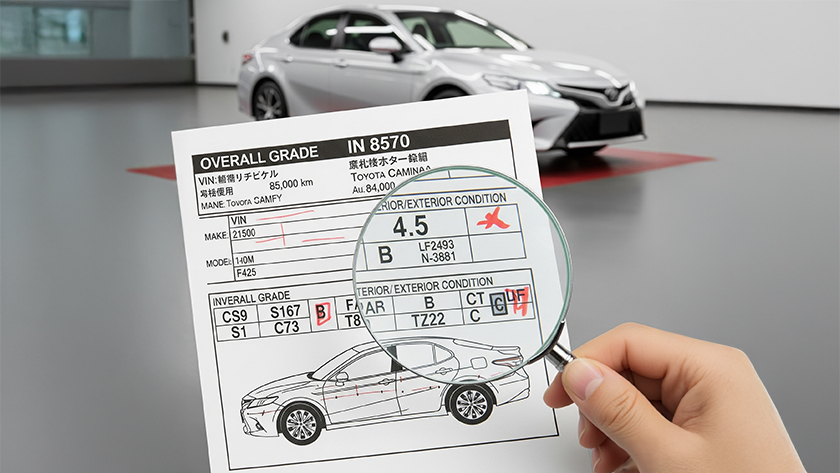
A typical sample shows the auction house name and lot number, registration date, mileage, overall and interior grades, an exterior diagram with damage codes, equipment checklist (AC, navigation, sunroof, etc.), and a free-text comments section from the inspector.
Why should I review a sample before checking a real auction sheet?
Reviewing a sample first helps you recognize the layout and codes quickly, so when you check your actual vehicle's sheet, you can spot important details like accident history or odor notes instead of being confused by unfamiliar Japanese shorthand.
Conclusion
Whether you're looking for a free Japanese auction sheet translation, a reliable auction sheet reader, or just want to understand grading before you buy, the right tool makes all the difference. JPChecker.com lets you check and translate any Japanese auction sheet online for free using the chassis number, so you can buy your next import with full confidence.
Visit JPChecker.com to translate and check your auction sheet today.