Want a reliable Japanese car without paying dealership prices? You're in the right place! Let me show you how Japan's massive auto auction system works – and how you can access it from anywhere in the world.
What is Japan Auto Auction? (The Simple Answer)
Think of Japan auto auctions as a gigantic wholesale marketplace where 50,000 cars are sold every single day. Instead of buying from a dealer who adds markup, you're buying at the same prices dealers pay – sometimes saving $5,000-$10,000 on the same car!
Here's the exciting part:
- 💰 Direct wholesale pricing (30-50% cheaper than dealers)
- ✅ Every car professionally inspected
- 🌍 Ships worldwide to 100+ countries
- 🚗 200+ auction locations across Japan
- 📅 Fresh inventory 6 days a week
Japanese car auctions aren't just big in Japan – they're where dealers from all over the world buy their inventory. Now you can access the same marketplace!
How Do Japan Car Auctions Actually Work?
The Auction Experience
Picture a massive hall filled with hundreds of bidding stations, giant screens showing cars in real-time, and professional buyers competing for the best deals. It's fast-paced – each car sells in just 10-20 seconds!
The Simple Process:
- 🔍 Car Gets Inspected → Professional inspectors check everything
- 📋 Auction Sheet Created → Detailed condition report made
- 📺 Car Goes Live → Appears on auction with all details
- 🎯 Bidding Happens → Lightning-fast competitive bidding
- ✅ Winner Pays → Winning bidder purchases the vehicle
- 🚢 Export Arranged → Car ships to buyer's country
Can You Bid Directly? (Not Quite, But...)
Here's the catch: Japanese law says only licensed dealers can bid. But don't worry! This is where auction agents come in – they're your licensed representative who bids on your behalf.
Think of them as your personal car shopper in Japan. You tell them what you want, set your budget, and they handle everything while you track it online in real-time!
The Magic Document: Understanding Auction Inspection Sheets
This is the game-changer that makes Japanese auctions so reliable. Every single car gets an auction inspection sheet – a detailed report that's 99% accurate about the car's true condition.
What Makes Auction Sheets Special?
Unlike buying from "honest Bob's used cars," this inspection is done by the auction house itself (not the seller). It's an independent expert telling you exactly what you're getting.
The Sheet Shows You:
✅ Exterior Condition
- Every scratch, dent, and ding mapped out
- Paint quality and color matching
- Rust spots (if any)
- Which panels were replaced
✅ Interior Condition
- Seat wear and stains
- Dashboard condition
- Any funky smells
- All equipment working or not
✅ Mechanical Health
- Engine performance
- Transmission smooth or rough
- Suspension issues
- Brake condition
✅ The All-Important Grade This is the quick rating that tells you overall condition:
- Grade 6 → Basically new (rare!)
- Grade 5 → Excellent, minimal wear
- Grade 4.5 → Really good condition ⭐ Sweet spot!
- Grade 4 → Good, normal wear ⭐ Best value!
- Grade 3.5 → Some visible wear
- Grade 3 → Rough, needs work
- Grade R → Modified/customized
- Grade A → Had an accident
Pro Tip: Most buyers aim for Grade 4 to 4.5 – excellent condition at fair prices!
Why This Matters So Much
All auction cars are sold "as is" with no warranty. So this inspection sheet is literally your only protection. It's why getting a professional translation of the sheet (they're in Japanese!) is super important.
Why Buy from Japanese Auto Auctions?
Real Benefits You'll Actually Notice
1. Your Wallet Will Thank You 💰
Average savings compared to your local dealership:
- Small cars: $3,000-$5,000 saved
- Family cars: $5,000-$8,000 saved
- SUVs: $7,000-$12,000 saved
- Luxury cars: $10,000-$20,000 saved
2. Japanese Cars Are Built Different (In a Good Way) 🏆
Why Japanese used cars are so highly rated worldwide:
- Obsessive Maintenance Culture – Japanese owners treat car service like a religion
- Strict Bi-Annual Inspections – "Shaken" system keeps cars in top shape
- Low Mileage – Most driving is short city trips
- Perfect Roads – No harsh winters destroying undercarriages
- Quality Manufacturing – Toyota, Honda, Nissan reliability is legendary
3. Mind-Blowing Selection 🎯
With 50,000 cars daily, you'll find:
Popular Fuel-Sippers:
- Toyota Prius, Aqua, Corolla
- Honda Fit, Freed, Vezel
- Nissan Leaf, Note, Serena
Adventure-Ready SUVs:
- Toyota Land Cruiser, Prado, Hilux
- Mitsubishi Pajero, Delica
- Nissan Patrol, X-Trail
JDM Legends:
- Nissan GT-R, Skyline, Silvia
- Toyota Supra, Chaser, Mark II
- Mazda RX-7, RX-8
- Subaru WRX STI
Luxury Comfort:
- Lexus LS, RX, NX
- Toyota Alphard, Crown, Vellfire
- Nissan Elgrand, Fuga
4. Transparent Process You Can Trust 👁️
Unlike sketchy used car lots, every auction car has:
- Independent professional inspection
- Detailed condition documentation
- Verified odometer reading
- Complete accident history
- Real photos (not stock images!)
Step-by-Step: How to Buy Your Dream Japanese Car
Let me walk you through the entire process like I'm your helpful friend who's done this before.
Step 1: Find Your Auction Agent (Your Japan Car Shopping Buddy)
What to Look For:
- ✅ Real customer reviews (Google, Trustpilot, Facebook)
- ✅ Clear, simple pricing (no hidden fees)
- ✅ English-speaking support
- ✅ Real-time auction access
- ✅ Experience shipping to your country
Red Flags to Avoid:
- ❌ "Too good to be true" prices
- ❌ No verifiable reviews
- ❌ Pushy sales tactics
- ❌ Unclear fee structure
- ❌ Poor communication
Step 2: Calculate Your Real Budget (No Surprises!)
Let's be honest about all the costs. Here's what a typical $10,000 auction car actually costs:
|
What You Pay For |
Typical Cost |
Example |
|
🎯 Auction Price |
Varies |
$10,000 |
|
👔 Agent Fee |
3-8% |
$500 |
|
🔍 Inspection |
$50-100 |
$75 |
|
🚢 Shipping |
$800-$2,500 |
$1,200 |
|
🛃 Import Duty |
2.5-10% |
$750 |
|
📋 Compliance |
$500-2,000 |
$1,000 |
|
💵 Total Cost |
$13,525 |
Key Takeaway: Budget about 30-35% extra on top of the auction hammer price.
Step 3: Learn to Read the Secret Language (Auction Codes)
Auction sheets use Japanese symbols and codes. Here are the most important ones:
Common Codes You'll See:
- A = Small scratch (under 1cm) – no big deal
- U = Small dent – barely noticeable
- W = Repair or larger dent – check carefully
- X = Needs replacement – budget for this
- XX = Already replaced – could be good or bad
- S = Rust spot – depends on location
- C = Corrosion – serious concern
Pro Tip: Get professional auction sheet translation! It costs $15-30 but can save you thousands by catching issues you'd miss.
Step 4: Start Shopping (The Fun Part!)
Your agent gives you access to their auction portal. You can browse like online shopping, but for cars!
Smart Search Strategy:
- Start with popular, reliable models (easier to resell later)
- Set your grade minimum at 4.0
- Watch a few auctions before bidding (learn the rhythm)
- Check recent sale prices for your target model
- Be patient – perfect car will come!
Beginner-Friendly Models:
- Toyota Prius (huge inventory, parts everywhere)
- Honda Fit (reliable, affordable)
- Toyota Vitz/Yaris (great fuel economy)
- Nissan X-Trail (popular SUV)
Step 5: Verify Before You Buy (The Smart Move)
Before placing your bid, do your homework:
✅ Get the auction sheet professionally translated
- Understand every code and comment
- Know exact condition details
- Spot potential red flags
✅ Check the vehicle history
- Previous auction sales (was it unsold multiple times?)
- Odometer verification (is mileage genuine?)
- Frame number check (any issues?)
✅ Request additional photos if needed
- Most agents can get extra pictures
- Focus on any problem areas
- Check undercarriage if possible
This is where JPChecker comes in handy – professional verification services mean you know exactly what you're buying before spending money!
Step 6: Bid Smart (Win Without Overpaying)
Bidding Strategy Tips:
🎯 Set Your Max Price – Decide before auction starts
- Research recent sales
- Factor in any repair costs
- Don't get auction fever!
⏰ Timing Matters – Some auctions are more competitive
- Monday/Tuesday often better prices
- End of month can have deals
- Holiday periods less competition
💪 Be Ready to Walk Away – There's always another car tomorrow
- Remember: 50,000 cars daily!
- Perfect car at right price will come
- Don't rush into mediocre deals
Step 7: After You Win (What Happens Next)
Typical Timeline:
- Day 1-2: Pay auction invoice
- Day 3-7: Agent collects car, arranges export docs
- Week 2-3: Car loaded on ship
- Week 4-8: Ocean shipping (varies by destination)
- Week 8-10: Customs clearance, compliance, registration
During shipping, good agents provide:
- Bill of lading documents
- Shipping tracking
- Photo updates
- Arrival notifications
- Customs assistance
Major Japanese Car Auction Houses You Should Know
The Big Players
🏆 USS Auctions (Largest)
- 120,000+ vehicles monthly
- 20+ locations across Japan
- Best grading reputation
- Highest quality standards
- Popular with exporters worldwide
🚗 TAA (Toyota Auto Auction)
- Toyota/Lexus specialist
- Premium inventory
- Strict inspection standards
- Higher average grades
- Best for Toyota buyers
🔧 JU Auctions
- Nationwide network
- Great variety
- Fair pricing
- Beginner-friendly
- Good for first-time buyers
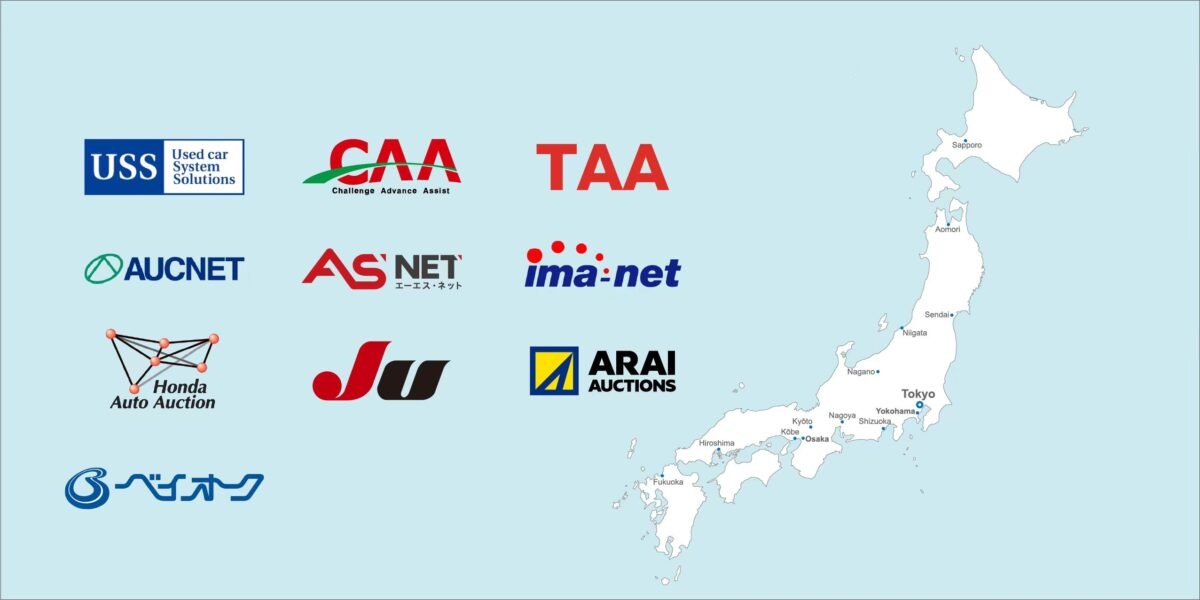
Other Major Auctions:
- HAA (Honda specialist)
- CAA Kanto (Tokyo area)
- ARAI (Niigata)
- Bayauc (diverse inventory)
- Mirive (Osaka)
Each has slightly different inventory, pricing, and quality standards. Your agent typically has access to multiple auction houses.
Smart Tips from Experienced Buyers
Do This (Pro Moves) ✅
🎯 Focus on Grade 4+ Best value for money. Grade 3.5 and below often need repairs costing more than you save.
📊 Track Prices for Your Model Watch your target car sell at auctions for 2-3 weeks. You'll learn fair market price and avoid overpaying.
🔍 Read Between the Lines If a nice-looking car has been at multiple auctions unsold, there's probably a reason. Dig deeper.
⏰ Patience Pays Off Average buyers find their perfect car within 2-4 weeks. Don't rush!
💬 Communicate Clearly Give your agent specific details: exact model, color preferences, max budget, must-have features.
🔧 Consider Maintenance Costs Some models have expensive parts. Research before buying something exotic.
Avoid This (Common Mistakes) ❌
❌ Skipping Verification "It looked fine in pictures" – Don't trust photos alone. Get that sheet translated!
❌ Forgetting Import Costs Falling in love with a car, then realizing import costs blow your budget. Calculate total cost first!
❌ Ignoring Grade R/A Cars Modified or accident cars can be problematic. Unless you know what you're doing, stick to clean grades.
❌ Choosing Agent by Lowest Price Cheapest agent often cuts corners on inspection, shipping quality, or communication. This is not where to save money!
❌ Unrealistic Expectations You can't see the car in person. Even with 99% accurate sheets, there's always some element of trust involved.
Frequently Asked Questions (Real Answers)
"How much do cars really cost at Japanese auctions?"
Honest Answer: Auction hammer prices range wildly:
- Basic compact cars: $2,000-$5,000
- Family sedans/wagons: $5,000-$12,000
- SUVs: $8,000-$20,000
- Luxury vehicles: $15,000-$40,000+
- Sports/JDM legends: $20,000-$80,000+
Remember to add 30-35% for total landed cost in your country.
"Can I really trust cars I can't see in person?"
Real Talk: The inspection system is surprisingly reliable at 99% accuracy. Professional auction sheets show more detail than most in-person inspections!
However: Always use verification services. That extra $50 for professional sheet translation can save you $5,000 in hidden repair costs.
"How long until I get my car?"
Typical Timeline:
- USA/Canada: 6-10 weeks total
- UK/Europe: 6-8 weeks
- Australia/NZ: 4-6 weeks
- Caribbean: 8-12 weeks
- Africa: 6-10 weeks
RoRo (roll-on/roll-off) shipping is fastest. Container shipping takes longer but protects the car better.
"What if something goes wrong?"
Good Agent Will:
- ✅ Provide pre-shipment inspection
- ✅ Have insurance options
- ✅ Resolve issues proactively
- ✅ Offer refund/replacement for major problems
- ✅ Stand behind their service
Your Protection:
- Detailed auction sheet (keep it!)
- Pre-shipment photos
- Professional verification report
- Payment through secure methods
- Written agent agreements
"Which cars are easiest to import?"
Safest Bets for Beginners:
USA (25-year rule):
- 1999 and older vehicles
- R34 Skyline, Supra, RX-7
- Classic Land Cruisers
Right-Hand Drive Countries:
- Any Japanese car works!
- UK, Australia, NZ, South Africa
- Caribbean islands
Left-Hand Drive Markets:
- Check compliance requirements
- Some models available in LHD
- Research heavily first
"Do I need to speak Japanese?"
Nope! Your agent handles:
- All auction bidding
- Japanese paperwork
- Export documentation
- Communication with auction houses
- Customs documents
You handle:
- Choosing your car
- Setting your budget
- Arranging payment
- Import process in your country
"Can I negotiate auction prices?"
No – Auctions are final bid wins. But you can:
- Set your maximum bid strategically
- Choose less competitive auction times
- Target unpopular colors/specs for deals
- Wait for high-inventory periods
Yes – You can sometimes negotiate:
- Agent commission fees (especially bulk buyers)
- Shipping options and costs
- Additional service fees
- Payment terms
"What about warranty?"
Reality Check: No warranties on auction cars. They're sold "as is."
Your Options:
- Buy high-grade vehicles (4+) for reliability
- Budget for potential repairs
- Purchase extended warranty in your country
- Choose models known for reliability
- Get thorough pre-purchase verification
Pro Tip: The money you save at auction easily covers any minor repairs needed.
Red Flags to Watch Out For
⚠️ Auction Warning Signs:
Run Away If:
- Car been to 5+ auctions unsold
- Grade suddenly dropped from previous auction
- Major accident history (Grade A) without details
- Odometer shows way too low for age
- Suspicious modifications
- Flood damage indicators (E grade)
Double Check When:
- Price seems too good (why isn't it selling?)
- Rust marks in critical areas
- Multiple XX marks (many replaced parts)
- Engine/transmission warnings
- Strange seller comments
Agent Red Flags:
- Pressure to bid immediately
- Won't provide translated sheets
- Unclear about total costs
- Can't verify auction membership
- Poor communication after payment
- No physical office/verifiable business
Why Professional Auction Sheet Translation Matters
Here's the truth: Japanese auction sheets are complex documents filled with codes, Japanese characters, and industry terminology. Even if you speak some Japanese, understanding auction-specific language is different.
What Professional Translation Reveals:
📋 Every Detail Explained
- All codes translated to plain English
- Damage severity and locations
- Inspector comments and concerns
- Recommended repair estimates
🔍 Hidden Information Decoded
- Between-the-lines insights
- Common issues with that model
- Whether grade matches description
- Fair value assessment
💰 Money-Saving Insights
- Which issues are serious vs cosmetic
- Realistic repair cost estimates
- Whether it's priced fairly
- Negotiation leverage points
Real Example: Basic auction sheet shows "A" grade in corner. Without translation, you might think it's minor. Professional translation reveals: "Previous accident repair to front passenger side quarter panel with color mismatch visible in direct sunlight. Recommend further inspection of suspension components."
That detail just saved you from buying a problem car!
Is Japan Auto Auction Right for You?
You'll Love It If You:
✅ Want the best value on quality used cars ✅ Don't mind waiting 6-10 weeks for delivery ✅ Enjoy researching and learning the process ✅ Want access to models unavailable locally ✅ Appreciate transparent buying systems ✅ Are comfortable with some calculated risk ✅ Have budget flexibility for total costs
Maybe Look Elsewhere If:
❌ You need a car immediately (like this week) ❌ You want local warranty and service guarantees ❌ Your country has strict/expensive import rules ❌ You prefer seeing/test driving before buying ❌ Budget is super tight with no flexibility ❌ You want someone else to handle everything
Bottom Line: For most buyers seeking quality Japanese cars at wholesale prices, auctions are absolutely worth it. With proper research, good agents, and verification services, the risk is minimal and the rewards are substantial.
Ready to Start Your Japan Auction Adventure?
You now know more about Japanese auto auctions than 95% of people! Here's your action plan:
This Week:
- ✅ Decide which car model you want
- ✅ Calculate your total realistic budget
- ✅ Research 3-5 reputable auction agents
- ✅ Read reviews and compare services
Next Week:
- ✅ Choose your agent and sign up
- ✅ Browse current auction listings
- ✅ Watch a few auctions (no bidding yet)
- ✅ Learn how your target car is priced
When Ready:
- ✅ Get auction sheet professionally translated
- ✅ Verify vehicle history thoroughly
- ✅ Place your first bid
- ✅ Stay patient and strategic
Remember: 50,000 cars auction daily. Your perfect car at the right price WILL come. Don't rush!
Need Help With Auction Sheets?
The difference between a great deal and an expensive mistake often comes down to understanding that auction inspection sheet. Professional translation and verification services give you:
- ✅ Crystal-clear English translations of all codes and comments
- ✅ Expert analysis of true vehicle condition
- ✅ Fair value assessment based on condition
- ✅ Red flag identification before you bid
- ✅ Peace of mind knowing exactly what you're buying
Think of it as a $20-50 insurance policy that protects your $10,000+ investment. Smart buyers never skip this step.
Quick Reference: Popular Japanese Models at Auction
Best Value Compact Cars:
- Toyota Prius (2010-2015): $4,000-$8,000
- Honda Fit (2013-2017): $5,000-$9,000
- Nissan Note (2012-2016): $4,000-$7,000
- Mazda Demio (2014-2017): $5,000-$8,000
Family-Friendly Options:
- Toyota Wish (2009-2015): $5,000-$10,000
- Honda Freed (2011-2016): $6,000-$12,000
- Nissan Serena (2010-2016): $7,000-$14,000
- Toyota Voxy (2014-2018): $12,000-$20,000
Adventure SUVs:
- Toyota Land Cruiser Prado (2009-2015): $18,000-$35,000
- Mitsubishi Pajero (2010-2016): $12,000-$22,000
- Nissan X-Trail (2013-2017): $10,000-$18,000
- Suzuki Jimny (2012-2018): $8,000-$15,000
Luxury Comfort:
- Lexus RX (2009-2015): $15,000-$28,000
- Toyota Alphard (2015-2018): $25,000-$45,000
- Nissan Elgrand (2010-2016): $12,000-$22,000
- Toyota Crown (2012-2017): $10,000-$20,000
Prices are approximate auction ranges for Grade 4-4.5 vehicles