Complete Ro-Ro Shipping Company List for Japan Vehicle Imports
Last Updated: December 2025
When importing vehicles from Japan, choosing the right Ro-Ro (Roll-on/Roll-off) shipping company is one of the most critical decisions you'll make. Ro-Ro shipping is the most common and cost-effective method for transporting cars, trucks, buses, and heavy machinery from Japan to destinations worldwide.
In this comprehensive guide by JPChecker, we provide a complete and trusted list of global Ro-Ro shipping companies widely used for Japanese vehicle exports, along with practical insights to help importers navigate the shipping process successfully.
What Is Ro-Ro Shipping?
Ro-Ro (Roll-on/Roll-off) shipping is a specialized method where vehicles are driven directly onto the vessel at the port of loading and driven off at the destination port. Unlike container shipping, there's no need for cranes or special loading equipment.
Key Advantages of Ro-Ro Shipping:
- Cost-effective for running vehicles (typically 30-50% cheaper than container shipping)
- Faster port handling with quicker loading and unloading times
- Ideal for all vehicle types including cars, trucks, buses, and heavy equipment
- Widely available from major Japanese ports (Yokohama, Nagoya, Kobe, Osaka)
- Higher capacity vessels can transport thousands of vehicles per voyage
Ro-Ro shipping is the preferred method for most used car imports from Japan, handling over 90% of vehicle exports from Japanese ports.
Major Global Ro-Ro Shipping Companies
Below is our comprehensive directory of major Ro-Ro shipping lines operating internationally and frequently used for Japan vehicle exports.
🇯🇵 Japanese Ro-Ro Shipping Companies
1. K Line (Kawasaki Kisen Kaisha)

One of Japan's largest and most reliable vehicle carriers with over 100 years of maritime experience.
Services:
- Extensive Ro-Ro routes from Japan to Europe, Africa, Americas, and Oceania
- Modern fleet of Pure Car Carriers (PCC) and Pure Car and Truck Carriers (PCTC)
- Regular sailings from Yokohama, Nagoya, and Kobe
🔗 Website: https://www.kline.co.jp/
2. NYK RORO (Nippon Yusen Kaisha)

Global shipping giant with one of the world's largest Pure Car Carrier (PCC) fleets.
Services:
- Commonly used for both new and used vehicle exports
- Coverage to over 200 ports worldwide
- Specialized heavy equipment transport
🔗 Website: https://www.nykroro.com/
3. Mitsui O.S.K. Lines (MOL)

Large Ro-Ro and vehicle carrier operator with comprehensive global coverage.
Services:
- Major global trade routes from Japan
- Advanced vessel tracking systems
- Reliable schedule performance
🔗 Website: https://www.mol.co.jp/
4. Toyofuji Shipping

Part of the Toyota Group, specializing in automotive logistics.
Services:
- Expert vehicle transport from Japan and Asia
- Strong connections with Japanese auction houses
- Priority handling for Toyota vehicles
🔗 Website: https://www.toyofuji.co.jp.e.apq.hp.transer.com/
🌍 European & Global Ro-Ro Specialists
5. Wallenius Wilhelmsen

One of the world's largest Ro-Ro operators with over 125 vessels.
Services:
- Specializes in cars, trucks, and heavy equipment
- Global network covering 6 continents
- Advanced vehicle processing terminals
🔗 Website: https://www.walleniuswilhelmsen.com/
6. Höegh Autoliners

Norway-based Ro-Ro specialist with a modern, eco-efficient fleet.
Services:
- Pure car and truck carrier specialist
- Over 40 vessels worldwide
- Strong environmental commitment
🔗 Website: https://www.hoeghautoliners.com/
7. Grimaldi Group

Italy-based shipping group with the world's largest Ro-Ro fleet.
Services:
- Strong presence in Europe, Africa, and Mediterranean
- Multi-purpose Ro-Ro vessels
- Extensive port network
🔗 Website: https://www.grimaldi-lines.com/en/grimaldi-lines-brand-book/
8. CLdN (Cobelfret)

European short-sea and deep-sea Ro-Ro operator.
Services:
- Popular for intra-Europe vehicle transport
- High-frequency services
- Modern fleet with large capacity
🔗 Website: https://www.cldn.com/
🇰🇷 Korean & Asian Ro-Ro Carriers
9. Hyundai Glovis

Vehicle logistics arm of Hyundai Motor Group and major Asia-based carrier.
Services:
- Major Ro-Ro exporter from Asia
- Integrated logistics solutions
- Growing global network
🔗 Website: https://www.glovis.net/
10. EUKOR Car Carriers

Specialized car and truck transportation, part of the Wallenius Wilhelmsen group.
Services:
- Deep-sea vehicle transportation
- Coverage across Pacific, Atlantic, and Asian routes
- Modern PCTC fleet
🔗 Website: https://www.eukor.com/
🚢 Regional & Niche Ro-Ro Operators
11. Sallaum Lines

Specialist in vehicles and rolling cargo with flexible services.
Services:
- Focused on vehicles and heavy cargo
- Regional expertise in Middle East and Africa
- Competitive pricing for smaller volumes
🔗 Website: http://www.sallaumlines.com/
12. Polaris Autoliners
Dedicated vehicle shipping specialist.
Services:
- Targeted routes for automotive trade
- Efficient vessel operations
- Growing market presence
🔗 Website: https://www.polarisautoliners.com/
13. Neptune Lines

Greece-based Ro-Ro carrier serving international routes.
Services:
- Regional and international coverage
- Focus on Mediterranean and European routes
- Reliable schedule adherence
🔗 Website: https://www.neptunelines.com/
14. WEC Lines

European Ro-Ro carrier with transatlantic services.
Services:
- Europe-North America routes
- Multi-purpose vessels
- Break-bulk and Ro-Ro combined services
🔗 Website: https://weclines.com/
15. Stena Line
Strong Ro-Ro presence in Northern Europe.
Services:
- Short-sea European routes
- High-frequency ferry services
- Efficient border crossings
🔗 Website: https://stenaline.com/
16. Crowley Maritime

US-based shipping company with Ro-Ro capabilities.
Services:
- Services to Caribbean and Latin America
- Heavy equipment transport
- US domestic routes
🔗 Website: https://www.crowley.com/
How to Track Your Ro-Ro Shipment
Unlike express courier services, Ro-Ro shipping companies don't provide real-time AWB-style tracking. However, you can still monitor your vehicle's journey effectively.
What You Need to Track:
✅ Bill of Lading (B/L) number - Your primary shipping document ✅ Booking reference - Provided by your exporter or freight forwarder ✅ Vessel name and voyage number - Identifies the specific ship carrying your vehicle ✅ ETD (Estimated Time of Departure) and ETA (Estimated Time of Arrival)
How to Track:
- Through your freight forwarder or exporter - They have direct access to shipping line systems
- Shipping line's local agent - Contact the destination port agent
- Global vessel tracking platforms - Websites like MarineTraffic or VesselFinder
- Shipping line's customer portal - Many carriers offer online tracking
💡 JPChecker Pro Tip:
Always request the Bill of Lading from your exporter as soon as the vehicle is shipped. This document is essential for customs clearance and proves ownership during transit. Keep both digital and physical copies in a safe place.
Ro-Ro vs Container Shipping: Which Is Right for You?
Understanding the differences helps you choose the best shipping method for your specific situation.
| Feature | Ro-Ro Shipping | Container Shipping |
|---|---|---|
| Cost | Lower (30-50% cheaper) | Higher |
| Vehicle Condition | Must be running and drivable | Can be non-running or damaged |
| Security | Standard (vehicle exposed) | Higher (enclosed container) |
| Transit Time | Faster (more frequent sailings) | Slower (fewer sailings) |
| Volume | Ideal for single or multiple vehicles | Best for 1-4 vehicles per container |
| Popularity | Most common (90%+ of exports) | Used for luxury/classic/non-running cars |
| Insurance | Standard marine insurance | Higher coverage available |
| Loading/Unloading | Drive on/drive off | Requires crane and equipment |
When to Choose Ro-Ro:
- Your vehicle is in running condition
- You want the most economical option
- You're importing standard used cars
- Time efficiency is important
- You're shipping multiple vehicles
When to Choose Container:
- Vehicle is non-running or damaged
- High-value classic or luxury vehicle
- Extra security is priority
- Shipping personal belongings with the vehicle
- Destination has limited Ro-Ro service
For most Japanese used car imports, Ro-Ro shipping remains the preferred and most practical option.
Japanese Ports for Ro-Ro Shipping
Most vehicles exported from Japan depart from these major ports:
🏭 Port of Yokohama
- Largest vehicle export port in Japan
- Most frequent Ro-Ro sailings
- Excellent infrastructure
🏭 Port of Nagoya
- Major automotive industry hub
- Strong connections to Toyota and other manufacturers
- High volume of used car exports
🏭 Port of Kobe
- Historic port with modern facilities
- Western Japan's primary export hub
- Good access to Osaka region
🏭 Port of Osaka
- Major gateway for Kansai region
- Growing used vehicle export center
🏭 Other Ports:
- Kawasaki, Hitachi, Hiroshima, Fukuoka (regional exports)
Understanding Ro-Ro Shipping Costs
Shipping costs vary based on several factors:
Cost Factors:
- Vehicle size and type - Measured in cubic meters (CBM) or RT (Revenue Ton)
- Route and destination - Distance and port accessibility
- Season - Peak seasons (Nov-Feb) may have higher rates
- Fuel surcharges - Bunker Adjustment Factor (BAF)
- Currency fluctuations - Exchange rates affect pricing
- Port handling fees - Varies by destination country
Typical Cost Range (from Japan):
- To North America (West Coast): $800-1,500
- To North America (East Coast): $1,200-2,000
- To Europe: $1,000-1,800
- To Africa (East Coast): $900-1,500
- To Middle East: $700-1,200
- To Oceania: $900-1,400
Prices are estimates and vary by carrier, season, and specific circumstances.
Important Documentation for Ro-Ro Shipping
Ensure you have these essential documents:
Required Documents:
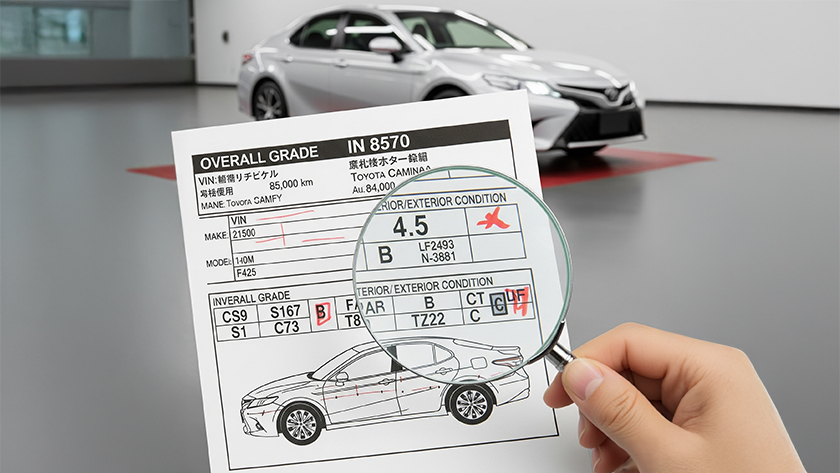
📄 Bill of Lading (B/L) - Proof of shipment and ownership 📄 Export Certificate - Japanese export approval 📄 Auction Sheet (for used vehicles) - Vehicle condition record 📄 Invoice and Packing List - For customs declaration 📄 Insurance Certificate - Marine cargo insurance 📄 Certificate of Origin - Proves vehicle is from Japan 📄 Deregistration Certificate - Japanese vehicle registration cancellation
💡 JPChecker Services:
At JPChecker, we help you verify and understand your auction sheet before purchase, ensuring you know exactly what you're importing. Our detailed translations cover all aspects of vehicle condition, history, and grade.
Ro-Ro Shipping Timeline
Understanding the typical timeline helps with planning:
Standard Timeline (Japan to Worldwide):
Week 1:
- Vehicle purchased at auction or from dealer
- Export procedures initiated
- Shipping booking confirmed
Week 2:
- Vehicle delivered to port
- Pre-shipment inspection
- Loading onto vessel
Week 3-6:
- Ocean transit (varies by destination)
- Regular vessel updates
Week 7:
- Arrival at destination port
- Customs clearance process
- Final delivery
Timeline varies significantly based on destination, shipping line schedule, and customs procedures.
Ro-Ro Shipping Safety and Insurance
Safety Measures:
✅ Vehicles are securely lashed to the vessel deck ✅ Professional loading and unloading by trained stevedores ✅ Modern vessels designed specifically for vehicle transport ✅ Weather monitoring and route optimization
Insurance Coverage:
Marine Cargo Insurance is essential and typically covers:
- Total loss from sinking or major incidents
- Partial damage from accidents during loading/unloading
- Weather-related damage
- General average (shared losses)
What's Usually NOT Covered:
- Pre-existing damage
- Wear and tear
- Theft of personal items left in vehicle
- Damage from improper packaging
💡 Insurance Tip:
Always purchase marine insurance through your exporter or freight forwarder. The cost is typically 1-2% of vehicle value and provides essential protection during transit.
Common Ro-Ro Shipping Mistakes to Avoid
❌ Mistake 1: Not Verifying Vehicle Condition
Solution: Use JPChecker to get professional auction sheet translation before purchase.
❌ Mistake 2: Leaving Personal Items in Vehicle
Solution: Remove all personal belongings; they're not covered by insurance and may cause customs issues.
❌ Mistake 3: Not Understanding Total Costs
Solution: Factor in port charges, customs duties, taxes, and inland transport to final destination.
❌ Mistake 4: Skipping Marine Insurance
Solution: Always insure your vehicle during ocean transit.
❌ Mistake 5: Not Confirming Vessel Schedule
Solution: Verify sailing dates with your freight forwarder; schedules can change.
❌ Mistake 6: Inadequate Documentation
Solution: Ensure all documents are complete and accurate before shipping.
Choosing the Right Ro-Ro Shipping Company
Key Selection Criteria:
🔍 Route Coverage - Does the carrier service your destination? 🔍 Sailing Frequency - How often do they depart? 🔍 Reputation - Check reviews and track record 🔍 Cost - Compare quotes from multiple carriers 🔍 Transit Time - Balance speed vs. cost 🔍 Customer Service - Responsive support is crucial 🔍 Claims Handling - How they handle damage claims
Questions to Ask Your Freight Forwarder:
- Which shipping line do you recommend and why?
- What's the total door-to-door transit time?
- Are there any transhipment ports (increases risk)?
- What's included in the quoted price?
- What's your claims process if damage occurs?
- Can you provide references from previous clients?
Environmental Considerations
Modern Ro-Ro carriers are increasingly focused on sustainability:
Eco-Friendly Initiatives:
🌱 LNG-powered vessels - Reduced emissions 🌱 Route optimization - Fuel efficiency 🌱 Ballast water management - Marine ecosystem protection 🌱 Scrubber systems - Air quality improvement 🌱 Shore power connectivity - Reduced port emissions
Leading carriers like Höegh Autoliners and Wallenius Wilhelmsen have committed to significant emission reductions by 2030.
Regional Ro-Ro Shipping Considerations
North America (USA, Canada, Mexico)
Popular Routes: Japan → California (Los Angeles, Long Beach) or Eastern USA (Baltimore, Jacksonville)
Considerations:
- EPA and DOT regulations for vehicles 25+ years old
- State-specific emissions requirements
- NAFTA considerations for Mexico
Europe (UK, Germany, France, etc.)
Popular Routes: Japan → UK (Southampton), Belgium (Zeebrugge), Germany (Bremerhaven)
Considerations:
- EU type approval requirements
- Individual country registration rules
- VAT and import duties
Africa (Kenya, Tanzania, Uganda, South Africa)
Popular Routes: Japan → Mombasa, Dar es Salaam, Durban
Considerations:
- Age restrictions on imported vehicles (varies by country)
- PVOC (Kenya) or JEVIC inspections
- Currency regulations
Middle East (UAE, Kuwait, Saudi Arabia)
Popular Routes: Japan → Dubai, Jebel Ali, Kuwait
Considerations:
- GCC standardization requirements
- Extreme heat preparation
- Specific documentation requirements
Oceania (Australia, New Zealand)
Popular Routes: Japan → Sydney, Melbourne, Auckland
Considerations:
- Strict quarantine and biosecurity
- Australian Design Rules (ADR) compliance
- Left-hand drive restrictions
Caribbean & Latin America
Popular Routes: Japan → Multiple transshipment ports
Considerations:
- Limited direct Ro-Ro service (often requires transhipment)
- Higher shipping costs
- Complex import regulations
The Future of Ro-Ro Shipping
The Ro-Ro industry is evolving rapidly:
Emerging Trends:
🚀 Larger vessels - New generation of mega PCTCs carrying 9,000+ vehicles 🚀 Digitalization - Blockchain for documentation and tracking 🚀 Autonomous ships - Remote-controlled vessel trials 🚀 Alternative fuels - Hydrogen, ammonia, and methanol propulsion 🚀 Smart loading systems - AI-optimized vessel stowage
These innovations promise faster, more efficient, and environmentally friendly vehicle shipping.
FAQs About Ro-Ro Shipping from Japan
Q: How long does Ro-Ro shipping take from Japan?
A: Transit times vary by destination:
- Asia: 1-2 weeks
- North America West Coast: 2-3 weeks
- North America East Coast: 4-6 weeks
- Europe: 4-6 weeks
- Africa: 3-5 weeks
- Middle East: 2-4 weeks
- Oceania: 2-3 weeks
Add 1-2 weeks for port processing and customs clearance.
Q: Can I ship personal belongings in my vehicle?
A: Generally NO. Most shipping lines and customs authorities prohibit personal items inside vehicles. Items found may result in delays, fines, or confiscation. Some carriers allow a spare tire and jack only.
Q: What happens if my vehicle is damaged during shipping?
A: If you have marine insurance, file a claim immediately upon discovery. Document damage with photos and have it noted on the delivery receipt. Your insurance company will handle the claim with the carrier.
Q: Do I need to drain the fuel tank?
A: Most carriers require fuel tanks to be no more than 1/4 full for safety reasons. Check with your specific carrier for their requirements.
Q: Can non-running vehicles be shipped via Ro-Ro?
A: No, vehicles must be able to start and drive onto the vessel under their own power. Non-running vehicles require container shipping.
Q: How is vehicle size calculated for shipping costs?
A: Carriers typically use cubic meters (length × width × height) or Revenue Ton (RT) which is 1 cubic meter. Larger vehicles cost more to ship.
Q: Are there weight restrictions?
A: Most Ro-Ro vessels can accommodate standard vehicles up to 4-5 tons. Heavier equipment may require special arrangements or different shipping methods.
Q: What's the difference between PCC and PCTC vessels?
A:
- PCC (Pure Car Carrier) - Designed exclusively for passenger cars
- PCTC (Pure Car and Truck Carrier) - Can accommodate larger vehicles including trucks, buses, and heavy equipment with adjustable decks
Why Choose JPChecker for Your Japan Import Journey
At JPChecker, we specialize in helping international buyers make informed decisions when importing vehicles from Japan.
Our Services Include:
✅ Professional Auction Sheet Translation - Understand every detail before you buy ✅ Vehicle History Verification - Comprehensive background checks ✅ Import Guidance - Step-by-step support through the import process ✅ Shipping Advice - Connect with trusted freight forwarders ✅ Condition Assessment - Expert evaluation of vehicle grade and status
Why Trust JPChecker?
- Expert Team - Native Japanese speakers with automotive expertise
- Fast Service - Most reports delivered within 24 hours
- Transparent Pricing - No hidden fees
- Comprehensive Reports - Detailed, easy-to-understand documentation
- Customer Support - Dedicated assistance throughout your import journey
Final Thoughts
Ro-Ro shipping remains the backbone of Japan's vehicle export industry, moving hundreds of thousands of vehicles worldwide each year. Choosing a reputable Ro-Ro carrier ensures:
✓ Safer handling with professional loading procedures ✓ Predictable transit times with regular sailing schedules ✓ Lower shipping costs compared to container alternatives ✓ Reliable service from established international carriers
Whether you're importing a single vehicle or managing bulk shipments, understanding the major Ro-Ro shipping companies and how the process works empowers you to make informed decisions and avoid costly mistakes.
Ready to Import Your Japanese Vehicle?
Before you purchase, make sure you fully understand the vehicle's condition and history. JPChecker provides professional auction sheet translations and vehicle verification services to help you buy with confidence.
Visit jpchecker.com today to:
- Get your auction sheet translated by experts
- Verify vehicle history and condition
- Access comprehensive import guidance
- Connect with trusted shipping partners
Have questions about Ro-Ro shipping or importing from Japan? Contact our team at JPChecker for personalized assistance with your vehicle import journey.
Related Articles:
- Understanding Japanese Auction Sheets
- Complete Guide to Importing Cars from Japan
- Japanese Vehicle Export Ports Guide
- Customs Clearance Process by Country
Keywords: Ro-Ro shipping Japan, vehicle import Japan, car shipping companies, Japanese car exports, Roll-on Roll-off shipping, K Line shipping, NYK Line, Wallenius Wilhelmsen, Höegh Autoliners, Japan car auction, JPChecker
© 2025 JPChecker. All rights reserved. This guide is for informational purposes only. Shipping costs, regulations, and carrier information are subject to change. Always verify current requirements with official sources.