Factory Detail Check: Why It Matters and How to Use It Before Buying a Japanese Car
If you're importing a used car from Japan, one of the smartest things you can do before committing your money is run a Factory Detail Check. It takes only a few minutes, it's free, and it could save you from an expensive mistake. Here's everything you need to know.
What Is a Factory Detail Check?
When a car rolls off a Japanese factory floor, the manufacturer records every single detail about that specific vehicle — the exact trim level, engine specification, factory-fitted options, color codes, transmission type, and more. This data is stored in the manufacturer's official database and tied to the car's chassis number (also called the VIN or frame number).
A Factory Detail Check lets you query that database directly, giving you a verified, manufacturer-confirmed profile of the car exactly as it was built.
Why Is It So Important?
1. Confirm What You're Actually Buying
Auction listings and dealer descriptions can be vague, mistranslated, or simply wrong. A Factory Detail Check bypasses all of that and goes straight to the source. You'll know exactly what grade (trim level) the car is, what factory options it came with, and whether the spec matches what's being advertised.
2. Detect Undisclosed Modifications
If a seller claims a car is a high-spec model but the factory record shows a base-grade unit, that's a red flag. Aftermarket upgrades — such as a different steering wheel, audio system, or alloy wheels — don't change what the factory originally built. The detail check helps you spot when a car has been "dressed up" to appear more valuable than it is.
3. Verify the Chassis Number Is Legitimate
Cross-checking the chassis number against the manufacturer's database is one of the simplest ways to confirm the car isn't stolen or carrying a cloned identity. If the chassis number returns no result or mismatched data, walk away.
4. Make Smarter Price Decisions
Knowing the exact original spec helps you negotiate. A base-grade car priced like a premium model is an opportunity to push back. Conversely, knowing a car has rare factory options can justify the asking price.
5. Peace of Mind Before Shipping
Once a car is on a vessel heading to your country, your options for recourse become very limited. Running a Factory Detail Check before the auction ends — or before you confirm a purchase — gives you a chance to flag problems while you still have leverage.
How to Use the Factory Detail Check on JPChecker
JPChecker makes this process straightforward. Here's how to do it step by step:
Step 1: Get the Chassis Number
The chassis number is usually found on the auction sheet, in the seller's listing, or stamped on a plate inside the engine bay or door jamb of the vehicle. It typically looks something like KSP210-0012345 for a Toyota.
Step 2: Choose the Right Manufacturer
On the JPChecker homepage, scroll to the Factory Detail Check section. You'll see direct links to the official detail check pages for all major Japanese manufacturers:
- Toyota
- Nissan
- Honda
- Mitsubishi
- Mazda
- Subaru
- Daihatsu
- Suzuki
Click the link for the brand of the car you're checking.
Step 3: Enter the Chassis Number
On the manufacturer's official page, enter the chassis number into the search field and submit. The page will be in Japanese, but the results are straightforward.
Step 4: Translate the Results
Once the results load, use Google Translate (either the browser extension or by copying the URL into translate.google.com) to convert the page to English. The information will include the model grade, factory specifications, color code, and installed options.
Step 5: Compare Against the Auction Sheet
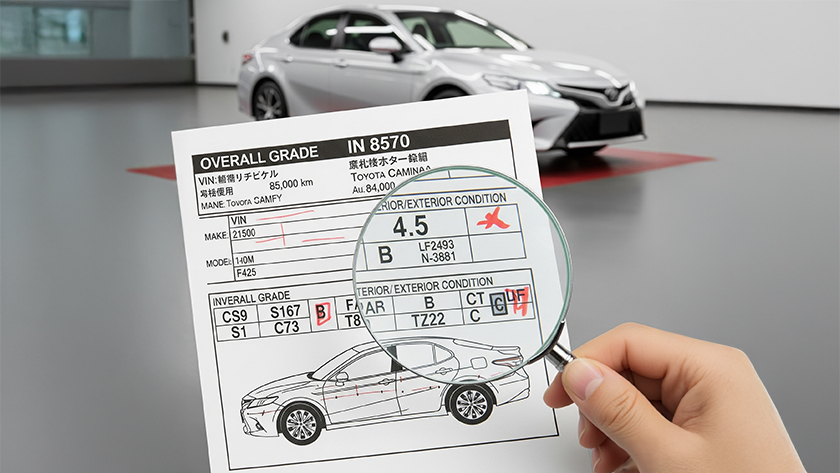
Now hold this information next to the auction sheet or seller's listing. Do the grades match? Are the listed options confirmed? Any discrepancy is worth questioning before you buy.
Which Cars Are Supported?
The Factory Detail Check works for vehicles manufactured by the eight brands listed above. This covers the vast majority of Japanese cars that appear at auction, including popular models like the Toyota Yaris, Nissan Note, Honda Fit, Suzuki Wagon R, Subaru Forester, and many more.
It's Free — There's No Reason Not to Use It
Unlike some vehicle history services that charge per report, the manufacturer detail check pages are completely free to use. JPChecker links you directly to the official manufacturer portals at no cost. Whether you're a first-time importer or an experienced dealer sourcing multiple vehicles per month, adding this step to your buying process takes less than five minutes and costs nothing.
Final Thoughts
Buying a used car from a Japanese auction involves a degree of trust — trust in the auction grade, the seller's description, and the importer handling the process. A Factory Detail Check reduces the amount of trust you need to extend by giving you direct access to the manufacturer's own records.
At JPChecker, we believe buyers deserve transparent, accurate information before committing to a purchase. The Factory Detail Check is one of the most powerful tools available to you, and it's sitting right there on our homepage, ready to use.
Start your check today at jpchecker.com — just grab the chassis number and go.
JPChecker also offers a Factory Recall Check (to confirm no unresolved safety recalls), an AI-powered Auction Sheet Translation, and a Sri Lanka vehicle import tax calculator. Check our full suite of tools to make your next purchase as informed as possible.