Auction Sheet Translation: How AI Instantly Decodes Japanese Auction Sheets — And Why You Need It
Buying a car from a Japanese auction is one of the smartest ways to get a quality used vehicle at a competitive price. But there's one major barrier standing between you and a confident purchase: the auction sheet is written entirely in Japanese.
Miss something on that sheet, and you could end up with hidden damage, undisclosed repairs, or a car in far worse condition than expected. That's exactly why JPChecker built an AI-powered Auction Sheet Translation tool — so you can understand every detail before you commit.
What Is a Japanese Auction Sheet?
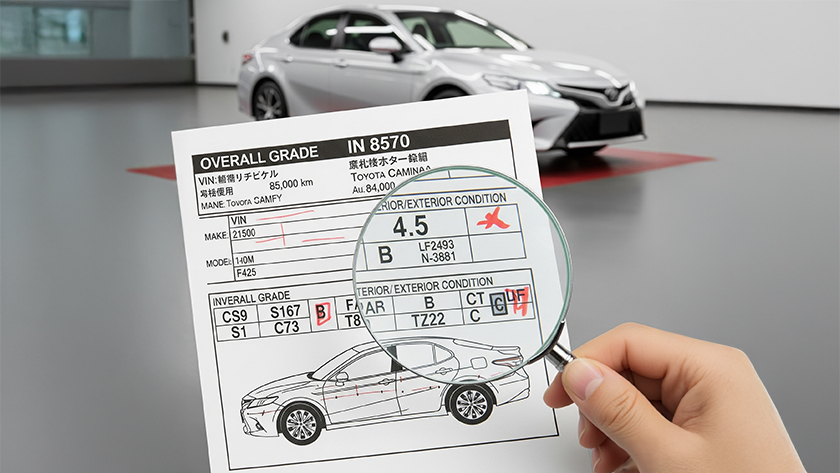
Every car sold through a Japanese auto auction comes with an official inspection sheet produced by a trained examiner at the auction house. It's the most honest document you'll ever see about a used Japanese car. It includes:
- Auction grade — an overall score reflecting the car's general condition
- Interior and exterior grades — separate scores for the cabin and bodywork
- Damage map — every dent, scratch, rust spot, crack, or repair marked with codes
- Auction comments — positive and negative notes from the inspector
- Vehicle history — accident or repair history flagged clearly
- Available options — factory and fitted equipment listed in full
- Other details — auction number, registration, recycling fees, and more
The problem? All of this is written in Japanese, using industry-specific shorthand that even fluent speakers sometimes struggle with.
Why Translating the Auction Sheet Is So Important
1. The Damage Map Tells the Real Story
An auction grade gives you a number — but the damage map shows you where problems are and how serious they are. Codes like W1, W2, A1, A3, and Aux mark specific types and sizes of damage across different panels. Without understanding these, you're guessing at the true condition of the car.
2. Inspector Comments Reveal What Grades Don't
The comments section is where inspectors flag things that don't fit neatly into a number. This is where you'll find notes about mechanical issues, leaks, odors, structural concerns, or safety system problems — written in plain Japanese text. Missing these could mean paying a premium for a car with serious undisclosed issues.
3. History Flags Are Critical
A single line in Japanese — "Accident/Repair history vehicle" — can change your entire decision. Repaired accident cars may have structural damage, misaligned panels, or airbag replacements that affect safety and resale value. You need to see this clearly, in English, before bidding.
4. Equipment Lists Affect Value
The options list tells you whether the car has air conditioning, alloy wheels, airbags, ABS, navigation, and more. In Japanese, these are listed as abbreviations and kanji. A full translation lets you know exactly what you're getting — and whether the price reflects it.
5. Bidding Blind Is a Financial Risk
At auction, decisions are made fast. Relying on a grade number alone — or a rough Google Translate of a blurry image — means bidding blind. A proper, structured translation gives you the confidence to bid the right amount, or to walk away entirely.
What the Translation Result Looks Like
Once your auction sheet is processed, JPChecker presents the translated information in a clean, structured format organised into the following sections:
🚗 Vehicle Identity — Maker, model, grade, first registration date, chassis code, color code, and registration plate details, all clearly labelled in English.
⚙️ Specifications — Engine size, transmission type, drive configuration, fuel type, driving side, number of doors, seats, and mileage.
⭐ Auction Condition — The overall auction grade alongside separate interior and exterior grades, so you can see at a glance how the car scores across all three dimensions.
💬 Auction Comments — Split into Positive and Negative sections. The positive side highlights what's in good condition; the negative side lists every concern the inspector flagged, from panel damage to mechanical issues.
🗺️ Damage Map — A plain-English breakdown of every damage code marked on the car's diagram, including the location and type of each mark.
🕐 History — A clear statement of whether the vehicle has any accident or repair history on record.
📋 Available Options — A full list of the car's fitted equipment, translated from Japanese abbreviations into readable English.
ℹ️ Other Details — Auction number, reference number, recycling fee, and any additional registration or vehicle notes.
Every section is presented on a single page, immediately after processing — no downloads, no emails, no waiting.
How to Use the JPChecker Auction Sheet Translation Tool
Step 1: Get Your Auction Sheet Image
Your image will come from your agent, the auction house portal, or the seller's listing. Save it as a JPG, PNG, or WebP file under 5 MB.
Step 2: Go to the Translation Page
Visit jpchecker.com and scroll to the Auction Sheet Translation section.
Step 3: Upload Your Image
Drag and drop your auction sheet into the upload box, or click to browse and select the file.
Step 4: Click "Translate Now"
Hit the red Translate Now button. The AI reads and processes your image in 10–20 seconds.
Step 5: Read Your Full Translation
The complete translated result appears on screen — vehicle identity, specifications, condition grades, positive and negative comments, damage map, history, options, and other details — all in clear English.
Free Translations — No Account Needed
New visitors get 3 free translations per day with no account required. Register free on JPChecker for more daily translations and to keep your history saved in one place.
A Smarter Way to Import
JPChecker was built to give every buyer the same information that experienced importers and dealers have always had. The Auction Sheet Translation tool is central to that mission.
Pair it with the Factory Detail Check (verify the car's original factory spec using the chassis number) and the Factory Recall Check (confirm no unresolved manufacturer recalls), and you have a complete, independent picture of any Japanese auction vehicle — before a single dollar leaves your account.
Try the Auction Sheet Translation tool now at jpchecker.com — your first 3 translations are free.
JPChecker also offers a Factory Detail Check, Factory Recall Check, and a Sri Lanka vehicle import tax calculator. All the tools you need, in one place.