Suzuki Wagon R Grade Guide: FX vs Hybrid FX-S vs Custom Z — All Differences Explained
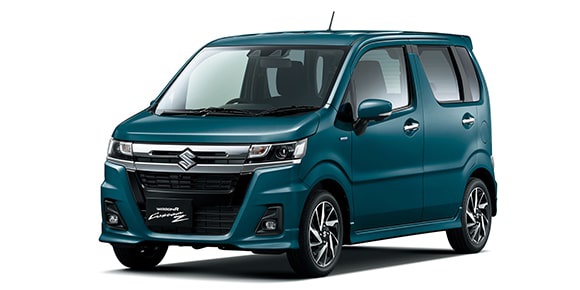
Japan's best-selling kei car since 2003, fully decoded. Three decades of the Wagon R — grades, mild hybrid system, Suzuki Safety Support, and which one to buy or import.
What Is the Suzuki Wagon R?
The Suzuki Wagon R is not just a car — it is a segment-defining icon that has held the title of Japan's best-selling kei car every single year since 2003. First introduced at the 1993 Tokyo Motor Show, it invented the "tall wagon" (or "tallboy") concept for kei vehicles: a deliberately tall body with a short bonnet and near-vertical sides that maximise interior volume within Japan's strict kei car dimensional regulations. By 2010, Suzuki had produced five million Wagon R units. The car is also sold by Mazda as the Flair (formerly AZ-Wagon) under a long-running badge-engineering arrangement.
The current model is the sixth generation (2017–present), built on Suzuki's HEARTECT lightweight platform. It is available in Japan with a naturally aspirated 660cc petrol engine or with Suzuki's mild hybrid ISG (Integrated Starter Generator) system. The range runs from the entry-level FX all the way through to the premium Custom Z Hybrid ZX — Japan's most fully equipped kei wagon. The December 2025 facelift further simplified the lineup into ZL and Hybrid ZX grades under the unified Custom Z styling.
What Does the "R" Stand For?
According to Suzuki, the "R" in Wagon R stands for two things: Revolution and Relaxation. The Revolution reflects the Wagon R's original status as a genuine revolution in kei car design — nothing like it had existed when the first generation launched in 1993. The Relaxation reflects the daily-use comfort philosophy that has guided every generation since. Together they describe a car designed to quietly transform its owner's everyday life.
Six Generations — A Brief History
The Current Lineup: What's Available Now
Understanding the Wagon R lineup requires knowing that the model has gone through two significant changes in recent years. The August 2022 facelift simplified the standard range to just FX and Hybrid FX-S, while adding the new Custom Z model to replace the Hybrid FZ. Then in December 2025, a further facelift consolidated the lineup into a unified Custom Z-based design with ZL (petrol) and Hybrid ZX (mild hybrid) grades — eliminating the turbocharged engine entirely and giving all models the sharper Custom Z body.
Grade Breakdown: FX, Hybrid FX-S, Custom Z (2022–2025)
- 660cc R06A NA engine
- CVT or 5-speed manual (FX only)
- 2WD or 4WD
- Suzuki Safety Support (standard)
- Halogen headlamps
- Steel wheels
- Manual air conditioning
- No mild hybrid system
- Lightest model in the range
- 660cc R06A + ISG mild hybrid
- CVT only · 2WD or 4WD
- EV creep up to 10 seconds
- Suzuki Safety Support (standard)
- LED headlamps
- 14-inch alloy wheels
- Auto air conditioning
- Keyless push-start
- Fuel economy ~25 km/L WLTC
- 660cc R06A + ISG mild hybrid
- CVT only · 2WD or 4WD
- All Hybrid FX-S features, plus:
- Sharper Custom Z body styling
- 15-inch alloy wheels
- Head-up display
- 360° omnidirectional camera
- Seat heater (driver + passenger)
- Radar cruise control
- 660cc R06A turbo + ISG
- 64 PS / 98 Nm torque
- Stingray trapezoidal headlamps
- Aggressive black & chrome grille
- Full premium equipment
- No longer produced new
- Still commonly found at auction
Full Feature Comparison Table
| Feature | FX NA · CVT/MT |
Hybrid FX-S Mild Hybrid |
Custom Z Hybrid ZX Mild Hybrid · Top |
|---|---|---|---|
| POWERTRAIN | |||
| Engine | 660cc NA | 660cc + ISG | 660cc + ISG |
| Mild hybrid (ISG) | ✗ | ✓ | ✓ |
| Transmission | CVT or 5MT | CVT only | CVT only |
| 4WD option | ✓ | ✓ | ✓ |
| EV creep (up to 10 sec) | ✗ | ✓ | ✓ |
| Fuel economy (WLTC approx.) | ~20–22 km/L | ~25 km/L | ~25 km/L |
| EXTERIOR | |||
| Headlamps | Halogen | Full LED | Full LED |
| Body style / grille | Standard square | Standard square | Custom Z sporty |
| Wheels | Steel (13-in) | Alloy (14-in) | Alloy (15-in) |
| Two-tone roof colour | ✗ | ✗ | OPT |
| Ground clearance (tall wagon) | ✓ | ✓ | ✓ |
| INTERIOR & CONVENIENCE | |||
| Air conditioning | Manual A/C | Auto climate | Auto climate |
| Keyless smart entry | ✗ | ✓ | ✓ |
| Push-button start | ✗ | ✓ | ✓ |
| Seat heater (driver + passenger) | ✗ | ✗ | ✓ |
| Head-up display | ✗ | ✗ | ✓ |
| Steering wheel audio controls | ✗ | ✗ | ✓ |
| Rear flat floor / cargo flexibility | ✓ | ✓ | ✓ |
| TECHNOLOGY & SAFETY | |||
| Suzuki Safety Support | ✓ | ✓ | ✓ |
| Rear parking sensors | ✓ | ✓ | ✓ |
| Rear camera | ✗ | OPT | ✓ |
| 360° omnidirectional camera | ✗ | ✗ | ✓ |
| Radar cruise control | ✗ | ✗ | ✓ |
| Display audio (smartphone link) | OPT | OPT | ✓ |
✓ = Standard | ✗ = Not available | OPT = Available as option | Dark column = Custom Z grade. Reference prices are Goo-net Exchange MSRP data for the August 2022 facelift model.
The Mild Hybrid System — How It Works
⚡ Suzuki ISG Mild Hybrid — Not Just a Label
The Wagon R's mild hybrid system uses an ISG (Integrated Starter Generator) — a motor-generator unit that replaces the conventional alternator and starter motor. It works in parallel with the 660cc petrol engine, recovering kinetic energy during braking and using it to assist the engine during acceleration. In stop-start urban traffic, it also enables a brief EV creep mode — the car can move on electricity alone for up to 10 seconds at speeds under 13 km/h — reducing fuel burn and emissions during the most fuel-wasteful phase of driving.
The result is fuel economy of around 25.1 km/L WLTC on the Hybrid FX-S — significantly better than the naturally aspirated FX's ~20–22 km/L. The lithium-ion battery is positioned under the front seats to avoid reducing boot space. The system adds approximately ¥160,000–¥170,000 to the price over the equivalent NA model, which is typically recovered in fuel savings over the ownership period for buyers who drive regularly.
Suzuki Safety Support — Standard on All Current Grades
From the August 2022 facelift onward, Suzuki Safety Support is standard equipment on all Wagon R grades including the entry FX. This is a meaningful commitment — many competing kei cars still reserve active safety technology for higher trim levels. The suite includes:
NA vs Mild Hybrid — Which to Choose?
R06A · Naturally Aspirated (FX)
- Displacement: 658 cc inline-3
- Power: 49 PS @ 6,500 rpm
- Torque: 58 Nm @ 4,000 rpm
- Transmission: CVT or 5-speed manual
- Fuel economy: ~20–22 km/L (WLTC)
- Best for: budget priority, city use
- Only Wagon R still offering manual
- Lightest weight: from 730 kg (5MT)
R06A + ISG · Mild Hybrid (FX-S / Custom Z)
- Displacement: 658 cc + ISG motor
- Power: 49 PS + electric assist
- Torque: 58 Nm + ISG boost at low RPM
- Transmission: CVT only
- Fuel economy: ~25.1 km/L (WLTC)
- EV creep up to 10 seconds under 13 km/h
- Noticeably smoother engine start/stop
- Best for: regular driving, fuel savings
The manual transmission on the FX is a rare differentiator — virtually every competing kei wagon has moved to CVT-only. Suzuki's decision to retain the 5-speed manual specifically on the FX serves fleet buyers, mountain-region owners, and drivers who simply prefer mechanical control. It is also the lightest Wagon R available at 730 kg, making it responsive for its modest power output.
Key Differences Between Grades Explained
1. Mild Hybrid vs Naturally Aspirated
The single most significant difference in the Wagon R range is the presence or absence of the ISG mild hybrid system. The FX does not have it — it is a conventional petrol engine. The Hybrid FX-S and Custom Z ZX both carry the ISG system. Beyond the fuel economy improvement (roughly 15–20% better WLTC figures), the mild hybrid grades also benefit from a noticeably smoother idle-stop experience, as the ISG restarts the engine almost silently compared to conventional starter-motor restarts. In daily urban stop-start driving, this difference is noticeable on every journey.
2. Headlamps: Halogen (FX) vs Full LED (FX-S and above)
The FX uses standard halogen headlamps. The Hybrid FX-S and Custom Z ZX both receive full LED headlamps, which are significantly brighter, more energy-efficient, and have a longer service life. This is the most immediately visible exterior difference between the entry FX and the rest of the range.
3. Wheels: 13-inch Steel (FX) → 14-inch Alloy (FX-S) → 15-inch Alloy (Custom Z ZX)
The FX runs on 13-inch steel wheels with plastic hubcaps — functional but plain. The Hybrid FX-S steps up to 14-inch alloy wheels, and the Custom Z ZX uses 15-inch alloys. Larger alloy wheels reduce unsprung weight slightly, improve brake cooling, and substantially enhance the car's visual presence. The 15-inch wheels on the Custom Z ZX also give it a noticeably more planted, adult stance compared to the standard models.
4. The Head-Up Display — Custom Z ZX Only
The Custom Z ZX includes a head-up display that projects key driving information — speed, navigation instructions, safety alerts — onto the lower windscreen. This feature is unusual in the kei segment and adds genuine daily convenience by keeping the driver's eyes on the road rather than glancing down at instruments.
5. 360° Camera — Custom Z ZX Only
Four cameras around the Wagon R Custom Z ZX generate a composite bird's-eye view of the vehicle's surroundings when parking or manoeuvring at low speed. In Japan's extremely tight urban parking environments this is a genuinely useful feature — and in export markets with similarly constrained urban infrastructure, buyers place high value on it.
6. Seat Heaters — Custom Z ZX Only
Front seat heaters for both driver and passenger are standard on the Custom Z ZX. These warm the seat quickly and are popular in Japan's colder northern regions. In export markets where winters are mild, this is less critical — but it is still a premium feature that buyers notice and appreciate.
7. Manual Transmission — FX Only
The FX is the only Wagon R (and one of very few remaining kei cars) still offering a 5-speed manual gearbox alongside the CVT option. All mild hybrid grades — Hybrid FX-S and Custom Z ZX — are CVT-only by necessity, as the ISG system is designed around the CVT. If a manual transmission is important to a buyer, the FX is the only choice in the current range.
Standard Wagon R vs Custom Z — Two Visual Personalities
Standard Wagon R (FX / Hybrid FX-S)
- Square, friendly, approachable design
- Traditional tall-wagon silhouette
- Simple horizontal grille lines
- Softer, warmer visual language
- Preferred by families and older buyers
- Available with 5-speed manual (FX)
- More colour options including pastels
Custom Z (Hybrid ZX / ZT)
- Sharper, sportier two-tier headlamp design
- Bolder front bumper with black accents
- Cleaner, darker aesthetic (less chrome post-2025)
- LED daytime running lights integrated in design
- Popular with younger and urban buyers
- All mild hybrid, CVT only
- Two-tone roof option available
Full Technical Specifications
| Specification | Detail |
|---|---|
| Model codes | 5BA-MH85S (NA · 2WD), 5BA-MH85S (NA · 4WD), 5AA-MH95S (Hybrid · 2WD), 5AA-MH95S (Hybrid · 4WD) |
| Generation | 6th generation (2017–), facelifted August 2022, December 2025 |
| Platform | HEARTECT (Suzuki lightweight high-rigidity platform) |
| Body style | 5-door tall wagon kei hatchback |
| Seating | 4 passengers |
| NA engine | R06A · 658cc inline-3 DOHC · 49 PS / 58 Nm |
| Mild hybrid | R06A + ISG (Integrated Starter Generator) · 49 PS + electric assist |
| Transmission | CVT (all hybrid grades) or 5-speed manual (FX only) |
| Drive options | 2WD (FF) or 4WD (i-4WD) |
| Dimensions (L×W×H) | 3,395 × 1,475 × 1,650 mm |
| Wheelbase | 2,460 mm |
| Kerb weight — FX 5MT 2WD | 730 kg |
| Kerb weight — FX CVT 2WD | 750 kg |
| Kerb weight — Hybrid FX-S 2WD | 770 kg |
| Kerb weight — Custom Z Hybrid ZX 2WD | 810 kg |
| Fuel economy — NA (WLTC) | ~20–22 km/L |
| Fuel economy — Hybrid (WLTC) | ~25.1 km/L |
| Fuel type | Regular (91 RON) unleaded petrol |
| Fuel tank | 27 litres |
| EV creep capability (Hybrid) | Up to 10 seconds at speeds under 13 km/h |
| Battery (Hybrid) | Lithium-ion, positioned under front seats |
Which Grade Should You Buy or Import?
💰 Best for Lowest Cost / Manual Transmission Preference
Choose the FX (CVT or 5MT) for the lowest purchase price while still getting Suzuki Safety Support and the proven tall-wagon practicality. The 5MT option is unique in the current kei wagon market — a genuine reason to choose the FX for mechanically-minded buyers and fleet operators. Main trade-offs: no mild hybrid, halogen headlamps, steel wheels, manual A/C, no keyless entry.
⭐ Best All-Round Choice — Most Popular Grade
Choose the Hybrid FX-S for the best combination of everyday usability and running costs. The mild hybrid system delivers ~25 km/L, LED headlamps, alloy wheels, auto climate control, keyless entry, and push-button start are all added over the FX. For most private buyers and importers, the Hybrid FX-S represents the sweet spot in the Wagon R range.
🏆 Best-Equipped / Most Desirable at Resale
Choose the Custom Z Hybrid ZX for the fully loaded experience. Head-up display, 360° camera, seat heaters, radar cruise control, and the sharper Custom Z styling make it the most desirable Wagon R at both new and used sale. It commands the highest prices at Japanese auction and exports fastest. Recommended for importers targeting premium-segment buyers.
Importing a Suzuki Wagon R
The Suzuki Wagon R is one of the most exported kei cars in the world for good reason: decades of reliability data, extraordinary parts availability worldwide, widespread mechanical familiarity, and an unbeatable combination of practicality and affordability. It is a top seller in Africa, South Asia, the Pacific, the Caribbean, and the Middle East.
Why the Wagon R Dominates Export Markets
The 660cc engine keeps import duty low in displacement-taxed markets. Parts are available in virtually every country that receives Japanese imports. Mechanics in Sri Lanka, Tanzania, New Zealand, or Jamaica are more likely to be familiar with a Wagon R than almost any other kei vehicle. The tall-wagon body maximises usable cabin space for a footprint that fits any traffic environment. Regular-grade fuel keeps running costs accessible everywhere.
Hybrid vs Non-Hybrid at Auction
The Hybrid models (MH95S) command a premium at auction — typically ¥100,000–¥200,000 over equivalent NA (MH85S) units of the same age and mileage. In markets where fuel prices are high, this premium is well justified. In markets where buyers prioritise low purchase price over running costs, the FX NA offers excellent value. The Custom Z Hybrid ZX commands the highest premium and tends to sell faster than any other Wagon R variant in export markets.
Pre-2022 Models at Auction
If sourcing 2017–2022 Wagon R units, you will encounter a different grade structure: FA, FX, FZ, Hybrid FX, Hybrid FZ, Stingray Hybrid X, and Stingray Hybrid T (turbocharged). These are all still reliable and popular export cars. The Stingray Hybrid T turbo is particularly sought after by performance-minded buyers. Always check the grade and powertrain from the chassis number, not just the auction sheet listing.
🔍 Verify Any Suzuki Wagon R Before You Import
Confirm grade, hybrid or NA specification, chassis history, mileage, and accident record for any Wagon R using the chassis number — instantly at JPChecker.com.
Run a Free Vehicle Check →