Daihatsu Taft Grade Guide: X vs G vs G Turbo — All Differences Explained
Japan's most adventurous kei crossover, decoded. Everything you need to know about grades, the Sky Feel Top, engines, and which Taft to buy or import.
What Is the Daihatsu Taft?
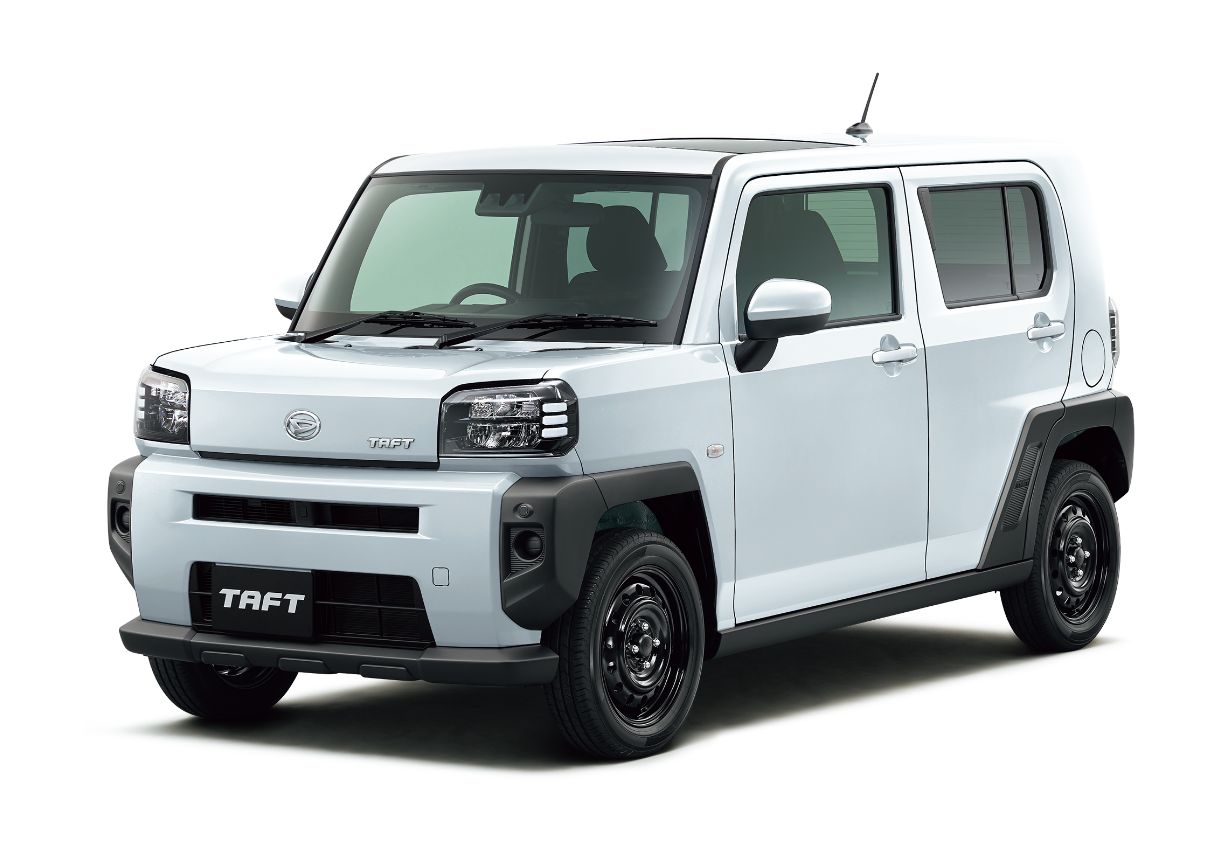
The Daihatsu Taft is a kei-class crossover SUV that has earned a devoted following in Japan for a very simple reason: it does things no other kei car does. It is the only kei vehicle in Japan that comes standard with a large panoramic glass roof — the "Sky Feel Top" — on every single grade. Combine that with a boxy, rugged SUV silhouette, a highly flexible interior, full LED headlamps across all grades, and a comprehensive Smart Assist safety suite, and you have one of the most feature-rich small cars money can buy in Japan.
The current generation (LA900S) launched in June 2020 and was built as the third model in Daihatsu's DNGA (Daihatsu New Global Architecture) platform series, following the Tanto and the Rocky. It received a specification update in November 2024 adding enhanced safety features, a new 9-inch display audio system, and revised pricing. The Taft range runs from ¥1,386,000 to ¥1,886,500 (including tax, as of November 2024).
What Does "TAFT" Stand For?
The Taft nameplate was revived in 2020 after more than a decade of absence. It directly replaced the Daihatsu Cast Activa and Cast Sport, and was positioned to challenge the popular Suzuki Hustler in the kei crossover segment. The car's design was inspired by the WakuWaku concept unveiled at the 2019 Tokyo Motor Show.
The Taft Grade Lineup: X, G & G Turbo
The Daihatsu Taft is offered in three core grades in the Japanese domestic market, each available in 2WD and 4WD configurations. The key distinction between the X and G grades is equipment level; the key distinction between G and G Turbo is the engine.
- 660cc NA engine · CVT
- 2WD or 4WD available
- Full LED headlamps (standard)
- Sky Feel Top (standard)
- Smart Assist (standard)
- Steel wheels
- Manual air conditioning
- 5 body colour options
- 660cc NA engine · CVT
- 2WD or 4WD available
- All X features, plus:
- Aluminium alloy wheels
- Auto air conditioning
- Keyless smart entry
- Push-button start
- ACC + Lane Keeping (2024+)
- 9-inch display audio
- More colour options
- 660cc turbo engine · CVT
- 2WD or 4WD available
- All G features, plus:
- 64 PS / 100 Nm torque
- Paddle shifters
- Vehicle Stability Control
- Sport-tuned suspension feel
- Best for motorway / hill use
Feature Comparison: All Grades Side by Side
| Feature | X NA · CVT |
G NA · CVT |
G Turbo TC · CVT |
|---|---|---|---|
| POWERTRAIN | |||
| Engine | 660cc NA | 660cc NA | 660cc Turbo |
| Power | 52 PS | 52 PS | 64 PS |
| Torque | 60 Nm | 60 Nm | 100 Nm |
| Transmission | CVT | CVT | CVT |
| 4WD option | ✓ | ✓ | ✓ |
| EXTERIOR | |||
| Full LED headlamps | ✓ | ✓ | ✓ |
| Sky Feel Top (panoramic glass roof) | ✓ | ✓ | ✓ |
| Wheels | Steel wheels | Alloy wheels | Alloy wheels |
| Body colour options | 5 colours | More options | More options |
| Two-tone colour availability | ✗ | ✓ | ✓ |
| High ground clearance (180 mm) | ✓ | ✓ | ✓ |
| INTERIOR & CONVENIENCE | |||
| Air conditioning | Manual A/C | Auto climate | Auto climate |
| Keyless smart entry | ✗ | ✓ | ✓ |
| Push-button start | ✗ | ✓ | ✓ |
| Electric parking brake | ✓ | ✓ | ✓ |
| Flexible Board (2-height cargo floor) | ✓ | ✓ | ✓ |
| Rear seat reminder | ✗ | OPT | OPT |
| TECHNOLOGY | |||
| Display audio screen size | 7-inch | 9-inch | 9-inch |
| Smartphone connectivity (wireless) | ✓ | ✓ | ✓ |
| Smart Assist (full safety suite) | ✓ | ✓ | ✓ |
| Rear corner sensors | ✓ | ✓ | ✓ |
| All-speed Adaptive Cruise Control (ACC) | ✗ | ✓ | ✓ |
| Lane Keeping Control (LKC) | ✗ | ✓ | ✓ |
| Vehicle Stability Control | ✗ | ✗ | ✓ |
| Paddle shifters | ✗ | ✗ | ✓ |
✓ = Standard | ✗ = Not available | OPT = Available as option | Data sourced from Daihatsu official press releases and the November 2024 specification update.
NA vs Turbo: Which Engine to Choose?
The single biggest mechanical decision when buying a Taft is choosing between the naturally aspirated (NA) and turbocharged (TC) engine. Both are 660cc inline-three units — the maximum allowed under Japan's kei car regulations — but they deliver a meaningfully different driving experience.
KF-VE · Naturally Aspirated
- Power: 52 PS @ 6,800 rpm
- Torque: 60 Nm @ 5,200 rpm
- Grades: X and G
- Fuel economy: ~20–21 km/L (WLTC)
- Best for: city driving, flat terrain
- Lower purchase price
- Simpler, lower-cost maintenance
KF-DET · Turbocharged
- Power: 64 PS @ 6,400 rpm
- Torque: 100 Nm @ 2,400 rpm
- Grades: G Turbo (and X Turbo)
- Fuel economy: ~18–19 km/L (WLTC)
- Best for: motorway, hills, loaded use
- 66% more torque than NA
- Noticeably stronger mid-range pull
The torque difference is what matters most in real-world driving. The turbo engine produces 100 Nm from just 2,400 rpm — meaning it feels strong at low speeds without needing to rev hard. For buyers in hilly terrain, those who carry passengers and cargo regularly, or anyone who will use the car on motorways, the G Turbo is strongly recommended. For pure urban use, the NA engine is entirely adequate and slightly more economical.
The Sky Feel Top — The Taft's Signature Feature
☀️ Sky Feel Top — Standard on Every Grade, Every Taft
The Sky Feel Top is the Taft's most distinctive and celebrated feature. It is a large fixed panoramic glass panel above the front seats — and it is fitted as standard to every single Taft sold in Japan, from the entry-level X to the top G Turbo. As of 2024, the Taft remains the only kei car in Japan equipped with a sunroof of any kind. This alone makes it stand out profoundly in the kei segment. The glass roof dramatically opens up the cabin, flooding it with natural light and giving occupants a genuine sense of space and airiness that you simply do not find in competing kei vehicles.
It is worth noting that the Sky Feel Top is a fixed glass panel — it does not open. This keeps the structure rigid and the roofline clean, and means there is no mechanical mechanism to fail or leak over time. For importers, this is a low-maintenance feature that adds significant appeal to buyers in warm-climate markets who value light and openness in a cabin.
Smart Assist Safety — Standard on All Grades
Daihatsu's Smart Assist active safety system is fitted as standard to every Taft grade. Daihatsu developed updated stereo cameras for the current generation, improving pedestrian detection capabilities including at night. The November 2024 update added rear corner sensors to all grades as standard, ensuring compliance with the latest Japanese safety regulations.
Key Differences Explained
1. Engine: The Most Important Choice
The X and G grades use the naturally aspirated KF-VE engine (52 PS, 60 Nm). The G Turbo uses the KF-DET turbocharged engine (64 PS, 100 Nm). This is not a marginal difference — the turbo engine produces 66% more torque, which transforms the car's motorway and hill performance. If you are in a flat urban area, the NA is fine. If there are hills involved, choose the turbo.
2. Wheels: Steel vs Alloy
The X grade runs on steel wheels with plastic hubcaps. Both the G and G Turbo upgrade to alloy wheels, which improve the car's visual stance and reduce unsprung weight slightly. The large 165/65R15 tyres — the biggest in the kei FF category at launch — are fitted to all grades and contribute to the Taft's high ground clearance of 180 mm.
3. Adaptive Cruise Control and Lane Keeping
Following the November 2024 specification update, the G grade gained all-speed Adaptive Cruise Control (ACC) and Lane Keeping Control (LKC) as standard equipment. These were previously only available on the G Turbo. The X grade still does not include these features. This upgrade significantly increases the G grade's appeal for motorway use and longer journeys.
4. Air Conditioning
The X grade comes with manual air conditioning — you set the temperature via a dial and switch the fan manually. Both the G and G Turbo have fully automatic climate control, which maintains a set cabin temperature and adjusts fan speed automatically. In hot-climate export markets, this is a meaningful daily-use advantage for the G grade.
5. Keyless Entry & Push-Button Start
The X grade uses a conventional key to unlock the doors and start the engine. The G and G Turbo both feature smart keyless entry — walk up with the key in your pocket, touch the handle to unlock, press the button to start. This is now considered essential equipment by most buyers and is a key reason the G is the most popular grade in Japan.
6. Display Audio: 7-inch vs 9-inch
The X grade receives a 7-inch display audio unit with wireless smartphone connectivity. The G and G Turbo step up to the newer 9-inch unit with voice recognition capability added in the 2024 update. Both systems support Apple CarPlay and Android Auto wirelessly. The larger screen is noticeably easier to use for navigation.
7. Vehicle Stability Control — G Turbo Only
Only the G Turbo comes with Vehicle Stability Control (VSC). This system applies braking to individual wheels when wheel slip is detected — useful on muddy tracks, loose surfaces, and in wet conditions. Combined with the optional 4WD, the G Turbo 4WD is the most capable off-road configuration in the Taft range.
Special Edition Models
Daihatsu regularly releases special edition Taft models. The most notable are the Chrome Venture and Dark Chrome Venture variants, which apply chrome or dark chrome exterior trim to the G Turbo grade and add a dark silver accent interior. These are based on the G Turbo and therefore include the full turbo engine and top-spec features. On the used and import market, Chrome Venture units are easy to identify and command a small premium.
Full Technical Specifications
| Specification | Detail |
|---|---|
| Model code | LA900S (2WD) / LA910S (4WD) |
| Platform | DNGA (Daihatsu New Global Architecture) |
| Body style | 5-door kei crossover SUV |
| Seating | 4 passengers |
| NA engine | KF-VE · 658cc inline-3 DOHC · 52 PS / 60 Nm |
| Turbo engine | KF-DET · 658cc inline-3 DOHC Turbo · 64 PS / 100 Nm |
| Transmission | D-CVT (continuously variable) |
| Drive options | 2WD (FF) or 4WD |
| Kerb weight (2WD) | 830–840 kg |
| Kerb weight (4WD) | 880–890 kg |
| Dimensions (L×W×H) | 3,395 × 1,475 × 1,630 mm |
| Wheelbase | 2,460 mm |
| Ground clearance | 180 mm |
| Tyre size | 165/65R15 |
| Fuel type | Regular (91 RON) unleaded petrol |
| Fuel economy (NA · WLTC) | ~20–21 km/L |
| Fuel economy (Turbo · WLTC) | ~18–19 km/L |
| Fuel tank capacity | 27 litres |
| Cargo floor | Flexible Board (2-height resin-coated) |
| Roof feature | Sky Feel Top (fixed panoramic glass — all grades) |
Which Grade Should You Buy or Import?
🏙 Best for Budget / City Use
Choose the X grade if you need the lowest entry cost and will use the car mainly in urban areas on flat terrain. You still get full LED headlamps, the Sky Feel Top, Smart Assist safety, and the flexible cargo floor — more than most kei cars offer at any price.
⭐ Best All-Round Choice — Most Popular in Japan
Choose the G grade for the best balance of price and everyday usability. The addition of keyless entry, auto climate control, alloy wheels, the 9-inch screen, and — since 2024 — adaptive cruise control and lane keeping makes it a significantly more refined daily companion. The G is by far the most common Taft found at Japanese auction.
🚀 Best for Performance / Hilly or Rural Use
Choose the G Turbo (ideally with 4WD) if you need confident overtaking, regular motorway use, or will drive in hilly or rural terrain. The turbo's 100 Nm of torque transforms the car's capability. The added Vehicle Stability Control is a genuine safety benefit on loose or slippery surfaces.
Importing a Daihatsu Taft
The Daihatsu Taft has grown steadily in popularity across export markets in Africa, the Middle East, Southeast Asia, and the Pacific. Its appeal is easy to understand: it delivers SUV styling, genuine ground clearance, a panoramic glass roof, and comprehensive safety technology at a price point below virtually any comparable imported SUV.
Why the Taft Exports Well
The 660cc engine keeps import duties low in countries that tax by engine displacement. Regular-grade fuel requirements keep running costs accessible. The boxy design maximises interior space for a very compact footprint, and the resin-coated flexible cargo floor makes it genuinely practical for work and leisure. The Sky Feel Top is a conversation-starting feature that buyers in warm markets particularly appreciate.
What to Look for at Auction
At Japanese auction, look for units graded 4 or above for good overall condition. Mileage on Taft units is typically low — under 30,000 km is very common given the car's city-use profile in Japan. The G grade is the most common auction find; G Turbo units attract a modest premium. Always confirm the grade matches the auction sheet listing using a chassis number check before bidding.
Confirming Grade Before You Buy
Grade confusion is common with Daihatsu kei vehicles — especially special editions. A car listed as "G Turbo Dark Chrome Venture" should be verified against its chassis record to confirm it carries the turbo engine and not a standard G specification. At JPChecker.com, you can run a full vehicle history and grade verification using the chassis number in under a minute.
🔍 Verify Any Daihatsu Taft Before You Import
Confirm grade, engine, mileage, accident history, and export status for any Taft using the chassis number — instantly at JPChecker.com.
Run a Free Vehicle Check →