Complete Guide to Japanese Vehicle Body Types and Classifications
When browsing Japanese car auctions, you'll encounter specific body type classifications that differ from Western automotive terminology. Understanding these classifications is essential for finding the right vehicle and accurately interpreting auction sheets. This comprehensive guide explains every Japanese vehicle body type, from the unique kei cars to full-size commercial vans.
Why Japanese Body Type Classifications Matter
Japanese vehicle classifications are more than just descriptions—they determine:
Legal Requirements: Different body types have different regulations for licensing, taxation, and insurance in Japan
Auction Categories: Auction houses organize inventory by body type, making search more efficient
Market Value: Body type significantly affects pricing and demand in Japanese auctions
Export Considerations: Certain body types are more popular in specific international markets
Auction Sheet Reading: Body type appears prominently on auction sheets and affects vehicle evaluation
Understanding these classifications helps you navigate auction listings, communicate accurately with agents, and identify the exact vehicle type you're seeking.
Quick Reference: Japanese Vehicle Body Types Table
| Body Type | Japanese Term | Abbreviation | Typical Seating | Doors | Primary Use | Common Examples |
|---|---|---|---|---|---|---|
| Sedan | セダン | SD | 5 | 4 | Passenger/Business | Crown, Accord, Camry |
| Wagon | ワゴン | WG | 5 | 5 | Family/Cargo | Corolla Fielder, Legacy, Levorg |
| Minivan | ミニバン | MV | 6-8 | 5 (sliding) | Family/Passenger | Alphard, Noah, Serena, Elgrand |
| Van | バン | VAN | 2-5 | 3-5 | Commercial/Cargo | HiAce, Caravan, Probox |
| SUV | SUV/クロカン | SUV | 5-7 | 5 | All-purpose | Land Cruiser, RAV4, X-Trail |
| Coupe | クーペ | CP | 2-4 | 2 | Sports/Luxury | GT-R, Fairlady Z, GR86 |
| Convertible | オープンカー | CB | 2-4 | 2 | Sports/Leisure | MX-5, S2000, Copen |
| Hatchback | ハッチバック | HB | 5 | 3-5 | Urban/Compact | Vitz, Fit, Note, Swift |
| Kei Car | 軽自動車 | KB/軽 | 4 | 3-5 | Urban/Economy | N-BOX, Tanto, Wagon R |
| Pickup | ピックアップ | TR | 2-5 | 2-4 | Work/Lifestyle | Hilux, Carry, Hijet Truck |
| MPV | MPV | MPV | 5-7 | 5 | Multi-purpose | Wish, Stream, Premacy |
| Bus | バス | BUS | 20-50+ | 2-3 | Transport | Coaster, Civilian |
| Truck | トラック | TR | 2-3 | 2 | Commercial | Dyna, Elf, Canter |
Kei Car Sub-Categories
| Kei Type | Japanese | Characteristics | Examples |
|---|---|---|---|
| Kei Hatchback | 軽ハッチバック | Standard compact design | Alto, Mira, N-ONE |
| Kei Wagon | 軽ワゴン | Tall box style, max interior | N-BOX, Tanto, Spacia |
| Kei Van | 軽バン | Commercial cargo focus | Every Van, Hijet Van |
| Kei Truck | 軽トラック | Small pickup bed | Carry, Hijet Truck |
| Kei SUV | 軽SUV | Mini off-road capability | Jimny, Hustler, Taft |
| Kei Sports | 軽スポーツ | Performance/convertible | S660, Copen, Cappuccino |
Body Type Size Classifications
| Category | Length | Width | Height | Engine | Examples |
|---|---|---|---|---|---|
| Kei | ≤3.4m | ≤1.48m | ≤2.0m | ≤660cc | N-BOX, Alto, Jimny |
| Compact | 3.5-4.2m | 1.6-1.7m | 1.4-1.6m | 1.0-1.5L | Vitz, Fit, Note |
| Small | 4.2-4.5m | 1.7-1.8m | 1.4-1.6m | 1.3-2.0L | Corolla, Civic, Axela |
| Medium | 4.5-4.8m | 1.7-1.8m | 1.4-1.6m | 2.0-2.5L | Camry, Accord, Crown |
| Large | 4.8m+ | 1.8m+ | 1.5m+ | 2.5L+ | Land Cruiser, Alphard, Century |
Japanese Vehicle Body Type Categories
Sedan (セダン - Sedan)
The sedan is a traditional passenger car with a separate trunk compartment and typically four doors.
Japanese Classifications:
Small Sedan: Compact sedans like Toyota Corolla, Honda Civic, Nissan Tiida. Engine displacement typically 1.3-1.8L.
Mid-Size Sedan: Family sedans such as Toyota Camry, Honda Accord, Nissan Teana. Engine displacement 2.0-2.5L.
Large Sedan: Full-size luxury sedans including Toyota Crown, Nissan Fuga, Honda Legend. Engine displacement 2.5L and above.
Executive/Luxury Sedan: Premium models like Lexus LS, Toyota Century, Nissan President.
Key Characteristics:
- Three-box design (engine, passenger, trunk)
- Typically 4 doors (some 2-door variants called "coupe sedans")
- Separate trunk compartment
- Emphasis on passenger comfort
- Popular in business and executive markets
Common Japanese Sedans at Auction:
- Toyota Crown, Mark X, Premio, Allion
- Honda Accord, Inspire, Grace
- Nissan Skyline, Fuga, Sylphy
- Mazda Atenza (Mazda6)
- Subaru Legacy
Wagon (ワゴン - Wagon) / Estate
Wagons are extended sedans with a rear cargo area and hatchback, offering more cargo space while maintaining sedan-like driving dynamics.
Japanese Sub-Categories:
Station Wagon: Traditional estate cars with extended roofline and rear cargo area
Sports Wagon: Performance-oriented wagons with sport tuning (Subaru Levorg, Mazda6 Wagon)
Compact Wagon: Smaller wagons built on compact car platforms
Key Characteristics:
- Extended roofline compared to sedan
- Large rear cargo area with hatchback
- Folding rear seats for cargo flexibility
- Two-box design (engine and combined passenger/cargo)
- Popular for families and outdoor enthusiasts
Common Japanese Wagons at Auction:
- Toyota Corolla Fielder, Caldina, Mark X Zio
- Nissan Stagea, Wingroad, AD Van (commercial)
- Honda Accord Wagon, Airwave
- Subaru Levorg, Legacy Touring Wagon, Outback
- Mazda Atenza Wagon
Note: In Japan, the line between "wagon" and "van" can blur, especially with commercial variants.
Minivan (ミニバン - Minivan)
Japanese minivans are multi-purpose vehicles designed primarily for passenger transport, typically seating 6-8 people.
Japanese Sub-Categories:
Compact Minivan: Smaller family MPVs like Toyota Sienta, Honda Freed (5-passenger)
Standard Minivan: Mid-size family vans such as Toyota Noah/Voxy, Nissan Serena (7-8 passengers)
Large Minivan: Full-size luxury people movers including Toyota Alphard/Vellfire, Nissan Elgrand (7-8 passengers with luxury focus)
Key Characteristics:
- Sliding rear doors (one or both sides)
- High roofline for interior space
- Three-row seating (6-8 passengers)
- Focus on passenger comfort and convenience
- Family-oriented features
- Often available in both 2WD and 4WD
Common Japanese Minivans at Auction:
- Toyota Alphard, Vellfire, Noah, Voxy, Sienta, Esquire
- Nissan Elgrand, Serena, Lafesta
- Honda Step WGN, Freed, Odyssey
- Mitsubishi Delica D:5
- Mazda Biante, Premacy
Market Note: Japanese minivans, especially Alphard/Vellfire and Elgrand, are highly sought after in Asian export markets.
Van (バン - Van)
Vans in Japanese classification are typically commercial or utility vehicles designed primarily for cargo transport, though some serve dual passenger/cargo roles.
Japanese Sub-Categories:
Light Van (Kei Van): Small commercial vans under kei car regulations (Suzuki Every, Daihatsu Hijet)
Compact Van: Small commercial vans like Toyota Probox, Nissan AD Van
Standard Van: Mid-size cargo vans such as Toyota HiAce (narrow body), Nissan Caravan (E25)
Large Van: Full-size commercial vans including Toyota HiAce (wide body), Nissan Caravan (E26)
Wagon/Van Hybrid: Passenger-cargo combinations like Toyota HiAce Wagon
Key Characteristics:
- Designed primarily for cargo transport
- Often panel van with minimal or no rear windows
- Commercial-grade interior (rubber floors, minimal trim)
- High payload capacity
- Available in multiple roof heights
- Sliding side doors for cargo access
Common Japanese Vans at Auction:
- Toyota HiAce, Probox, Succeed
- Nissan Caravan, NV350, AD Van
- Honda Partner
- Mazda Bongo
- Suzuki Every, Carry (kei vans)
- Daihatsu Hijet (kei van)
Important Distinction: Japanese "vans" are typically commercial vehicles. What Westerners call "minivans" are classified as "minivans" in Japan.
SUV (SUV / クロカン - Cross Country)
Sport Utility Vehicles range from compact crossovers to full-size off-road capable vehicles.
Japanese Sub-Categories:
Kei SUV: Ultra-compact SUVs under kei regulations (Suzuki Jimny, Daihatsu Taft)
Compact SUV/Crossover: Small urban SUVs like Toyota C-HR, Mazda CX-3, Honda Vezel
Mid-Size SUV: Standard SUVs including Toyota RAV4, Nissan X-Trail, Mazda CX-5
Large SUV: Full-size models such as Toyota Land Cruiser, Nissan Patrol, Mitsubishi Pajero
Luxury SUV: Premium SUVs like Lexus RX, LX, Land Cruiser (luxury variants)
Key Characteristics:
- Elevated driving position
- Available all-wheel drive (4WD)
- Cargo versatility
- Range from urban crossovers to serious off-roaders
- Growing popularity in Japanese market
Common Japanese SUVs at Auction:
- Toyota Land Cruiser, Prado, Harrier, RAV4, C-HR
- Nissan X-Trail, Patrol, Murano
- Honda CR-V, Vezel (HR-V)
- Mazda CX-3, CX-5, CX-8
- Subaru Forester, XV (Crosstrek)
- Mitsubishi Pajero, Outlander, RVR
- Suzuki Jimny, Hustler
Market Note: Large SUVs like Land Cruiser are extremely popular in Middle Eastern and African export markets.
Coupe (クーペ - Coupe)
Coupes are sporty two-door vehicles emphasizing style and performance over practicality.
Japanese Sub-Categories:
Sports Coupe: Performance-focused two-doors like Nissan GT-R, Fairlady Z, Toyota GR86
Grand Touring Coupe: Luxury sporty coupes such as Lexus RC, Infiniti Q60
Compact Coupe: Smaller sporty coupes like Toyota GR86, Subaru BRZ
Key Characteristics:
- Two doors (some 2+2 seating with small rear seats)
- Sporty styling and handling focus
- Often performance-oriented
- Lower roofline than sedans
- Driver-focused experience
Common Japanese Coupes at Auction:
- Nissan GT-R, Fairlady Z (370Z), Silvia
- Toyota GR86 (formerly 86), Supra
- Subaru BRZ
- Mazda RX-7, RX-8
- Honda NSX
- Lexus RC
Market Note: Japanese sports coupes are highly desirable in enthusiast markets worldwide, especially classic models.
Convertible / Cabriolet (オープンカー - Open Car)
Open-top vehicles with retractable or removable roofs.
Japanese Sub-Categories:
Soft Top: Fabric convertible roof (Mazda MX-5, Honda S2000)
Hard Top Convertible: Retractable metal roof (Lexus SC430, BMW Z4 sold in Japan)
Targa Top: Removable roof section with fixed roll bar (some sports cars)
Key Characteristics:
- Retractable or removable roof
- Open-air driving experience
- Often sports or luxury focused
- Less common in Japanese market due to climate
Common Japanese Convertibles at Auction:
- Mazda MX-5 (Roadster)
- Honda S2000, S660
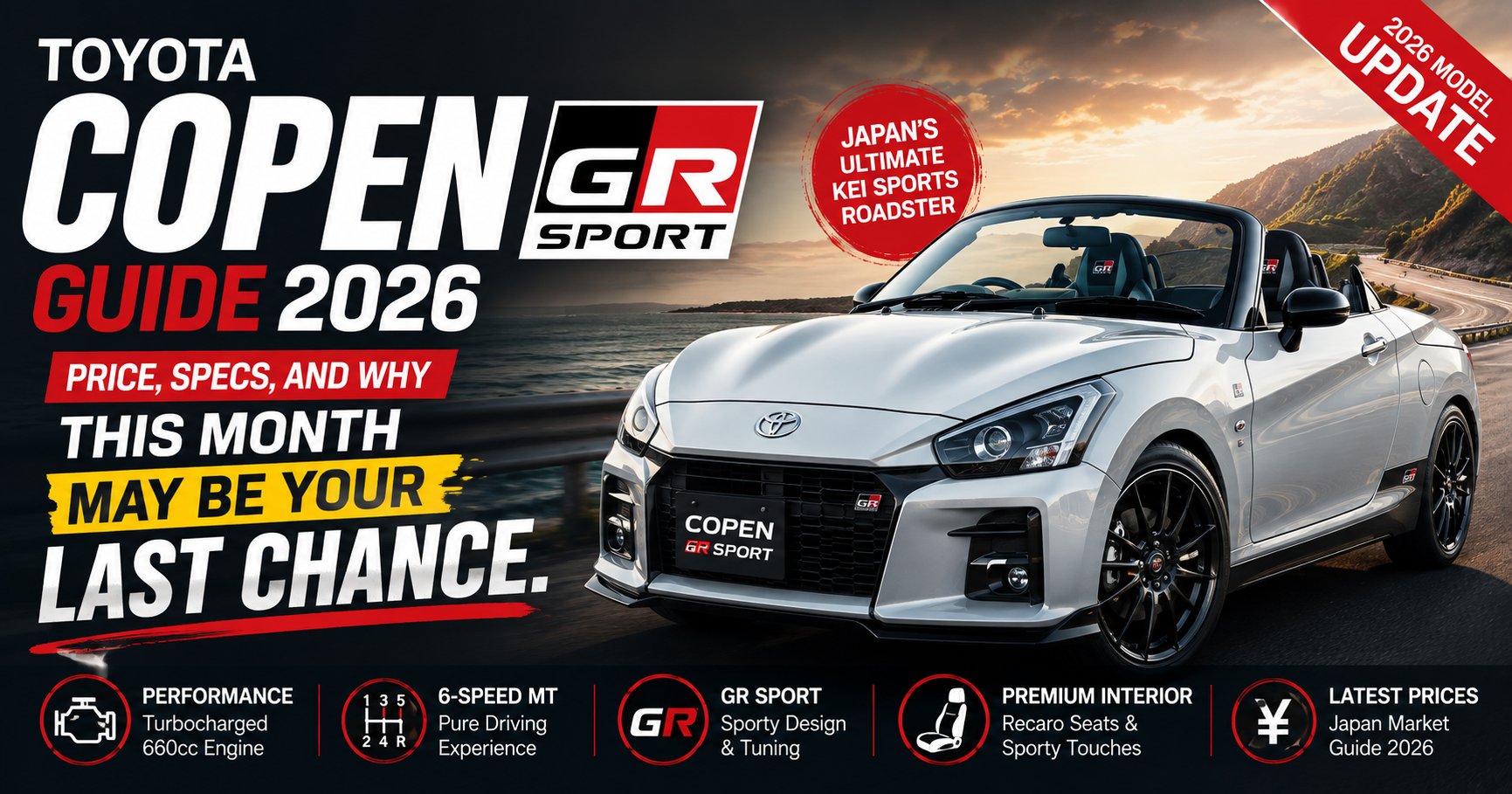
- Daihatsu Copen
- Toyota MR-S
- Nissan Fairlady Z Roadster
Hatchback (ハッチバック - Hatchback)
Compact cars with rear hatch door and combined passenger/cargo area.
Japanese Sub-Categories:
Kei Hatchback: Ultra-compact under kei regulations (Suzuki Alto, Daihatsu Mira)
Compact Hatchback: Small city cars like Toyota Vitz (Yaris), Honda Fit, Nissan Note
Sports Hatchback: Performance hatchbacks such as Toyota GR Yaris, Honda Civic Type R
Key Characteristics:
- Rear hatch door (not separate trunk)
- Typically 3 or 5 doors
- Compact dimensions
- Fuel efficient
- Urban-friendly
- Folding rear seats for cargo flexibility
Common Japanese Hatchbacks at Auction:
- Toyota Vitz (Yaris), Aqua (Prius C), GR Yaris
- Honda Fit (Jazz), Civic (hatchback)
- Nissan Note, March (Micra)
- Mazda Demio (Mazda2), Axela (Mazda3)
- Suzuki Swift, Solio
Kei Car (軽自動車 - Keijidousha)
Kei cars are a unique Japanese category of ultra-compact vehicles with special legal status.
Legal Requirements:
- Maximum length: 3.4 meters (11.2 feet)
- Maximum width: 1.48 meters (4.9 feet)
- Maximum height: 2.0 meters (6.6 feet)
- Maximum engine displacement: 660cc
- Maximum power: 64 horsepower
Kei Car Body Style Sub-Categories:
Kei Sedan: Small sedans (rare, mostly older models)
Kei Hatchback: Standard kei cars like Suzuki Alto, Daihatsu Mira, Honda N-ONE
Kei Wagon: Tall box-style kei cars such as Suzuki Wagon R, Daihatsu Move, Honda N-BOX
Kei Van: Commercial kei vehicles like Suzuki Every, Daihatsu Hijet Van
Kei Truck: Small pickup trucks such as Suzuki Carry, Daihatsu Hijet Truck
Kei SUV: Mini SUVs like Suzuki Jimny, Daihatsu Taft
Kei Sports: Sporty models such as Honda S660, Suzuki Cappuccino, Daihatsu Copen
Key Characteristics:
- Lower taxes and registration fees in Japan
- Yellow license plates (private) or black plates (commercial)
- Extremely fuel efficient
- Perfect for crowded urban areas
- Unique to Japanese market
- Limited power but creative use of space
Common Kei Cars at Auction:
- Honda N-BOX, N-WGN, N-ONE, S660
- Suzuki Alto, Wagon R, Hustler, Jimny, Spacia, Every
- Daihatsu Tanto, Move, Mira, Copen, Taft, Hijet
- Nissan Dayz, Roox
- Mitsubishi eK Wagon
Market Note: Kei cars are popular exports to markets with narrow roads or where small, fuel-efficient vehicles are desired.
Pickup Truck (ピックアップトラック - Pickup Truck)
Pickup trucks have separate cab and cargo bed.
Japanese Sub-Categories:
Kei Truck: Mini trucks under kei regulations (Suzuki Carry, Daihatsu Hijet)
Compact Pickup: Small pickups like older Toyota Hilux (sold domestically)
Mid-Size Pickup: Standard pickups such as Toyota Hilux, Nissan Navara (limited domestic sales)
Large Pickup: Full-size trucks like Toyota Tundra (mostly for export)
Key Characteristics:
- Open cargo bed
- Available in single cab, extended cab, or crew cab
- 2WD or 4WD options
- Work-focused or lifestyle-oriented
- Limited domestic Japanese market (pickups less popular in Japan)
Common Japanese Pickups at Auction:
- Toyota Hilux, Tundra (export models)
- Nissan Navara (export), Titan (export)
- Suzuki Carry (kei truck)
- Daihatsu Hijet (kei truck)
- Mitsubishi Triton (export)
Market Note: Full-size pickups at Japanese auctions are typically export models or returned imports. Kei trucks are the most common domestic pickup type.
MPV (Multi-Purpose Vehicle)
MPV is sometimes used interchangeably with minivan but can also refer to crossover-style people movers.
Key Characteristics:
- Flexible seating configurations
- Passenger-focused design
- More car-like driving than traditional vans
- Often 5-7 seats
Common Japanese MPVs at Auction:
- Toyota Ipsum, Wish, Avensis Verso
- Mazda MPV, Premacy
- Honda Stream, Jade
Commercial Truck (トラック - Truck)
Beyond pickups, this includes larger commercial vehicles with enclosed cargo areas or specialized bodies.
Japanese Sub-Categories:
Light Truck (Kei Truck): Under 660cc kei regulations
Small Truck: 1-2 ton capacity (Toyota Dyna, Hino Dutro)
Medium Truck: 2-4 ton capacity (Hino Ranger, Isuzu Forward)
Large Truck: 4+ ton capacity (Hino Profia, Isuzu Giga)
Key Characteristics:
- Commercial use focused
- Various body types (flatbed, enclosed, refrigerated)
- Diesel engines common
- Available with numerous specialized configurations
Common Commercial Trucks at Auction:
- Toyota Dyna, Toyoace
- Hino Dutro, Ranger, Profia
- Isuzu Elf, Forward, Giga
- Mitsubishi Fuso Canter, Fighter
- Nissan Atlas, Condor
Bus (バス - Bus)
Passenger transport vehicles with capacity for numerous passengers.
Japanese Sub-Categories:
Microbus/Coaster: Small buses 20-30 passengers (Toyota Coaster, Nissan Civilian)
Mid-Size Bus: 30-50 passengers
Large Bus: 50+ passengers (Hino Blue Ribbon, Mitsubishi Fuso Aero)
Key Characteristics:
- Designed for passenger transport
- Commercial/public transport use
- Various lengths and capacities
- Special licensing required to operate
Body Type Terminology on Auction Sheets
When reading Japanese auction sheets, body types appear in both Japanese and abbreviated forms:
Common Abbreviations:
- SD: Sedan
- WG: Wagon
- HT: Hardtop (pillarless design)
- CP: Coupe
- CB: Cabriolet/Convertible
- HB: Hatchback
- MV: Minivan
- SUV: Sport Utility Vehicle
- VAN: Van (commercial)
- TR: Truck
- KB: Kei Car
Japanese Terms:
- セダン (Sedan)
- ワゴン (Wagon)
- クーペ (Coupe)
- ミニバン (Minivan)
- バン (Van)
- 軽自動車 (Kei Car)
- トラック (Truck)
Body Types and Market Demand
High Export Demand Body Types:
Land Cruisers & Large SUVs: Middle East, Africa, Australia, New Zealand
Minivans (Alphard/Elgrand): Southeast Asia, Middle East, Russia
Kei Cars: Caribbean, African nations, Pacific islands
Sports Coupes & Sedans: USA, UK, Australia (enthusiast market)
Commercial Vans (HiAce): Worldwide demand for commercial use
Compact Hatchbacks: Europe, Southeast Asia, South America
Domestic Japanese Favorites:
Kei Cars: Dominant in Japanese urban areas (40% of domestic sales)
Minivans: Popular for Japanese families
Compact Cars: Practical for narrow roads and parking
Wagons: Popular for outdoor enthusiasts
Sedans: Business and executive use
Choosing the Right Body Type
Consider these factors when selecting a vehicle body type:
Intended Use:
- Family transportation → Minivan or wagon
- Business/executive → Sedan
- Commercial work → Van or truck
- Off-road/adventure → SUV or 4WD wagon
- Sports/enthusiast → Coupe or sports car
- Urban commuting → Compact hatchback or kei car
Market Destination:
- Check import regulations in your target country
- Consider body type popularity in your market
- Verify size restrictions for import
- Research local demand for specific body types
Practical Considerations:
- Parking space availability
- Fuel efficiency requirements
- Passenger/cargo capacity needs
- Maintenance and parts availability
Budget:
- Kei cars: Generally most affordable
- Compact cars: Good value
- Sedans: Mid-range pricing
- SUVs/Minivans: Higher prices, especially luxury models
- Sports cars: Variable, condition-dependent
- Commercial vehicles: Competitive pricing, higher mileage
Body Type and Auction Grades
Body type affects auction grading considerations:
Sedans/Coupes: Exterior condition heavily weighted, small scratches more visible
SUVs/Trucks: Undercarriage and 4WD system condition important
Minivans: Interior condition crucial due to family use, check for child-related wear
Kei Cars: Age and mileage matter less due to low-stress urban use
Commercial Vans: Higher mileage acceptable, mechanical condition prioritized over cosmetics
Sports Cars: Modification history and maintenance records critical
Common Body Type Misconceptions
Misconception: "Kei cars are toys and unsafe"
Reality: Modern kei cars meet Japanese safety standards and are practical urban vehicles
Misconception: "Japanese vans are the same as minivans"
Reality: Vans are commercial cargo vehicles; minivans are passenger-focused people movers
Misconception: "All wagons are commercial vehicles"
Reality: Many wagons are premium passenger vehicles (Subaru Levorg, Mazda6 Wagon)
Misconception: "Pickups are common in Japan"
Reality: Full-size pickups are rare; kei trucks dominate the small truck market
Misconception: "SUVs in Japan are all off-roaders"
Reality: Many are urban crossovers with limited off-road capability
Verifying Body Type Information
Before bidding on Japanese auctions:
✓ Check Auction Sheet: Verify body type classification matches your expectations
✓ Review Photos: Confirm body style visually matches description
✓ Understand Variants: Some models have multiple body types (sedan vs wagon)
✓ Verify Specifications: Engine size, drivetrain, and features should match body type
✓ Research Model History: Some names changed body types across generations
✓ Use Verification Services: Platforms like JPChecker help verify vehicle details, body type classifications, and auction information accuracy
Conclusion
Understanding Japanese vehicle body types is essential for successful auction buying. From the unique kei car category to commercial vans and luxury minivans, each classification has specific characteristics, market demand, and considerations.
Whether you're sourcing family minivans for Asian markets, compact kei cars for island nations, Land Cruisers for Africa, or JDM sports coupes for enthusiast collectors, knowing the exact body type classifications helps you find the right vehicles and communicate effectively with auction agents.
The Japanese automotive market offers incredible diversity across body types—from the smallest 660cc kei car to full-size luxury sedans and commercial trucks. This variety, combined with Japan's transparent auction system and detailed vehicle classifications, makes it possible to find exactly the vehicle type you need.
Ready to search Japanese auctions by body type? Visit JPChecker for comprehensive vehicle listings, detailed body type filters, and auction verification services across all major Japanese auction houses.
Body type classifications and regulations current as of November 2025. Kei car regulations and specific body type definitions subject to Japanese automotive laws and auction house standards.