Toyota Yaris 1.0L: Complete Grade Guide — X, G & Z Explained
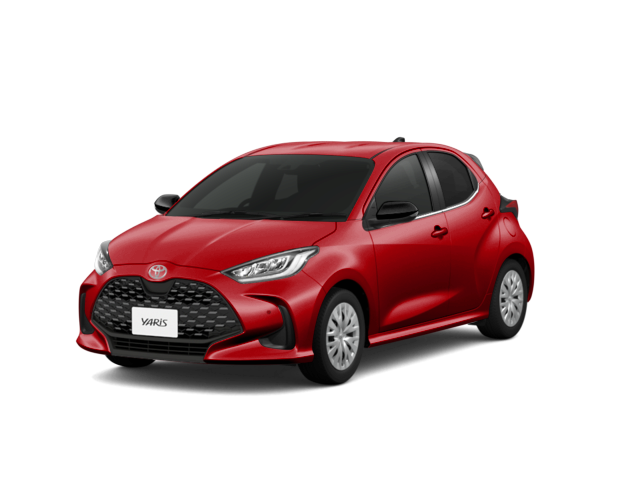
Everything you need to know about Japan's most popular compact hatchback — grades, features, prices, and which one to buy or import.
Overview: Why the Toyota Yaris 1.0L Matters
The Toyota Yaris (ヤリス) is Japan's best-selling compact hatchback. Since 2020, it replaced the long-running Vitz nameplate and was built on Toyota's brand-new TNGA GA-B platform — the first compact car in Japan to use this architecture. The result is a car with a much lower centre of gravity, stiffer body, and sharper handling than the Vitz it replaced.
While the Yaris is available with a 1.5L petrol engine and a 1.5L hybrid system, the 1.0L variant is the entry point to the lineup. It pairs a refined three-cylinder engine with a lightweight CVT and keeps the car within Japan's compact-car dimension regulations (under 1,695 mm wide), making it especially suited for tight city streets. It is exclusively offered with front-wheel drive and CVT.
The Yaris 1.0L Grade Lineup
In the Japanese domestic market (JDM), the Yaris 1.0L petrol engine is only available in two main grades: X and G. The top-spec Z grade is not offered with the 1.0L engine — it requires the 1.5L petrol or hybrid powertrain. Here is an at-a-glance overview of what each grade means:
- 1.0L · CVT · 2WD · 5-seat
- Base specification
- Full Toyota Safety Sense
- 8-inch Display Audio
- Steel wheels (15-inch)
- Halogen projector headlamps
- 1.0L · CVT · 2WD · 5-seat
- Upgrades over X
- Full Toyota Safety Sense
- 8-inch Display Audio
- 16-inch alloy wheels
- Full LED headlamps
- Leather-wrapped steering
- 1.5L petrol or Hybrid only
- Not available with 1.0L
- 16-inch alloy wheels
- Leather-wrapped steering + heater
- Front soft armrest
- Rear roof spoiler
- Hot-stamp front grille
The price gap between the 1.0L X and 1.0L G is approximately ¥224,400 — a significant jump, but one that brings a meaningful equipment upgrade. Both grades are front-wheel drive only, paired exclusively with the CVT.
Feature Comparison: Yaris X vs G (1.0L)
The table below compares the two 1.0L grades directly, based on Toyota Japan's official grade comparison document. The Z grade is included for reference, noting it requires the 1.5L engine.
| Feature | X 1.0L CVT |
G 1.0L CVT |
Z 1.5L only |
|---|---|---|---|
| POWERTRAIN | |||
| Engine | 1.0L 3-cyl | 1.0L 3-cyl | 1.5L 3-cyl |
| Transmission | CVT | CVT | CVT or 6MT |
| Drive | 2WD | 2WD | 2WD or 4WD |
| EXTERIOR | |||
| Headlamps | Projector Halogen | Full LED (3-lamp) | Full LED (3-lamp) |
| Rear combination lamps | Standard | Full LED | Full LED |
| Wheel size | 15-inch steel | 16-inch alloy | 16-inch alloy |
| Tyre size | 175/70R14 or 185/60R15 | 185/55R16 | 185/55R16 |
| Rear roof spoiler | ✗ | ✗ | ✓ |
| Front grille (hot stamp) | ✗ | ✗ | ✓ |
| Satin chrome door belt moulding | ✗ | ✗ | ✓ |
| INTERIOR | |||
| Steering wheel | Urethane 3-spoke | Leather-wrapped | Leather + heater |
| Shift knob | Standard | Leather-wrapped | Leather-wrapped |
| Instrument cluster | Analogue + 4.2" TFT colour MID | Analogue + 4.2" TFT colour MID | Digital + 7.0" TFT colour MID |
| Front door inner garnish | Black | Black | Gun metallic |
| Front console | Black | Black | Gun metallic |
| Front soft armrest (console box) | ✗ | ✗ | OPT |
| TECHNOLOGY | |||
| 8-inch Display Audio (Apple CarPlay / Android Auto) | ✓ | ✓ | ✓ |
| Toyota Safety Sense (TSS) | ✓ | ✓ | ✓ |
| T-Connect (5 years free) | ✓ | ✓ | ✓ |
| Smart entry & push-start | ✗ | OPT | ✓ |
| Auto air conditioning | Manual A/C | OPT | ✓ |
| Panoramic View Monitor | ✗ | OPT | OPT |
✓ = Standard | ✗ = Not available | OPT = Available as option | Data source: Toyota Japan grade comparison PDF, February 2026.
Engine & Technical Specifications
Both the X and G grades with the 1.0L share identical mechanical underpinnings. The differences between grades are purely in equipment and trim, not in performance.
| Specification | Detail |
|---|---|
| Engine type | 1KR-VE — 1.0L inline 3-cylinder DOHC |
| Displacement | 998 cc |
| Power output | Approximately 69 PS (51 kW) @ 6,000 rpm |
| Torque | Approximately 92 Nm @ 4,200 rpm |
| Transmission | CVT (Continuously Variable Transmission) |
| Drive system | Front-wheel drive (2WD) only |
| Fuel type | Regular (91 RON) unleaded petrol |
| Fuel economy (WLTC) | Approximately 19–20 km/L combined |
| Platform | TNGA GA-B |
| Body style | 5-door hatchback |
| Dimensions (L×W×H) | 3,940 × 1,695 × 1,500 mm |
| Wheelbase | 2,550 mm |
| Kerb weight | Approx. 870–900 kg |
| Seating capacity | 5 passengers |
| Fuel tank | 32 litres |
Safety Technology — Standard Across All Grades
One of the Yaris's strongest selling points is that Toyota Safety Sense (TSS) comes as standard equipment on every single grade, including the entry-level X 1.0L. This is not the case with many competitors who reserve advanced safety technology for higher trims. The TSS suite on the current Yaris includes:
Detects vehicles, pedestrians, and cyclists — including at night. Alerts the driver and applies emergency braking.
Monitors lane markings and warns the driver when the vehicle drifts unintentionally.
Switches between high and low beam automatically based on oncoming traffic conditions.
Maintains a set speed and distance from the vehicle ahead on motorways and open roads.
Added in the 2024 facelift — provides subtle deceleration support ahead of curves and slow-moving traffic.
Prevents sudden acceleration in car parks — particularly useful for older drivers and tight manoeuvres.
The Yaris achieved a 5-star Euro NCAP rating, which is a reflection of the safety architecture inherited by all variants including the 1.0L.
Key Differences Between X and G (1.0L) — Explained
1. Headlamps: Halogen vs Full LED
The most visible difference between X and G is the headlamp system. The X grade uses projector-type halogen headlamps, which provide adequate but not exceptional illumination. The G grade upgrades to three-lamp full LED headlamps with LED turn signals and LED daytime running lights. LED headlamps produce significantly whiter, brighter light — improving visibility at night and enhancing the car's aesthetic presence. The rear combination lamps also become full LED on the G grade.
2. Wheels: Steel vs Alloy
The X grade rides on 15-inch steel wheels with plastic wheel covers. These are durable and easy to repair, but add weight and look utilitarian. The G grade steps up to 16-inch machined alloy wheels with a black paint accent — a meaningful upgrade that improves kerb appeal and very slightly reduces unsprung weight.
3. Steering Wheel & Shift Knob
The X comes with a standard urethane (plastic) steering wheel and a basic shift knob. The G wraps both in genuine leather, making the cabin feel noticeably more premium on a daily basis. The Z takes this further with a leather-wrapped steering wheel that also includes a steering heater — though again, this is not available on the 1.0L engine.
4. Instrument Cluster
Both the X and G 1.0L share the same analogue instrument cluster with a 4.2-inch TFT colour multi-information display. If you want the full digital instrument panel (7.0-inch TFT), you will need to move to the Z grade — and accept the 1.5L engine that goes with it.
5. Interior Trim & Finish
The G receives more refined cabin trim compared to the X, including higher-quality door garnishes and console finishing details. The overall visual quality of the interior is more cohesive in the G, making longer journeys more pleasant. The X is honest and functional but noticeably plainer inside.
6. Connected Technology: Same Core, Different Options
Both grades come with the same 8-inch Display Audio touchscreen supporting Apple CarPlay and Android Auto wired connectivity, plus five years of Toyota's T-Connect telematics service. Smart entry and push-button start, and automatic air conditioning, are available as options on the G but are not included as standard — and are not available at all on the X.
7. Fuel Economy: Identical
Since both X and G share the same 1.0L engine and CVT, their fuel economy figures are effectively the same — around 19–20 km/L on the WLTC cycle. The lighter weight of the X (due to steel wheels) does not produce a meaningful difference in real-world consumption.
Which Grade Should You Buy?
🏙 Best for City Driving / Value
Choose the X 1.0L if you want the lowest purchase cost, low running expenses, and Toyota's full safety suite. Perfect for urban commuting and drivers who prioritise practicality over premium feel. At ¥1,697,300, it undercuts many rivals while still offering TSS and Display Audio as standard.
⭐ Best All-Round Choice
Choose the G 1.0L if you spend meaningful time in the car. The full LED headlamps alone justify part of the ¥224,400 price difference — improved night visibility is a genuine safety benefit. Add leather steering, alloy wheels, and LED rear lamps, and the G is the better daily companion. Most private buyers and importers opt for the G for this reason.
The Z grade, while the most desirable in terms of equipment, is not a choice for 1.0L buyers. If the premium interior trim, digital dash, steering heater, and hot-stamp grille of the Z are important to you, budget for the 1.5L engine — and you gain 4WD availability as a bonus.
Importing a Toyota Yaris 1.0L to Your Country
The Toyota Yaris 1.0L is one of the most popular JDM compact cars in the export market, particularly in countries across Africa, the Middle East, the Caribbean, and parts of Asia. Here is what matters when importing one:
Why the 1.0L is Popular for Export
The small engine displacement qualifies for lower import duty in many countries that tax by engine size. It also means lower road tax and insurance costs, and the regular-fuel requirement makes ownership simple. The car's light weight (under 900 kg) and compact dimensions are practical advantages in markets with narrow or congested roads.
Auction Grades to Look For
When sourcing at Japanese auction, look for Yaris 1.0L units with an auction grade of 4 or above for good interior and exterior condition. Mileage is typically low given the urban use profile of this car — units with under 30,000 km are common. The G grade commands a modest premium over the X at auction, reflecting its equipment and desirability.
Checking a Yaris Before You Buy
Before committing to any import purchase, always run a full vehicle history and specification check. At JPChecker.com, you can verify a Japanese vehicle's genuine grade, option history, accident record, and export compliance using the chassis number — before you pay a deposit.
🔍 Check Any Toyota Yaris Before You Import
Use JPChecker.com to verify chassis history, grade confirmation, mileage, and accident records for any JDM vehicle. Takes less than 60 seconds.
Run a Free Vehicle Check →