Honda N-WGN Grade Guide: G vs L vs Custom — Every Difference Explained
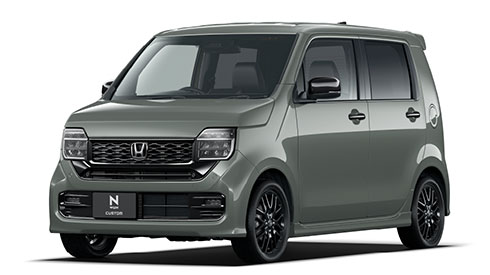
Japan's most driver-friendly kei wagon, fully decoded. Grades, Honda SENSING, the revolutionary center-tank layout, turbo vs NA — and which N-WGN to buy or import.
What Is the Honda N-WGN?
The Honda N-WGN (pronounced "N-Wagon") is Japan's answer to the question: what if a kei car truly prioritised its passengers? Built around Honda's revolutionary center-tank layout — which places the fuel tank beneath the front seats rather than under the rear — the N-WGN achieves a flat, low floor that creates class-leading interior space and one of the easiest cabin access experiences in the kei segment.
It is a strictly Japanese domestic market (JDM) model, never sold new in any other country. Since 2013 it has been one of Japan's top-selling kei wagons, competing directly with the Suzuki Spacia and Daihatsu Move. The N-WGN is particularly popular with older drivers, families, and urban commuters who prioritise interior comfort, ease of access, and safety technology over sportiness or SUV styling.
The current model is the second generation (JH3/JH4), launched in 2019 and facelifted in September 2022. All current N-WGN models come with Honda SENSING — Honda's full suite of active safety and driver assistance — as standard equipment across every grade.
The Honda N Series — Where N-WGN Fits
The N-WGN is part of Honda's "N Series" of kei vehicles, each designed around a specific use case and customer profile. The "N" stands for New, Next, Nippon, and Norimono (vehicle). Understanding where the N-WGN sits in this lineup helps set expectations for the type of vehicle it is.
The N-WGN occupies a distinctive space: it is more refined and driver-comfortable than the N-BOX, more practical than the N-ONE, and more lifestyle-oriented than the N-VAN. Its tagline since the 2019 redesign has been "New Simple!" — reflecting Honda's commitment to removing complexity and focusing on what matters most in daily life.
Generations & Key Updates
The N-WGN has been through two generations and multiple revisions since its 2013 debut. Here is the quick history buyers need to know:
| Year | Event | Key Change |
|---|---|---|
| Nov 2013 | 1st Generation launch (JH1/JH2) | Center-tank layout, sliding rear seat, N Series debut |
| Jul 2016 | 1st Gen facelift | New grille, updated Custom design |
| Aug 2019 | 2nd Generation launch (JH3/JH4) | Honda SENSING standard on all grades, electric parking brake, telescopic steering, bicycle CMBS first in kei class |
| Sep 2022 | 2nd Gen facelift (current) | Turbo engine removed from standard N-WGN (Custom only), new Custom honeycomb grille, side markers moved to mirrors on L grade |
The Full Grade Lineup
The N-WGN is offered in two distinct bodies — the standard N-WGN and the sportier-styled N-WGN Custom — each with their own grade structure. Both bodies use the same mechanical platform, but they target different buyers with different interior and exterior personalities.
Standard N-WGN — Friendly, Practical, Everyday
- 660cc NA S07B engine
- CVT · 2WD or 4WD
- Honda SENSING (standard)
- Halogen headlamps
- Steel wheels
- Manual air conditioning
- Sliding rear seat
- Flat cargo floor
- 660cc NA S07B engine
- CVT · 2WD or 4WD
- Honda SENSING (standard)
- LED headlamps
- 14-inch alloy wheels
- Auto air conditioning
- Keyless smart entry
- Push-button start
- Rear camera standard
N-WGN Custom — Sharp, Premium, Urban
- 660cc NA engine · CVT
- 2WD or 4WD
- Honda SENSING standard
- Full LED headlamps
- 15-inch alloy wheels
- Honeycomb grille (post-2022)
- Auto climate control
- Keyless entry + push-start
- Black premium interior
- 660cc turbo S07B engine · CVT
- 2WD or 4WD
- All Custom L features, plus:
- 64 PS / 104 Nm torque
- Paddle shifters
- Unique turbo badging
- The only current turbo N-WGN
Feature Comparison: All Grades
| Feature | G NA |
L NA |
Custom L NA |
Custom L Turbo TC |
|---|---|---|---|---|
| POWERTRAIN | ||||
| Engine | 660cc NA | 660cc NA | 660cc NA | 660cc Turbo |
| Power | 58 PS | 58 PS | 58 PS | 64 PS |
| Torque | 65 Nm | 65 Nm | 65 Nm | 104 Nm |
| 4WD option | ✓ | ✓ | ✓ | ✓ |
| Paddle shifters | ✗ | ✗ | ✗ | ✓ |
| EXTERIOR | ||||
| Headlamps | Halogen | Full LED | Full LED | Full LED |
| Wheels | Steel (13-in) | Alloy (14-in) | Alloy (15-in) | Alloy (15-in) |
| Front grille style | Friendly / round | Friendly / round | Honeycomb bold | Honeycomb bold |
| Body style | Standard | Standard | Custom | Custom |
| Two-tone colour | ✗ | ✗ | OPT | OPT |
| INTERIOR | ||||
| Interior colour | Ivory / beige | Ivory / beige | Black premium | Black premium |
| Air conditioning | Manual | Auto climate | Auto climate | Auto climate |
| Keyless smart entry | ✗ | ✓ | ✓ | ✓ |
| Push-button start | ✗ | ✓ | ✓ | ✓ |
| Sliding rear seat | ✓ | ✓ | ✓ | ✓ |
| Rear seat tray storage | ✓ | ✓ | ✓ | ✓ |
| Telescopic & tilt steering | ✓ | ✓ | ✓ | ✓ |
| Driver seat height adjust | ✓ | ✓ | ✓ | ✓ |
| Electric parking brake | ✓ | ✓ | ✓ | ✓ |
| TECHNOLOGY & SAFETY | ||||
| Honda SENSING (full suite) | ✓ | ✓ | ✓ | ✓ |
| Rear parking sensors | ✓ | ✓ | ✓ | ✓ |
| Rear camera | ✗ | ✓ | ✓ | ✓ |
| Honda Connect (display audio) | OPT | OPT | OPT | OPT |
| Auto brake hold | ✓ | ✓ | ✓ | ✓ |
| Vehicle Stability Assist (VSA) | ✓ | ✓ | ✓ | ✓ |
✓ = Standard | ✗ = Not available | OPT = Available as option | Dark columns = N-WGN Custom grades | Reference prices based on Honda Japan manufacturer's suggested retail pricing at model launch; actual prices set independently by dealers.
The Center-Tank Layout — Honda's Space-Making Masterstroke
🔧 Why the N-WGN's Floor Is So Low
Most kei cars place the fuel tank beneath the rear seats. Honda's patented center-tank layout places it under the front seats instead. This radical repositioning creates a completely flat, low rear floor — enabling easier entry and exit, a more comfortable seating position, and more usable cargo space than any conventional layout kei wagon can achieve.
Conventional Kei Layout
Fuel tank under rear seats → raised floor → stepped floor → harder rear entry → less flat cargo space
Honda Center-Tank Layout
Fuel tank under front seats → completely flat rear floor → low load height → easy entry → maximum flat cargo space
The center-tank layout is shared across the entire Honda N Series and represents Honda's most significant engineering contribution to the kei car segment. In the N-WGN, it works in combination with a sliding rear seat — which can travel 200 mm forward or backward — giving occupants complete control over whether they prioritise rear legroom or cargo space at any time.
The cargo space floor was designed with a lowered ground height on the tailgate opening, making it easier to load heavy items. A two-level cargo board further allows the space to be divided into upper and lower sections for flexible organisation.
Honda SENSING — Standard on Every Single Grade
When Honda launched the second-generation N-WGN in 2019, it made a commitment that set the car apart from its competitors: Honda SENSING active safety technology would be fitted as standard to every grade, without exception. The N-WGN was also the first kei vehicle in Japan to include a Collision Mitigation Braking System capable of detecting a bicycle cutting across the vehicle's path — a milestone in mini-vehicle safety.
NA vs Turbo Engine — What Changed After the 2022 Facelift
This is the most important thing to understand about the current N-WGN lineup: since the September 2022 facelift, the turbocharged engine is exclusively available in the N-WGN Custom. The standard N-WGN range — G and L grades — is naturally aspirated only.
Both engines are Honda's S07B inline-3 unit built on the current platform, sharing the same block and CVT transmission. The key differences are:
| Specification | S07B NA (G, L) | S07B Turbo (Custom L Turbo) |
|---|---|---|
| Displacement | 658 cc | 658 cc |
| Power output | 58 PS @ 7,300 rpm | 64 PS @ 6,000 rpm |
| Torque | 65 Nm @ 4,800 rpm | 104 Nm @ 2,600 rpm |
| Torque advantage | — | 60% more torque |
| Fuel economy (WLTC) | ~21–23 km/L | ~19–21 km/L |
| Available grades | N-WGN G, N-WGN L | N-WGN Custom L Turbo only |
The turbo engine's torque arrives much lower in the rev range — at 2,600 rpm versus 4,800 rpm for the NA. This means the turbo feels effortlessly strong in everyday urban driving without needing to rev hard, and it is significantly more composed on motorways and in merging situations. For any buyer planning regular expressway use or carrying four adults, the turbo Custom is worth budgeting for.
Key Differences Between Standard N-WGN Grades
1. Headlamps: Halogen (G) vs Full LED (L)
The entry G grade uses halogen headlamps. The L grade upgrades to full LED headlamps, which produce significantly brighter, whiter light and consume less power. This is the most immediately noticeable difference between the two standard grades, both on the road at night and in terms of visual kerb appeal. LED headlamps are standard on all Custom grades as well.
2. Wheels: Steel 13-inch (G) vs Alloy 14-inch (L)
The G grade runs on 13-inch steel wheels with plastic hubcaps. The L upgrades to 14-inch alloy wheels, while the Custom L and Custom L Turbo use larger 15-inch alloys. The alloy wheels are lighter, better-looking, and slightly improve ride quality by reducing unsprung weight.
3. Air Conditioning: Manual (G) vs Auto Climate (L and above)
The G grade has manual air conditioning — you set temperature and fan speed via separate dials. The L and all Custom grades have fully automatic climate control, which maintains a set cabin temperature automatically. For buyers in warm markets where the air conditioning runs constantly, auto climate control is a meaningful quality-of-life upgrade.
4. Keyless Entry and Push-Button Start
The G grade requires the physical key to unlock and start the car. The L and all Custom grades include smart keyless entry and push-button ignition — approach with the key in your pocket, touch the door handle to unlock, press the button to start. Most buyers consider this standard in a modern vehicle and it is the second most common reason buyers step up from G to L.
5. Rear Camera
A reversing camera is not included on the G grade but comes fitted as standard on the L. Combined with the rear parking sensors that are standard on all grades, the L provides a noticeably better rear visibility experience when manoeuvring — important for urban parking.
6. Interior Colour Scheme: Warm Beige (N-WGN) vs Black Premium (Custom)
The standard N-WGN uses an ivory and beige interior colour scheme — warm, light, and spacious-feeling. The N-WGN Custom has a black base interior with titanium-look metallic garnishes — darker, sharper, and more premium-feeling. This is not a grade difference within the N-WGN but a body variant distinction. Buyers choose between the two as a lifestyle preference.
7. Sliding Rear Seat — Standard on Every Grade
One of the N-WGN's most celebrated features is its 200 mm sliding rear seat, which allows passengers to choose between maximum rear legroom and maximum cargo space. This feature is fitted to every grade — G, L, and all Custom variants — without exception. On the G grade, this means a buyer at the lowest price point still gets Honda's signature space flexibility.
N-WGN vs N-WGN Custom — Two Different Cars
The N-WGN and N-WGN Custom share the same platform, engines, dimensions, and Honda SENSING safety suite. But they are designed for genuinely different buyers and should be thought of as separate models with different personalities rather than simply a higher and lower trim.
| Aspect | N-WGN | N-WGN Custom |
|---|---|---|
| Design theme | "Friendly, simple, trusted" | "Bold, premium, urban presence" |
| Headlamp style | Round, soft expression | Sharp, angular, detailed |
| Front grille | Friendly two-bar style | Honeycomb mesh (since 2022 facelift) |
| Bumper design | Simple, body-coloured | Bold lower bumpers emphasising width |
| Interior colour | Ivory / light beige | Black with titanium-look garnishes |
| Turbo engine option | Not available (post-2022) | Yes — Custom L Turbo |
| Wheel size | 13–14 inch | 15 inch |
| Typical buyer | Families, seniors, daily commuters | Urban professionals, style-conscious buyers |
Full Technical Specifications
| Specification | Detail |
|---|---|
| Model code | JH3 (2WD) / JH4 (4WD) |
| Generation | 2nd generation (2019–), facelifted Sep 2022 |
| Body style | 5-door kei tall wagon hatchback |
| Seating | 4 passengers |
| NA engine | S07B · 658cc inline-3 DOHC · 58 PS / 65 Nm |
| Turbo engine | S07B Turbo · 658cc inline-3 DOHC TC · 64 PS / 104 Nm |
| Transmission | CVT |
| Drive options | 2WD (FF) or 4WD (i-4WD) |
| Dimensions (L×W×H) | 3,395 × 1,475 × 1,675 mm (2WD) / 1,695 mm (4WD) |
| Wheelbase | 2,520 mm |
| Kerb weight (2WD NA) | 820–840 kg |
| Kerb weight (4WD NA) | 860–890 kg |
| Fuel type | Regular (91 RON) unleaded petrol |
| Fuel economy NA (WLTC) | ~21–23 km/L |
| Fuel economy Turbo (WLTC) | ~19–21 km/L |
| Fuel tank | 27 litres |
| Platform | Shared with N-BOX (centre-tank layout) |
| Rear seat slide range | 200 mm forward / backward |
| Cargo floor access height | Lowered tailgate opening for easier heavy load access |
Which Grade Should You Buy or Import?
🏙 Best for Budget / Basic Daily Use
Choose the N-WGN G for the lowest purchase price while still getting Honda SENSING, the sliding rear seat, flat floor, electric parking brake, and auto brake hold as standard. A remarkable amount of technology for the money. The main trade-offs are halogen headlamps, steel wheels, manual A/C, and no keyless entry.
⭐ Best All-Round Choice — Most Popular Grade in Japan
Choose the N-WGN L for the best everyday experience. Full LED headlamps, alloy wheels, auto climate control, keyless entry, push-button start, and rear camera make it a significantly more refined daily companion. The price step from G to L is well justified for anyone spending real time in the car.
🚀 Best for Style + Performance
Choose the N-WGN Custom L Turbo if you want the sharpest styling, the most powerful engine, and the most premium interior. The turbo's 104 Nm makes it genuinely confident on motorways and in hilly terrain. It is the only current N-WGN with a turbocharged engine. Be aware the dark interior and bold styling are not for everyone.
Importing a Honda N-WGN
The N-WGN is an increasingly popular import choice across sub-Saharan Africa, the Pacific Islands, the Caribbean, and parts of Southeast Asia. It offers a combination of refinement, safety technology, and ease of access that stands out from other kei wagons in the export market.
Why the N-WGN Exports Well
The sliding rear seat, flat floor, and low tailgate entry height make the N-WGN exceptionally practical for multi-passenger use in any climate. Honda SENSING on every grade means even the cheapest import carries a comprehensive suite of active safety technology — far ahead of what most vehicles at this price point offer in export markets. The small 660cc engine attracts low import duty in many countries and runs on regular-grade fuel.
Knowing Your Generation at Auction
Pre-2022 N-WGN models (JH3/JH4, 2019–2022) may still have the turbocharged option on the standard L grade. After September 2022, only the Custom carries the turbo. When sourcing a turbo unit, check the auction sheet and chassis number carefully to confirm the engine specification. A pre-facelift L Turbo is a different vehicle from a post-facelift Custom L Turbo.
N-WGN vs N-WGN Custom at Auction
Both body styles appear under the N-WGN name at auction. The Custom commands a modest premium and sells faster in export markets due to its more assertive styling. Look for auction grades of 4 or above for good overall condition. Mileage under 40,000 km is very common given the car's city-use profile. Always run a chassis number check before bidding to confirm grade, body type, and engine specification.
🔍 Verify Any Honda N-WGN Before You Import
Confirm grade, body type (standard vs Custom), engine (NA vs Turbo), mileage, and full vehicle history using the chassis number — instantly at JPChecker.com.
Run a Free Vehicle Check →