Suzuki Alto Grade Guide: A vs L vs Hybrid S vs Hybrid X — All Differences Explained
Japan's most affordable kei car — fully decoded. The 9th generation Alto's four grades, class-leading 28.2 km/L fuel economy, mild hybrid system, and everything importers need to know.
What Is the Suzuki Alto?
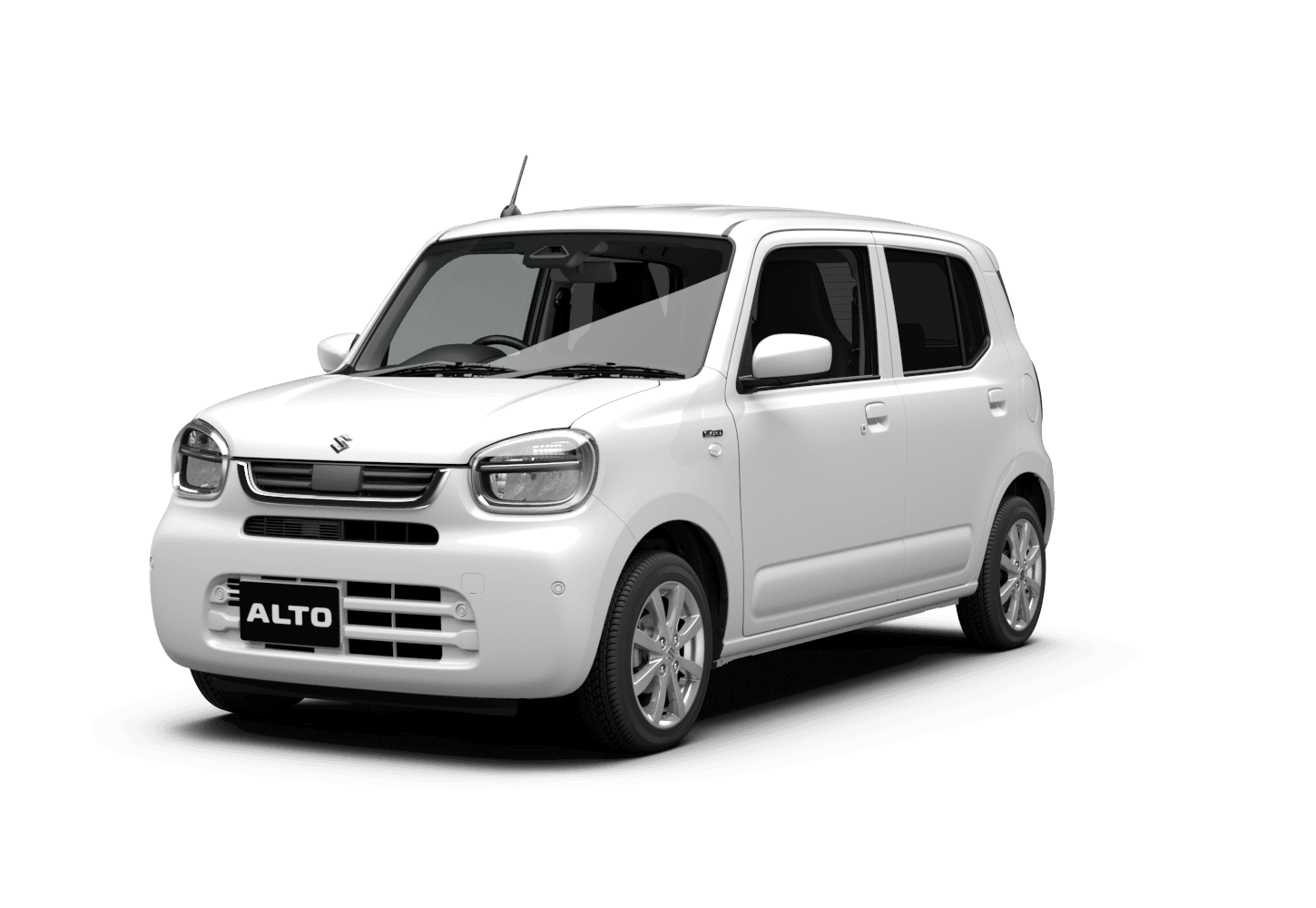
The Suzuki Alto is the car that changed Japan's kei market forever. When it launched in May 1979 at just ¥470,000 — making it by far the cheapest new car on sale in Japan at the time — it created an entirely new category: the affordable, no-frills personal kei car that ordinary Japanese families could actually afford. That founding mission of accessibility, economy, and ease has guided every generation since, and defines the current 9th generation car above all else.
The 9th generation Alto, launched in December 2021, is the lightest, most fuel-efficient, and most feature-complete Alto ever made. At its best — the Hybrid X grade in 2WD — it achieves a claimed 28.2 km/L on the WLTC cycle, which Suzuki confirms is the best fuel economy figure of any petrol or mild hybrid kei car on sale in Japan as of June 2025. It weighs from just 680 kg, turns in a 4.4-metre radius, and starts from approximately ¥1,142,900 — keeping alive the Alto's 46-year tradition of being Japan's most affordable new kei car.
45 Years of History — Nine Generations
The 9th Generation — What's New
The ninth-generation Alto represents the most comprehensive reinvention of the car since the 1984 second generation. Lead exterior designer Alessandro Di Gregorio of Suzuki's European Design Centre in Italy gave the car a complete visual transformation: where the 8th generation was sharp and angular, the 9th generation is rounded and approachable, with oval design motifs throughout and a more vertical windscreen that increases headroom by 45 mm while improving the sense of spaciousness.
Internally, shoulder room increased by 25 mm and the front door opening was enlarged by 20 mm — making it significantly easier to enter and exit, a deliberate priority for older drivers. Two USB charging ports are standard across the range. The instrument cluster was modernised with a new layout, and the infotainment system received a new 7-inch display (Hybrid X). All of this was achieved while keeping the car's weight at under 700 kg in 2WD non-hybrid form.
Grade Lineup: A, L, Hybrid S, Hybrid X
The 9th generation Alto is offered in four grades that divide clearly into two groups: the A and L grades use the naturally aspirated R06A engine (no hybrid), while the Hybrid S and Hybrid X grades use the new R06D engine with the ISG mild hybrid system. All grades are CVT-only, and all are available in 2WD (FF) or 4WD.
- 660cc R06A NA engine
- CVT · 2WD or 4WD
- Suzuki Safety Support (standard)
- 6 airbags standard
- 13-inch steel wheels
- Halogen headlamps
- Manual air conditioning
- 2 USB ports
- Fuel economy: ~25.2 km/L WLTC
- 660cc R06A NA engine
- CVT · 2WD or 4WD
- All A features, plus:
- Auto air conditioning
- Keyless push-start entry
- Rear camera (optional)
- Additional colour options
- Fuel economy: ~25.2 km/L WLTC
- 660cc R06D + ISG mild hybrid
- CVT · 2WD or 4WD
- EV creep capability
- Suzuki Safety Support (standard)
- LED headlamps
- Auto air conditioning
- Keyless push-start
- Fuel economy: ~27.7 km/L WLTC
- 660cc R06D + ISG mild hybrid
- CVT · 2WD or 4WD
- All Hybrid S features, plus:
- Head-up display
- Traffic sign recognition
- 14-inch alloy wheels
- Two-tone paint available
- 7-inch infotainment screen
- Fuel economy: 28.2 km/L WLTC
Full Feature Comparison Table
| Feature | A NA · CVT |
L NA · CVT |
Hybrid S ISG · CVT |
Hybrid X ISG · CVT · Top |
|---|---|---|---|---|
| POWERTRAIN | ||||
| Engine | R06A NA | R06A NA | R06D + ISG | R06D + ISG |
| Mild hybrid (ISG) | ✗ | ✗ | ✓ | ✓ |
| Transmission | CVT | CVT | CVT | CVT |
| 4WD option | ✓ | ✓ | ✓ | ✓ |
| EV creep mode | ✗ | ✗ | ✓ | ✓ |
| Fuel economy (WLTC 2WD) | ~25.2 km/L | ~25.2 km/L | ~27.7 km/L | 28.2 km/L |
| EXTERIOR | ||||
| Headlamps | Halogen | Halogen | Full LED | Full LED |
| Wheels | 13-in steel | 13-in steel | 13-in steel | 14-in alloy |
| Two-tone paint | ✗ | ✗ | ✗ | ✓ |
| Adjustable halogen angle (5-level) | ✓ | ✓ | LED auto-level | LED auto-level |
| INTERIOR & CONVENIENCE | ||||
| Air conditioning | Manual A/C | Auto climate | Auto climate | Auto climate |
| Keyless smart entry | ✗ | ✓ | ✓ | ✓ |
| Push-button start | ✗ | ✓ | ✓ | ✓ |
| USB ports (×2) | ✓ | ✓ | ✓ | ✓ |
| Head-up display | ✗ | ✗ | ✗ | ✓ |
| 7-inch infotainment screen | ✗ | ✗ | ✗ | ✓ |
| Rear camera | ✗ | OPT | OPT | ✓ |
| SAFETY | ||||
| Suzuki Safety Support | ✓ | ✓ | ✓ | ✓ |
| 6 airbags | ✓ | ✓ | ✓ | ✓ |
| Dual Sensor Brake Support | ✓ | ✓ | ✓ | ✓ |
| Lane departure warning | ✓ | ✓ | ✓ | ✓ |
| Rear obstacle detection | ✓ | ✓ | ✓ | ✓ |
| Traffic sign recognition | ✗ | ✗ | ✗ | ✓ |
| High beam assist | ✓ | ✓ | ✓ | ✓ |
✓ = Standard | ✗ = Not available | OPT = Available as dealer option | Dark column = Hybrid X top grade. Prices and specifications sourced from Goo-net Exchange (July 2025) and Suzuki official website.
The Mild Hybrid ISG System — How It Works in the Alto
The Hybrid S and Hybrid X grades use Suzuki's R06D engine paired with an ISG (Integrated Starter Generator) mild hybrid system — the same basic architecture used in the Wagon R and Hustler, but specifically tuned for the Alto's ultra-lightweight body to extract maximum fuel economy. The ISG replaces the conventional alternator and starter motor with a combined motor-generator unit.
The result is the 28.2 km/L WLTC figure on the Hybrid X — approximately 12% better than the NA grade's ~25.2 km/L. The lightweight Alto body (from 700 kg for the Hybrid 2WD) amplifies the efficiency gains of the hybrid system more than any other Suzuki model, since there is less mass to move. The lithium-ion battery is positioned to avoid reducing cabin or boot space.
NA vs Mild Hybrid: Which to Choose?
R06A · Naturally Aspirated (A / L grades)
- Displacement: 658 cc inline-3 DOHC
- Power: 46 PS @ 6,500 rpm
- Torque: 55 Nm @ 4,000 rpm
- Transmission: CVT only
- Fuel economy: ~25.2 km/L (WLTC 2WD)
- Kerb weight: 680 kg (A grade 2WD)
- Model code: 3BA-HA37S
- Best for: lowest purchase cost
R06D + ISG · Mild Hybrid (Hybrid S / X grades)
- Displacement: 658 cc inline-3 DOHC
- Power: 49 PS + ISG electric assist
- Torque: 58 Nm + ISG boost
- Transmission: CVT only
- Fuel economy: up to 28.2 km/L (WLTC 2WD)
- Kerb weight: 700 kg (Hybrid S 2WD)
- Model code: 5AA-HA97S
- Best for: running cost efficiency
The ~20 kg weight penalty of the mild hybrid system over the NA is very small, and the fuel economy improvement is significant. For most buyers who will drive the car regularly, the Hybrid grades pay back their premium through fuel savings over a typical ownership period. For buyers on the tightest budget or those who drive very low annual mileage, the A or L grade remains excellent value and still achieves a very respectable ~25 km/L.
The 28.2 km/L Achievement — Japan's Most Fuel-Efficient Petrol Kei Car
The 28.2 km/L figure achieved by the Alto Hybrid X is not a laboratory anomaly — it is the product of a deliberate, systematic weight-reduction and aerodynamic programme combined with the mild hybrid ISG system. Suzuki's official website (suzuki.co.jp) highlights this achievement prominently as the car's primary selling point. Key contributors include a drag-reducing body optimised in a wind tunnel, low-rolling-resistance tyres, a lightweight HEARTECT platform body structure, and an engine management system tuned specifically for the Alto's mass profile.
Real-world economy reported by owners typically ranges from 20–26 km/L depending on driving conditions, with steady highway driving approaching the claimed figure most closely. Urban stop-start driving reduces the figure but the mild hybrid EV creep and engine idle-stop help recover much of this loss versus a conventional NA engine.
Design Philosophy — "Approachable & Safe"
✏️ Designed in Italy, Built for Japan
The 9th generation Alto's exterior was penned by Alessandro Di Gregorio at Suzuki's European Design Centre in Italy. The brief was to create a car that felt approachable, safe, and friendly — deliberately moving away from the angular, tougher look of the 8th generation. Oval design motifs appear throughout: in the headlights, grille, door handles, and interior details. The more vertical windscreen increases not only headroom but also the sense of visibility and safety for drivers of all ages. Suzuki describes the character as conveying "approachability and safety through form."
The taillights were redesigned to a vertical orientation on the sides of the boot lid — a direct homage to the 5th generation Alto's distinctive rear light design. This gives the 9th generation a family-resemblance connection to one of the car's most beloved historical designs while maintaining a thoroughly modern visual presence. Available in up to 12 colour combinations including two-tone options on the Hybrid X grade.
The HEARTECT Platform — Lightweight Without Compromise
The 9th generation Alto continues on Suzuki's HEARTECT platform — the same lightweight, high-rigidity architecture used in the Wagon R, Swift, and Baleno. For the Alto, HEARTECT is particularly important because the car's entire competitive proposition depends on being exceptionally light. The platform achieves its low weight through strategic use of high-tensile steel in critical structural zones while using lighter grades elsewhere.
Suzuki Safety Support — Standard Across All Four Grades
Suzuki Safety Support is standard equipment on every grade of the 9th generation Alto — including the entry-level A grade. This means that even the cheapest new Alto you can buy comes with a comprehensive active safety suite. The 9th generation also added standard fitment of six airbags across all grades — previously, side and curtain airbags were optional on the 8th generation. The main safety features include:
Key Differences Between Grades Explained
1. The Hybrid System — The Most Important Choice
The single biggest decision when buying a 9th generation Alto is whether to choose the NA engine (A or L grade) or the mild hybrid R06D engine (Hybrid S or Hybrid X). The hybrid grades cost approximately ¥155,000–¥270,000 more than their NA counterparts but achieve 10–12% better fuel economy. For buyers who drive regularly — commuting, daily shopping, regular journeys — the Hybrid grades will typically recover this premium in fuel savings over a standard ownership period. For very low-mileage or occasional-use buyers, the NA is the smarter financial choice.
2. Headlamps: Halogen (A / L) vs Full LED (Hybrid S / X)
The A and L grades use halogen headlamps with a 5-level manual adjustment lever. Both Hybrid grades receive full LED headlamps with automatic levelling — brighter, whiter, more energy-efficient, and with a longer service life. LED headlamps are one of the most visible quality differences between the NA and hybrid grades and are a genuine safety benefit on dark rural roads.
3. Wheels: 13-inch Steel (A / L / Hybrid S) vs 14-inch Alloy (Hybrid X)
Three of the four grades — A, L, and Hybrid S — use 13-inch steel wheels with plastic hubcaps. Only the Hybrid X steps up to 14-inch alloy wheels, which reduce unsprung weight and give the car a notably more finished appearance. For buyers who want the Alto's best-looking specification, the Hybrid X is the only option.
4. Head-Up Display and 7-inch Screen — Hybrid X Only
The Hybrid X is uniquely equipped with both a head-up display that projects speed and traffic sign information onto the windscreen, and a 7-inch infotainment touchscreen. No other Alto grade receives either of these features. For buyers who use smartphone navigation daily and want a more connected driving experience, these additions on the Hybrid X make a meaningful difference to everyday use.
5. Two-Tone Paint — Hybrid X Only
Of the 12 possible colour combinations in the Alto range, the two-tone roof options are exclusively available on the Hybrid X. These paired roof-and-body colour combinations give the Alto a considerably more youthful, premium appearance — one of the strongest visual differentiators between the Hybrid X and every other grade.
6. Air Conditioning: Manual (A) vs Auto Climate (L / S / X)
The A grade uses manual air conditioning — separate dials for temperature and fan speed. The L and both Hybrid grades receive fully automatic climate control. Auto climate maintains a set cabin temperature without requiring manual adjustment, which is a genuine daily comfort improvement particularly in markets with hot or variable climates.
7. Keyless Entry — Not on A Grade
The entry A grade uses a conventional key to unlock and start the car. The L, Hybrid S, and Hybrid X all feature keyless smart entry and push-button ignition. For buyers who will use the car every day, this is one of the most appreciated convenience features separating the A from all other grades.
Full Technical Specifications
| Specification | Detail |
|---|---|
| Model codes | 3BA-HA37S (NA · 2WD/4WD) · 5AA-HA97S (Hybrid · 2WD/4WD) |
| Generation | 9th generation, launched December 2021 |
| Platform | HEARTECT (Suzuki lightweight high-rigidity structure) |
| Body style | 5-door kei hatchback |
| Seating | 4 passengers |
| NA engine | R06A · 658cc inline-3 DOHC · 46 PS / 55 Nm |
| Hybrid engine | R06D + ISG · 658cc inline-3 DOHC · 49 PS / 58 Nm + electric assist |
| Transmission | CVT (all grades) — no manual available |
| Drive options | 2WD (FF) or 4WD |
| Dimensions (L×W×H) | 3,395 × 1,475 × 1,525 mm |
| Wheelbase | 2,460 mm |
| Kerb weight — A grade 2WD | 680–690 kg |
| Kerb weight — Hybrid S 2WD | 700 kg |
| Kerb weight — Hybrid X 2WD | 710 kg |
| Kerb weight — 4WD (all hybrid) | 750–760 kg |
| Fuel economy — NA (WLTC 2WD) | ~25.2 km/L |
| Fuel economy — Hybrid S (WLTC 2WD) | ~27.7 km/L |
| Fuel economy — Hybrid X (WLTC 2WD) | 28.2 km/L |
| Fuel type | Regular (91 RON) unleaded petrol |
| Fuel tank | 27 litres |
| Turning radius | 4.4 metres |
| Front suspension | MacPherson strut |
| Rear suspension | Torsion beam (2WD) / isolated trailing link (4WD) |
| Airbags | 6 standard — dual front + front side + full curtain (all grades) |
| Colour options | Up to 12 combinations (two-tone available on Hybrid X only) |
Which Grade Should You Buy or Import?
💴 Best for Lowest Purchase Price / Basic Daily Transport
Choose the A grade if your absolute priority is the lowest possible purchase cost. You still get Suzuki Safety Support, 6 airbags, two USB ports, a 4.4-metre turning circle, and the HEARTECT platform. The A grade is the purest expression of the Alto's founding philosophy: the maximum practicality and safety for the minimum price.
⭐ Best All-Round Choice — Most Popular Grade
Choose the Hybrid S for the best balance of price, fuel economy, and daily comfort. LED headlamps, auto climate, keyless entry, and the ISG mild hybrid system delivering ~27.7 km/L make it a significantly more complete car than the A or L. For most private buyers and importers, the Hybrid S is the recommended sweet spot in the Alto range.
🏆 Best Equipped / Highest Specification
Choose the Hybrid X for the complete Alto experience — class-leading 28.2 km/L, 14-inch alloys, head-up display, 7-inch touchscreen, traffic sign recognition, rear camera, and exclusive two-tone paint. It is the most desirable Alto at auction, sells fastest in export markets, and commands the highest resale value. The price premium over the Hybrid S is justified if you want the most complete kei car in Japan's entry segment.
Importing a Suzuki Alto
The Suzuki Alto is one of the most widely exported JDM vehicles in the world. Its combination of low purchase price, exceptional fuel economy, minimal maintenance complexity, and near-universal parts availability makes it one of the safest choices for importers in any market. It is particularly popular across South Asia, East Africa, the Caribbean, and the Pacific.
Why the Alto Exports So Well
The Alto's 660cc engine qualifies for the lowest import duty bracket in most displacement-taxed markets. It runs on regular-grade fuel. It weighs under 700 kg in NA form, reducing shipping costs. The R06A and R06D engines are among the most widely serviced Suzuki engines outside Japan — mechanics from Nairobi to Colombo are more likely to be familiar with an Alto engine than almost any other kei vehicle. The 4.4-metre turning circle makes it manageable in any urban environment.
Hybrid vs NA at Auction
Hybrid units (HA97S) command a premium at auction of approximately ¥100,000–¥200,000 over equivalent NA units (HA37S) of the same age and condition. In fuel-price-sensitive markets, this premium is quickly recovered in running costs. In cost-focused markets, the NA A or L grade offers outstanding value. The Hybrid X commands the highest prices and moves fastest in export.
Identifying Grade at Auction
Model code is the key identifier: HA37S = NA petrol; HA97S = mild hybrid. Check the auction sheet grade listing carefully — A, L, Hybrid S, and Hybrid X are distinct grades with meaningfully different equipment. Verify from the chassis number using JPChecker.com before placing a bid, particularly for Hybrid X units where the head-up display, alloy wheels, and 7-inch screen should be confirmed as fitted.
🔍 Verify Any Suzuki Alto Before You Import
Confirm grade (A / L / Hybrid S / Hybrid X), NA or hybrid specification (HA37S / HA97S), mileage, and full accident history using the chassis number — instantly at JPChecker.com.
Run a Free Vehicle Check →