Which Japanese Vehicles Can You Import to Australia? (2026 SEVS & ROVER Guide)
Quick answer
You can legally import a Japanese vehicle to Australia if it fits one of three pathways:
- The 25-year rule — the vehicle was manufactured 25+ years ago (built in 2001 or earlier as of 2026). No SEVS listing needed.
- The SEVS pathway — the vehicle is under 25 years old, was never sold new in Australia, and appears on the Specialist and Enthusiast Vehicles (SEVs) Register.
- The Personal Import Scheme — you personally owned and used the car overseas for 12+ months and are relocating to Australia permanently.
Every pathway requires an approval lodged through ROVER (Road Vehicle Regulator) before the car is shipped. Skipping this step is the single most expensive mistake JDM importers make.
What is ROVER, and why does it matter?
ROVER is the Australian Department of Infrastructure's online system for administering the Road Vehicle Standards (RVS) legislation, which replaced the older Motor Vehicle Standards Act 1989. It's where every import approval, vehicle type approval, and the SEVs Register itself now live. If a car doesn't have an approved entry pathway logged in ROVER, it cannot be registered for road use in Australia — regardless of how good the auction sheet looks.
From 1 July 2026, ROVER also requires motive power data (petrol, diesel, hybrid, EV, etc.) on every RAV submission for L, M and N category vehicles, so make sure whoever handles your compliance paperwork is including it — missing entries now fail automatically.
The three import pathways, compared
| Pathway | Vehicle age | Must be on SEVS Register? | Best for |
|---|---|---|---|
| 25-Year Rule | 25+ years old (2001 or earlier, as of 2026) | No | Classic JDM icons — R32/R33 Skylines, early Supras, Kei classics |
| SEVS Scheme | Under 25 years old | Yes — must match one of 6 eligibility criteria | Modern performance, rare, or LHD Japanese models not sold new in Australia |
| Personal Import Scheme | No minimum age | No | Individuals moving to Australia who owned the car overseas for 12+ months |
The 25-year threshold is a rolling window — it moves forward one year every year, so a car ineligible today may qualify next year.
Pathway 1: The 25-year rule
This is the most common route for JDM enthusiast imports because it's the simplest:
- No SEVS Register listing required
- No Registered Automotive Workshop (RAW) compliance process required
- Age is calculated from the date of manufacture, not the model year
- The vehicle still needs to be made roadworthy and pass state-level registration inspection
This pathway is why classics like early Nissan Skylines, first-generation Toyota Soarers, and Kei-class collector cars move through Australian import relatively smoothly once they hit the age cutoff.
Pathway 2: The Specialist and Enthusiast Vehicles (SEVS) Scheme
For newer Japanese vehicles, this is where most buyers get tripped up. To qualify, the model must be entered on the SEVs Register under one of six criteria: performance, environmental benefit, left-hand drive, accessibility, historic/limited production, or campervan/motorhome conversion.
Key points:
- Check the model, not just the car. SEVS approval is granted to a specific make/model/variant combination, not to individual vehicles. Two cars with the same badge but different engine or trim specs may not both qualify.
- A RAW must complete compliance work. Vehicles imported under SEVS require certification through a Registered Automotive Workshop before they can be plated and registered.
- Being "on the list" isn't the same as approval to import. ROVER is explicit about this: a SEVs Register entry only confirms the model is eligible — you still need a concessional RAV entry approval for your specific vehicle before it ships.
How to check if your Japanese vehicle model is SEVS-approved
- Go to the official Specialist and Enthusiast Vehicles Register on ROVER.
- Filter by Make, Model, and Model Code (this is the most reliable filter — Japanese chassis/model codes are often more specific than the marketing name).
- Cross-check the Category and Build Date range shown against your target vehicle's actual specs, not just the auction sheet description.
- If it's not listed, it doesn't automatically mean "no" — some models are eligible for a new SEVS application, though this is a longer, separate process with its own evidentiary requirements.
Because the register updates regularly and is filtered live on the government site, always verify a model directly on ROVER before paying a deposit — don't rely on a list you saw in a forum thread or an old blog post.
Pathway 3: The Personal Import Scheme
This one is about the person, not the car. There's no age restriction and no SEVS listing requirement — but you must satisfy every one of the personal eligibility criteria, including having owned and personally used the vehicle overseas for at least 12 consecutive months before relocating permanently to Australia. It's the right pathway for expats and returning residents bringing their own daily driver home, not for buying a fresh auction car specifically to import.
Step-by-step: importing a Japanese vehicle to Australia
- Identify the correct pathway — age of the vehicle and your own circumstances decide this.
- Verify eligibility — check the 25-year cutoff, or search the SEVs Register for the exact model code.
- Apply for approval via ROVER before the vehicle ships. This includes the Vehicle Import Approval (VIA) application fee.
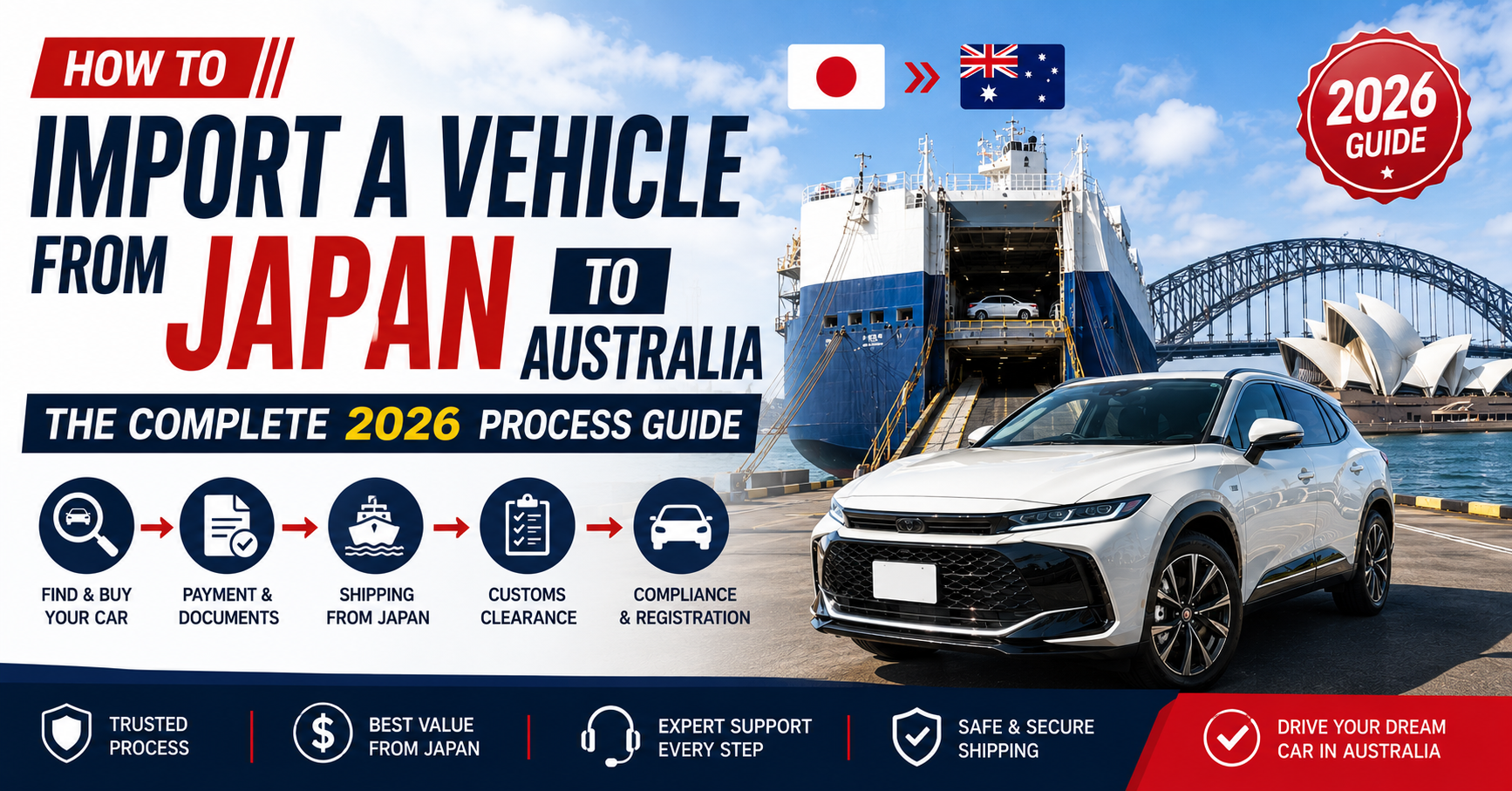
- Arrange shipping and customs clearance. Japanese-built vehicles generally attract 0% customs duty under JAEPA with proof of origin, plus 10% GST on the customs value (vehicle price + freight + insurance), and Luxury Car Tax if applicable above the threshold.
- Complete compliance work through a Registered Automotive Workshop if importing under SEVS.
- Get a roadworthy/compliance inspection, then register the vehicle with your state or territory authority.
FAQs
Can I import any car from a Japanese auction to Australia? No. Only vehicles that fit the 25-year rule, are listed on the SEVs Register, or qualify under the Personal Import Scheme can be legally imported and registered.
Do I need approval before or after shipping the car? Before. ROVER approval must be secured before the vehicle leaves Japan — arriving without it risks costly delays, storage fees, or forced re-export.
Is being on the SEVs Register the same as import approval? No. A SEVs Register listing only confirms the model type is eligible. You still need a separate concessional RAV entry approval for your individual vehicle.
Does the 25-year cutoff change every year? Yes — it's a rolling rule. As of 2026, vehicles manufactured in 2001 or earlier qualify; that threshold advances by one year each year.
Bottom line
Before you bid on a Japanese vehicle, check three things: its exact date of manufacture, whether the specific model and variant appear on the SEVs Register, and whether your own ROVER application is realistic given your timeline. Get those right first, and the rest of the import — shipping, customs, compliance, registration — is a matter of process, not guesswork.
Sources: ROVER — Road Vehicle Regulator, Specialist and Enthusiast Vehicles Register