Understanding Japanese Auction Sheet Formats: A Complete Guide by Auction Company
When importing a vehicle from Japan, the auction sheet is your most crucial document. It provides detailed information about the vehicle's condition, history, and specifications. However, not all auction sheets look the same—each major Japanese auction house has its own unique format and grading system.
In this comprehensive guide, we'll break down the auction sheet formats from Japan's major auction companies to help you make informed decisions when purchasing Japanese used vehicles.
What is a Japanese Auction Sheet?
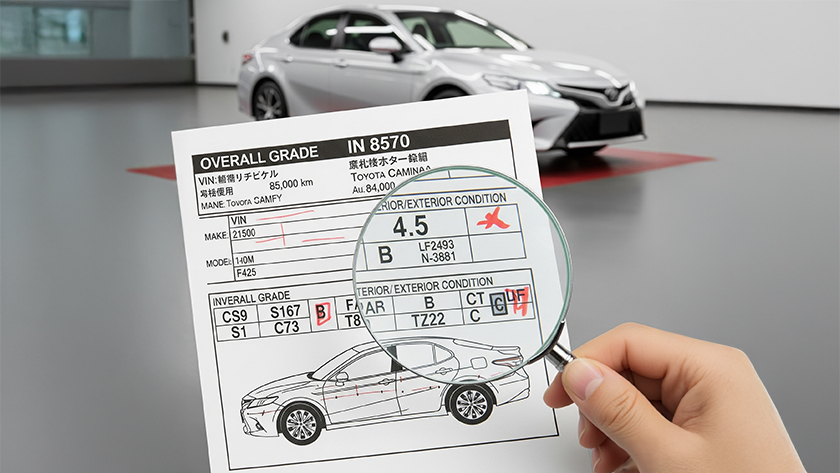
Image: A full Japanese auction sheet with key sections labeled
A Japanese auction sheet (オークションシート) is an official inspection report created by professional inspectors at Japanese auto auctions. These documents contain:
- Vehicle specifications and equipment
- Exterior and interior condition ratings
- Detailed damage maps showing exact locations of imperfections
- Mileage verification with odometer reading
- Service history notes and previous owner information
- Inspector's overall grade and detailed comments
The auction sheet serves as the vehicle's "report card" and is highly trusted due to Japan's strict inspection standards and the independence of auction house inspectors.
Major Japanese Auction Houses and Their Formats
1. USS (United Super Service) Auction
Image: USS auction sheet showing the distinctive USS logo at the top and the grade section
USS is Japan's largest and most prestigious auto auction network, operating multiple auction locations across the country including USS Tokyo, USS Osaka, USS Nagoya, and over 15 other venues.
Key Features of USS Auction Sheets:
- Grading Scale: Uses a comprehensive letter-based system (S, 6, 5, 4.5, 4, 3.5, 3, 2, 1, R, RA)
- Grade S: Nearly new vehicles (typically under 12 months old, less than 10,000 km)
- Grade 6: Excellent condition (like new, minimal use, under 3 years old)
- Grade 4.5-5: Very good condition (minor wear, well-maintained)
- Grade 3.5-4: Average condition (some scratches and wear, most common grade)
- Grade 3: Below average (noticeable scratches, dents, requires bodywork)
- Grade R/RA: Accident repair history (修復歴)
USS Sheet Layout:
- Clean, organized format with vehicle diagram in the center
- USS logo prominently displayed at the top
- Color coding using specific marks (A, U, W, X, XX, etc.) to indicate damage severity
- Special sections for equipment list, interior condition, and undercarriage condition
- Inspector comments typically on the left side of the damage diagram
Image: Close-up of USS vehicle damage diagram with various damage codes marked
USS Damage Notation System:
- A1-A3: Small scratches (increasing size)
- E1-E3: Scratches on exterior panels
- U1-U3: Dents (U1=thumb size, U2=palm size, U3=larger)
- W1-W3: Repair marks (W1=excellent repair, W3=poor quality repair)
- Y1-Y3: Cracks or tears
- X: Panel replaced (properly done)
- XX, XXX: Panel replaced (poor quality repair, multiple panels)
- S1-S3: Rust (increasing severity)
- C: Corrosion
2. JU (Japan Used Motor Vehicle Exporters Association)
 Image: JU Group auction sheet showing simpler format
JU represents a network of smaller, regional auctions across Japan with over 120 locations covering all prefectures.
Key Features of JU Auction Sheets:
- Grading Scale: Similar to USS but may vary slightly between regional locations
- Format: Generally simpler and more straightforward than USS
- Damage Map: Basic vehicle outline with damage markers, less detailed than USS
- Inspector Comments: Often includes more detailed written notes in Japanese
- Local Variations: Different JU branches may have slight format differences based on regional preferences
- Higher Resolution: JU provides 640x480 pixel images compared to the industry average of 300x225
Notable Characteristics:
- More handwritten notes than standardized formats
- Stronger focus on local market preferences
- Good for finding vehicles in specific regions of Japan
3. TAA (Toyota Auto Auction)
Image: TAA auction sheet showing Toyota Auto Auction header and strict grading
TAA specializes in Toyota vehicles but also handles other makes. Established in 1967, it's Japan's oldest auto auction network with 13 venues nationwide.
Key Features of TAA Auction Sheets:
- Grading System: Uses primarily numbers (5, 4, 3, 2, 1, R)
- Grade 5: Excellent condition (nearly perfect)
- Grade 4: Good condition (minor imperfections)
- Grade 3.5: Average condition
- Grade 3: Below average condition (visible wear)
- Grade R: Accident repair history
Important Note on TAA Grading: TAA is known for having one of the strictest grading systems in Japan. A vehicle graded 3.5 at TAA might receive a grade 4 or even 4.5 at other auction houses. This conservative grading provides extra confidence but requires understanding when comparing prices.
TAA Sheet Layout:
- Similar layout to USS but with TAA branding
- Detailed equipment list with focus on Toyota-specific features
- Comprehensive service history section
- Higher quality images (640x480 resolution)
- Very detailed inspector comments
 Image: TAA auction sheet equipment section showing detailed factory options
4. HAA (Hanaten Auto Auction)
Image: HAA auction sheet with handwritten inspector notes
Based in Osaka and Kobe, HAA is known for its strict inspection standards and detailed condition reporting.
Key Features of HAA Auction Sheets:
- Grading System: Alphanumeric (similar to USS, 0-5 scale)
- Strict Grading: Known for being conservative with grades, highly trusted
- Auction Days: Hanaten Osaka (Thursdays), HAA Kobe (Saturdays)
- Detailed Damage Notation: Comprehensive marking system with multiple damage indicators
- Format: Professional layout with clear sections, often includes more handwritten notes
- Mechanical Section: More detailed mechanical condition reporting than some other auctions
- Quality Focus: HAA has a strong reputation for accuracy and reliability
Notable Characteristics:
- Handwritten inspection notes (sometimes harder to read but more detailed)
- Interior grades often conservative (many vehicles graded "B" for interior)
- Strong emphasis on mechanical condition beyond just cosmetic appearance
5. CAA (Chubu Auto Auction)
Image: CAA auction sheet showing detailed comment section
A major auction house based in central Japan (Aichi Prefecture) with four locations running on Tuesdays and Wednesdays.
Key Features of CAA Auction Sheets:
- Grading System: Letter and number combination similar to USS
- Main Location: CAA Chubu in Toyota City (5,000+ vehicles weekly)
- Clear Layout: Easy-to-read format with organized sections
- Equipment Verification: Detailed checking of vehicle features and options
- Regional Strength: Strong presence in Aichi Prefecture near Toyota headquarters
- More Written Comments: CAA sheets tend to include more descriptive text than symbol-heavy formats
Notable Characteristics:
- Additional comments box at the bottom provides extra context
- Good for Toyota and Honda vehicles due to regional connections
- Generally reliable grading standards
6. ARAI/AAAi Oyama Auction
Image: ARAI auction sheet showing commercial vehicle focus
ARAI operates multiple auction sites including locations for passenger cars and commercial vehicles.
Key Features of ARAI Auction Sheets:
- Grading System: Similar to USS (S, 6, 5, 4, 3, 2, 1)
- Locations: Oyama (car auction Thursdays, truck auction Saturdays), Sendai, Fukuoka, Bayside
- Professional Format: Clean, well-organized layout
- Comprehensive Inspection: Thorough checking of all vehicle aspects
- Commercial Focus: Strong in trucks and commercial vehicles
- Multiple Locations: Format consistent across ARAI auction sites
7. Isuzu Auto Auction
Image: Isuzu auction sheet emphasizing commercial vehicle specifications
Specializes in commercial vehicles, trucks, and Isuzu brand vehicles with three locations across Japan.
Key Features of Isuzu Auction Sheets:
- Commercial Focus: Detailed engine hours and transmission inspection
- Work Vehicle Grades: Special grading considerations for commercial use
- Load Capacity Notes: Important specifications for trucks and vans
- Maintenance History: Strong emphasis on service records and fleet maintenance
- 90% Isuzu Brand: Most vehicles are Isuzu make, excellent source for trucks
Understanding Common Elements Across All Formats
Image: Auction sheet with arrows pointing to each major section
Despite differences between auction houses, all Japanese auction sheets share common elements:
1. Vehicle Information Section
Located at the top of the sheet:
- Make, model, and grade/trim level
- Year of manufacture (製造年月)
- First registration date (初年度登録)
- Chassis/VIN number
- Engine code and displacement
- Transmission type (AT/MT/CVT)
- Mileage reading (走行距離)
2. Exterior Condition Map
The central feature of most auction sheets:
- Front, sides, rear, and roof views in diagram form
- Damage markers with severity codes positioned on the diagram
- Paint condition indicators showing repairs or repaints
- Replacement panel notations
Image: Close-up of damage notation with examples of each code type
3. Interior Condition Rating
- Seat condition (A, B, C, D grades where A is best)
- Dashboard and trim condition
- Odor notes (smoke, pets, mildew indicated by symbols)
- Equipment functionality (air conditioning, audio system, etc.)
4. Mechanical Assessment
- Engine condition and operation
- Transmission operation and shifting quality
- Undercarriage condition and rust inspection
- Modification notes (aftermarket parts, engine swaps)
- Timing belt status and service history
5. Equipment List (装備)
Checkboxes or listings for:
- Air conditioning (AC/エアコン)
- Navigation system (ナビ)
- Sunroof/moonroof (サンルーフ)
- Alloy wheels (AW/アルミホイール)
- Power steering (PS)
- Power windows (PW)
- ABS brakes
- Airbags (SRS)
- Leather seats (本革シート)
6. Inspector Comments (検査員コメント)
Critical section containing:
- Special notes about the vehicle's condition
- Accident history mentions (事故歴/修復歴)
- Repair quality assessments
- Unusual wear or damage descriptions
- Recommendations or warnings
- Mileage verification notes
How to Read Damage Codes: Complete Guide
 Image: Visual chart showing damage codes and their meanings with illustrations
Different auction houses use similar but slightly varying damage notation systems. Here's a comprehensive guide:
Scratch and Surface Damage Codes:
- A: Scratch or crack (A1 = tiny/barely visible, A2 = small, A3 = medium/noticeable)
- E: Exterior panel scratches (similar to A but specifically on body panels)
- P: Paint scratch or chip
Dent Codes:
- U: Dent (U1 = tiny/thumb-size, U2 = small/palm-size, U3 = large/noticeable)
Repair and Replacement Codes:
- W: Repair/paint work (W1 = small area/high quality, W2 = medium area/good quality, W3 = large area/poor quality)
- X: Panel replaced (properly done with good fitment)
- XX: Panel replaced with issues (poor fitment, gaps, or color mismatch)
- XXX: Multiple panels replaced or very poor repair
Structural Damage:
- Y: Small crack or tear (Y1 = small, Y2 = medium, Y3 = large)
- S: Rust (S1 = minor surface rust, S2 = moderate rust, S3 = severe rust/holes)
- C: Corrosion (C1 = minor, C2 = moderate, C3 = severe)
Special Notations:
- B: Bumper damage or replacement
- AU: Combination of scratch and dent in same location
- 数字 (Numbers 1-4): Severity modifiers (1=minor, 4=severe)
Location Codes (on diagram):
Damage codes are placed on the vehicle diagram at the exact location of the damage, making it easy to visualize the vehicle's condition.
Tips for Evaluating Auction Sheets
Image: Similar vehicles with different grades from different auctions
1. Compare Grades Across Auctions
- A grade 4 at USS might be stricter than a grade 4 at a smaller regional auction
- TAA grades approximately 0.5 points lower than other auctions for the same condition
- HAA and USS are known for conservative, trustworthy grading
- Regional JU auctions may vary in strictness
2. Look Beyond the Overall Grade
- Always check the damage map and inspector notes, not just the overall grade
- A grade 4 vehicle could have engine issues mentioned in comments
- Interior and exterior grades can differ significantly from overall grade
3. Verify Mileage Authenticity
- Genuine mileage is crucial for accurate valuation
- Look for the $ or * symbol indicating mileage discrepancy
- Check if odometer reading matches service history (車検 shaken records)
- Be wary of suspiciously low mileage on older vehicles
4. Check Accident History Carefully
- Look for "修復歴" (repair history) or "事故歴" (accident history) markings
- XX or XXX codes often indicate accident repairs
- Grade R or RA specifically indicates accident repair
- Read inspector comments for repair quality assessment
5. Understand Regional Differences
- Coastal vehicles (Okinawa, Hokkaido coastal areas) may have more rust
- Snow belt vehicles may have undercarriage corrosion
- Urban vehicles often have more minor parking scratches
- Rural vehicles may have better overall condition but higher mileage
6. Read Inspector Comments Carefully
Japanese inspector notes often contain critical information:
- "エンジン異音" = engine noise
- "ミッション不調" = transmission issues
- "下回り錆" = undercarriage rust
- "修復歴あり" = has repair history
- "ワンオーナー" = one owner
- "禁煙車" = non-smoking vehicle
7. Use Professional Translation
- Japanese auction sheets contain technical terms and abbreviations
- Misunderstanding comments can lead to expensive mistakes
- Professional services like JP Checker provide accurate translations
Comparing Auction Sheet Formats: Quick Reference
| Auction | Grading System | Strictness | Sheet Style | Best For |
|---|---|---|---|---|
| USS | S, 6-1, R, RA | High | Professional, detailed | All vehicles, best overall |
| TAA | 5-1, R | Very High | Toyota-focused | Toyota vehicles, quality priority |
| HAA | 5-1, R | High | Handwritten details | Buyers wanting thorough inspection |
| CAA | Similar to USS | Medium-High | Text-heavy comments | Central Japan vehicles |
| JU | Varies by location | Medium | Simpler format | Regional vehicles, budget-friendly |
| ARAI | S, 6-1 | Medium-High | Professional | Commercial vehicles, trucks |
| Isuzu | Varies | Medium | Commercial focus | Trucks and commercial only |
Why Auction Sheet Verification Matters
Image: Example of JP Checker verification report
At JP Checker, we understand that interpreting Japanese auction sheets can be challenging, especially when dealing with different formats from various auction houses. Our expert verification service helps you:
Our Services Include:
✅ Decode All Auction Formats - We work with USS, TAA, HAA, CAA, JU, ARAI, and all major Japanese auction companies
✅ Professional Translation - Accurate English translation of all inspector comments and technical terms
✅ Grade Verification - Confirm the accuracy of auction grades and identify any discrepancies
✅ Damage Assessment - Detailed explanation of all damage codes and their severity
✅ Authenticity Verification - Ensure your auction sheet is genuine and unaltered
✅ Hidden Issue Detection - Identify potential problems mentioned in inspector notes
✅ Comparative Analysis - Understand how grades compare across different auction houses
✅ Expert Advice - Get professional recommendations on whether a vehicle is a good purchase
Why Choose JP Checker?
- Experience: Years of experience with Japanese auto auctions
- Expertise: Native Japanese speakers with automotive knowledge
- Speed: Fast turnaround on auction sheet verification
- Accuracy: Detailed, accurate translations and assessments
- Coverage: All major auction houses and formats
- Support: Personalized customer service and guidance
Common Auction Sheet Red Flags to Watch For
Image: Highlighted examples of problematic auction sheet markings
Critical Warning Signs:
🚩 Mileage Issues
- $ or * symbol next to mileage
- Comments about "メーター交換" (meter replacement)
- Suspiciously low mileage for vehicle age
🚩 Accident History
- 修復歴 (repair history) marked
- Multiple XX or XXX codes
- Grade R or RA
- Frame damage mentions in comments
🚩 Mechanical Problems
- Engine noise warnings (エンジン異音)
- Transmission issues (ミッション不調)
- Oil leaks (オイル漏れ)
- Starting problems (始動不良)
🚩 Structural Issues
- Severe rust (S3, C3 codes)
- Flood damage mentions (冠水歴)
- Fire damage (火災)
- Frame rust (フレーム錆)
🚩 Legal Issues
- No service history available
- Import documentation problems
- Modified beyond legal limits
Understanding Auction Sheet Authenticity
Image: Side-by-side showing authentic and potentially altered sheets
How to Verify Authenticity:
- Check Official Watermarks: Genuine auction sheets have auction house watermarks or stamps
- Verify Lot Numbers: Cross-reference lot numbers with auction records
- Inspect Print Quality: Authentic sheets have consistent, professional printing
- Compare Format: Ensure the format matches the claimed auction house
- Professional Verification: Use services like JP Checker to confirm authenticity
Common Forgery Attempts:
- Altered grade numbers
- Modified damage diagrams
- Changed mileage readings
- Removed accident history indicators
- Fake auction house logos
Auction Sheet Translation: Key Japanese Terms
For those wanting to learn auction sheet terminology:
Essential Terms:
- 評価点 (Hyōka-ten) = Grade/Rating
- 走行距離 (Sōkō-kyori) = Mileage
- 修復歴 (Shūfuku-reki) = Repair history
- 車検 (Shaken) = Vehicle inspection
- 外装 (Gaisō) = Exterior
- 内装 (Naisō) = Interior
- 装備 (Sōbi) = Equipment
- 検査員 (Kensa-in) = Inspector
- ワンオーナー (Wan-ōnā) = One owner
- 禁煙車 (Kin'en-sha) = Non-smoking vehicle
Conclusion
Understanding the different Japanese auction sheet formats is essential for anyone importing vehicles from Japan. While USS, TAA, HAA, and other major auction houses have their own unique formats and grading philosophies, they all share the same goal: providing transparent, accurate information about vehicle condition.
Key Takeaways:
✓ Each auction house has its own format, but core information remains consistent ✓ Grading strictness varies—TAA and HAA are more conservative ✓ Always read inspector comments, not just the overall grade ✓ Damage codes are standardized but application can vary ✓ Professional verification prevents costly mistakes ✓ Auction sheet authenticity is crucial for protecting your investment
By familiarizing yourself with these formats and knowing what to look for, you can confidently navigate the Japanese used car market and find the perfect vehicle for your needs.
Image: Satisfied customer with their successfully imported vehicle
Ready to Import Your Dream Car from Japan?
Need help reading a Japanese auction sheet? Visit JP Checker for expert auction sheet verification and translation services.
Get Started Today:
- Upload your auction sheet to JP Checker
- Receive professional translation and analysis
- Make informed decisions with confidence
- Import your perfect vehicle from Japan
We work with all major Japanese auction formats to give you complete peace of mind when importing your vehicle from Japan. Don't risk buying a vehicle without understanding its true condition—let our experts guide you through every auction sheet detail.
Contact JP Checker:
🌐 Website: https://jpchecker.com 📧 Expert verification for all Japanese auction houses ⚡ Fast turnaround and detailed reports 🎯 Avoid costly mistakes with professional guidance
Last Updated: November 2025 | Your trusted source for Japanese auction sheet verification