Understanding Japanese Auction Grading Systems: A Complete Guide
If you're looking to import a vehicle from Japan, understanding the Japanese auction grading system is crucial to making an informed purchase. Japanese car auctions are renowned worldwide for their transparency and detailed inspection standards, but the grading system can seem complex at first glance.
This comprehensive guide will help you decode Japanese auction sheets, understand vehicle grading systems, and make confident buying decisions when importing cars from Japan.
What Makes Japanese Auction Grading Unique?
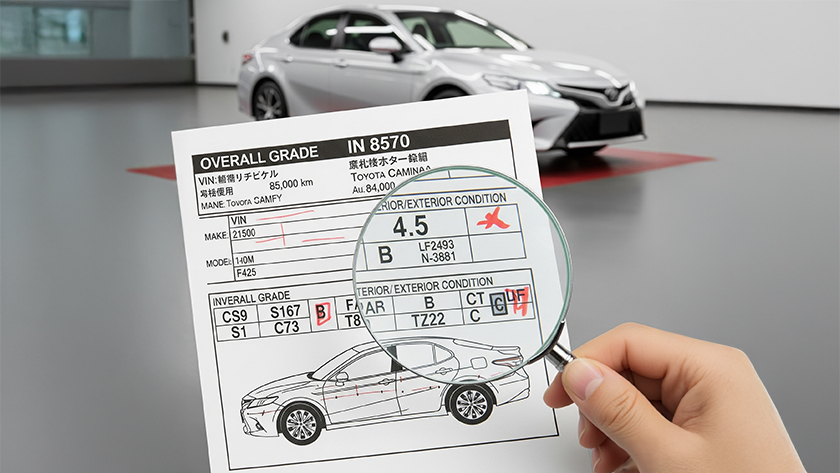
Japanese auction houses employ one of the most rigorous and transparent vehicle inspection systems in the world. Each vehicle is thoroughly inspected by professional graders who document every detail on an auction sheet (also called inspection sheet or condition report).
While different auction houses like USS, TAA, Honda Auto Auction, and JU may have slight variations in their format, the core grading principles remain consistent across Japan.
The beauty of this Japanese car auction system is that it provides buyers with detailed, unbiased information about a vehicle's condition before bidding, reducing uncertainty and helping you avoid costly surprises when importing cars from Japan.
The Main Grading Scale for Cars Explained
Japanese auction grades range from 0 to 9, with letter grades for special conditions. Here's a quick reference table followed by detailed explanations:
Quick Reference: Car Grading Scale
| Grade | Condition | Typical Mileage | Age | Key Characteristics |
|---|---|---|---|---|
| S, 9, 8, 7 | Brand New | Under 10,000km | Less than 1 year | Unused, delivery mileage only |
| 6 | Almost Brand New | Under 30,000km | Less than 3 years | No dents or scratches |
| 5 | Excellent | Under 60,000km | - | Very few minor imperfections |
| 4.5 | Very Good | Under 100,000km | - | Very few dents or scratches |
| 4 | Very Good | Under 150,000km | - | Few dents/scratches, may need minor work |
| 3.5 | Good | Under 150,000km | - | Similar to 4, needs more work or higher mileage |
| 3 | Below Average | Varies | - | Obvious damage, needs serious panel/paint work |
| 2 | Poor | Varies | - | Significant deterioration, corrosion holes |
| 1 | Modified/Disaster | Varies | - | Major modifications or flood damage |
| R, RA, A, 0 | Accident History | Varies | - | Repaired after accident (RA/A = minor) |
| R1 | Modified + Accident | Varies | - | Intensive modifications with accident history |
| ***, 99 | Major Damage | Varies | - | Unrepaired, may not move |
Here's what each grade means in detail:
Premium Grades (S, 9, 8, 7)
These represent virtually new vehicles with under 10,000km on the odometer. They're typically less than one year old and used only for delivery purposes. If you're looking for a car in pristine, showroom condition, these grades are your target.
Grade 6: Almost Brand New
Vehicles with this grade have under 30,000km and are less than three years old. You'll find no dents or scratches, making these excellent choices for buyers who want near-new quality at a better price point.
Grade 5: Excellent Condition
With under 60,000km, Grade 5 vehicles have very few minor imperfections and represent outstanding overall condition. This grade offers an excellent balance of quality and value for most importers.
Grade 4.5: Very Good Condition
These vehicles typically have under 100,000km and very few dents or scratches. While they show slightly more use than Grade 5, they remain in very good condition and are popular among buyers looking for reliable, well-maintained vehicles.
Grade 4: Solid and Reliable
With mileage under 150,000km, Grade 4 vehicles may have a few dents, scratches, or minor rust but are very good, solid cars. They might need minor panel work and paint, but mileage isn't typically a concern. This grade represents excellent value for money.
Grade 3.5: Good Condition
Similar to Grade 4 but may require more panel work and paint, or have higher mileage. These vehicles are still in good working order but show more visible signs of use.
Grade 3: Below Average
These vehicles have obvious dents, large scratches, rust, or fading. They need serious panel and paint work, or some panels may have already been replaced. While condition is below average, they can still be good purchases for buyers comfortable with cosmetic repairs.
Grade 2: Poor Condition
Grade 2 doesn't mean the vehicle is destroyed, but it does indicate significant deterioration. You might find corrosion holes and other serious issues. This grade is common for classic cars, old trucks, and buses where restoration is expected.
Grade 1: Modified or Disaster Vehicles
These vehicles have substantial engine or panel damage, aftermarket modifications like turbo installations or engine swaps, or have been affected by natural disasters such as flooding. Intensive modifications converting automatic to manual transmission also fall into this category.
Grades R, RA, A, 0: Accident History
These grades indicate the vehicle has been repaired after an accident. The severity ranges from RA and A (minor accidents) to more significant repairs. It's important to note that these vehicles aren't necessarily in bad condition. Many can be excellent purchases if properly repaired. The key is understanding what was repaired and how well the work was done.
Grade R1: Modified with Accident History
This grade combines intensive modifications with accident repair history.
Grades *** or 99: Major Damage
These ungraded vehicles haven't been repaired yet, may not move at all, or provide limited information on the auction sheet. They may or may not be drivable due to extensive damage or engine trouble.
Truck Grading: What's Different?
Trucks use a simpler grading scale from 2 to 4, with different mileage and age expectations:
Truck Grading Scale
| Grade | Condition | Typical Mileage | Age | Key Characteristics |
|---|---|---|---|---|
| 4 | Excellent | Under 100,000km | 3-5 years | Excellent overall condition |
| 3.5 | Very Good | Under 500,000km | 5-7 years | Few dents, scratches, or rust |
| 3 | Good | Under 1,000,000km | 7-12 years | Few dents, scratches, or rust |
| 2 | OK | Over 1,000,000km | 9-15 years | Large dents, scratches, or rust |
Trucks typically accumulate much higher mileage than passenger cars, so these thresholds reflect realistic commercial vehicle usage.
Interior Grading: The Other Half of the Story
While exterior grades tell you about the body and mechanical condition, interior grades reveal how well the vehicle was maintained inside. Interior grades range from A (best) to E (worst):
Interior Grading Scale
| Grade | Condition | Description |
|---|---|---|
| A | Very Clean (Like New) | Almost no dirt, stains, or tears |
| B | Very Clean | Very few imperfections, may need light cleaning |
| C | Average | Some dirt, stains, tears, or cigarette burns. Needs cleaning |
| D | Below Average | Various dirt, stains, tears, cracks, possible odors. Some issues may be permanent |
| E | Dirty | Lots of large stains, tears, burns, odors. May need dashboard repair |
Important Auction House Variations
Not all auction houses grade identically. TAA and Honda auction houses are known for stricter grading standards. A Grade 3.5 vehicle from TAA might be equivalent to a Grade 4.0 at other auction houses. This is important to keep in mind when comparing vehicles from different auctions.
Decoding Mileage Symbols
Japanese auction sheets are incredibly transparent about mileage authenticity. Here's what the symbols mean:
Mileage Symbol Guide
| Symbol | Meaning |
|---|---|
| No symbol | 100% genuine odometer reading, verified through Japan's vehicle history records |
| $ | Odometer replaced, but displayed mileage is accurate |
| * | Mileage is NOT accurate |
| # | Mileage unknown |
This level of transparency is rare in used car markets worldwide and is one reason Japanese auction vehicles are so trusted internationally.
Understanding Inspection Symbols
Auction sheets include detailed symbols indicating specific issues and their locations on the vehicle. These symbols help you understand exactly where damage or imperfections are located and how severe they are.
Scratch Codes
| Code | Description | Severity |
|---|---|---|
| A1 | Scratch - First size | Minor, small scratch |
| A2 | Scratch - 2 Palm size | Medium scratch |
| A3 | Scratch - Larger than A2 | Large scratch |
Dent Codes
| Code | Description | Severity |
|---|---|---|
| U1 | Dent - Thumb size | Small dent |
| U2 | Dent - Palm size | Medium dent |
| U3 | Dent - Larger than U2 | Large dent |
Combined Dent & Scratch Codes
| Code | Description | Severity |
|---|---|---|
| AU1 | Dent and Scratch | Small combined damage |
| AU2 | Dent and Scratch | Medium combined damage |
| AU3 | Dent and Scratch | Large combined damage |
| B1 | Dent with Scratch | Very small |
| B2 | Dent with Scratch | Small |
| B3 | Dent with Scratch | Larger than B2 |
| B4 | Dent with Scratch | Major damage |
Paint & Body Work Codes
| Code | Description | Details |
|---|---|---|
| W1 | Wavy Panel Repaired | Good quality repair |
| W2 | Wavy Panel Repaired | Slight waves visible |
| W3 | Wavy Panel Repaired | Conspicuous/obvious waves |
| P1 | Peeling | Small area |
| P2 | Peeling | Medium area |
| P3 | Peeling | Large area |
| E1 | Dimples | Few dimples present |
| E2 | Dimples | Several dimples |
| E3 | Dimples | Many dimples |
| H | Peeling or Hole | Paint peeling or hole in body |
Rust & Corrosion Codes
| Code | Description | Severity |
|---|---|---|
| S1 | Rust | Small rust spots |
| S2 | Rust | Medium rust |
| S3 | Rust | Heavy rust |
| C1 | Corrosion | Small corrosion |
| C2 | Corrosion | Medium corrosion with hole |
| C3 | Corrosion | Heavy corrosion |
Crack Codes
| Code | Description | Severity |
|---|---|---|
| Y1 | Crack | Thumb size |
| Y2 | Crack | Palm size |
| Y3 | Crack | Larger than Y2 |
Glass & Windshield Codes
| Code | Description | Action Needed |
|---|---|---|
| G | Stone chip on glass | Minor chip, may not need replacement |
| R | Crack on windshield - Repaired | Already repaired |
| RX | Crack on windshield | Needs replacement |
Panel Replacement Codes
| Code | Description | Status |
|---|---|---|
| X | Panel needs replacement | Not yet replaced |
| XX | Panel has been replaced | Already replaced once |
| XXX | Panel has been replaced | Replaced multiple times |
Common Japanese Terms on Auction Sheets
| Japanese | Romaji | English | Category |
|---|---|---|---|
| キズ | Kizu | Scratch | Surface damage |
| スレ/スリ | Sure/Suri | Scratch (Scrape) | Surface damage |
| ハゲ | Hage | Peeling | Paint issue |
| サビ | Sabi | Rust | Corrosion |
| ヒビ/ワレ | Hibi/Ware | Crack | Structural |
| 凹/ヘコミ | Hekomi | Dent | Body damage |
| ヤブレ/破れ | Yabure | Wear/Tear | Interior damage |
| ヨゴレ/汚れ | Yogore | Dirt | Cleanliness |
| コゲ | Koge | Burns | Damage |
| 穴 | Ana | Hole | Structural |
| トビ/石 | Tobi/Ishi | Stone chip | Glass damage |
| 腐食 | Fushoku | Corrosion | Rust |
| 波 | Nami | Wave | Panel repair |
| 小 | Shou | Small | Size indicator |
| 大 | Dai | Large | Size indicator |
How to Read Inspection Symbols on Auction Sheets
These symbols are typically marked on a diagram of the vehicle showing:
- Location: Front bumper, hood, doors, fenders, rear bumper, roof, etc.
- Type of damage: Using the codes above (A1, U2, B3, etc.)
- Severity: Indicated by the number (1 = minor, 2 = medium, 3 = major)
Example: If you see "A2" marked on the driver's door location, it means there's a medium-sized scratch (about 2 palm sizes) on that door.
Important: The absence of symbols in an area means that part is in good condition with no notable damage.
Common Options and Equipment Codes
Auction sheets use standardized codes for vehicle features and options. Understanding these codes helps you know exactly what equipment a vehicle has and assess its true value.
Transmission Types
| Code | Full Name | Description |
|---|---|---|
| AT / FA | Automatic Transmission | Standard automatic gearbox |
| MT | Manual Transmission | Manual stick shift |
| F5 / F6 | 5/6 Speed Manual | 5 or 6-speed manual transmission |
| CVT | Continuously Variable Transmission | Smooth, fuel-efficient automatic |
| TIP | Tiptronic | Automatic with manual shift option |
| CA / CAT | Column Automatic | Automatic with column shifter |
| DA / DAT | Dashboard Automatic | Automatic with dashboard shifter |
Standard Comfort & Convenience Features
| Code | Full Name | Description |
|---|---|---|
| AC | Air Conditioner | Basic cooling system |
| AAC | Climate Control AC | Automatic temperature control |
| WAC / WAA | Double Air Conditioner | Front and rear AC systems |
| PS | Power Steering | Electric/hydraulic steering assist |
| PW / EW | Power Windows | Electric window controls |
| PM | Power Mirrors | Electric mirror adjustment |
| CL | Central Locking | Lock all doors with one button |
| SR | Sunroof | Opening glass roof panel |
| HR | Highroof | Raised roof height (vans/trucks) |
| CD | CD Player | CD audio system |
| MD | MD Player | MiniDisc player |
| TV | Television | Japanese TV receiver (Japan only) |
| NAVI / ナビ | Navigation | GPS system (Japan maps only) |
| ST | Stereo | Audio stereo system |
Interior & Seating
| Code | Full Name | Description |
|---|---|---|
| LS / カワ | Leather Seats | Premium leather upholstery |
| ES | Electric Seats | Power seat adjustment |
| SH | Seat Heater | Heated front seats |
| SAR | Seat Arm Rest | Armrest in seats |
Wheels & Exterior
| Code | Full Name | Description |
|---|---|---|
| 純AW | Genuine Alloy Wheels | Original manufacturer alloy wheels |
| AW | Alloy Wheels | Aftermarket alloy wheels |
| エロ | Aero Kits | Aerodynamic body kit |
| F.S.R. | Front, Side, Rear Aero | Complete aero package |
| RS | Rear Spoiler | Rear wing/spoiler |
| SP | Spoiler | General spoiler |
| SS | Side Step | Side running boards |
| BB | Bull Bar | Front protective bar |
| GG | Grille Guard | Front grille protection |
| RR | Roof Rails | Roof luggage rails |
Safety Features
| Code | Full Name | Description |
|---|---|---|
| ABG / SRS / エアB | Airbag | Airbag system (number varies) |
| WAB | Dual Front Airbag | Driver and passenger airbags |
| F&S AB | Front & Side Airbag | Front and side airbags |
| CAB | Curtain Side Airbag | Curtain airbags for side impact |
| ABS | Anti-Lock Brake System | Prevents wheel lockup in braking |
| ESC / ESP | Electronic Stability Control | Prevents skidding/loss of control |
| TRC / TCS | Traction Control System | Prevents wheel spin |
| VDC / DSC | Vehicle Dynamics Control | Advanced stability system |
| VSA | Vehicle Stability Assist | Honda stability control |
| EBD | Electronic Brakeforce Distribution | Optimizes brake pressure |
| HSA | Hill Start Aid | Prevents rollback on hills |
| HDC | Hill Descend Control | Controls speed going downhill |
Lighting & Vision
| Code | Full Name | Description |
|---|---|---|
| HID | High-Intensity Discharge | Bright xenon headlamps |
| FL | Fog Lamps | Front fog lights |
| SL | Spot Lights | Additional spot lighting |
| AL / AHL | Auto Headlights | Automatic headlight activation |
| HL | Headlight Levelizer | Automatic headlight angle adjustment |
| AFS | Adaptive Front Light System | Headlights that turn with steering |
Technology & Control
| Code | Full Name | Description |
|---|---|---|
| BT | Bluetooth | Wireless connectivity |
| AU | Steering Audio Control | Audio controls on steering wheel |
| CC | Cruise Control | Maintains set speed |
| EPS | Engine Push Start | Push-button engine start |
| OP | Optitron Meter | Illuminated gauge cluster |
| HDD | Hard Disc Storage Audio | Hard drive music storage |
| EIS | Engine Immobilizer System | Anti-theft system |
Sensors & Safety Aids
| Code | Full Name | Description |
|---|---|---|
| C&Bsonar | Corner & Back Sensor | Parking sensors rear and corners |
| CS | Corner Sensor | Corner proximity sensors |
| CP | Corner Pole | Visible corner markers |
| ECP | Electric Corner Pole | Retractable corner markers |
| FP | Front Pole | Front corner marker |
| RM | Rear Mirror | Rear view mirror camera |
| RW | Rear Wiper | Rear window wiper |
Performance & Mechanical
| Code | Full Name | Description |
|---|---|---|
| TC | Twin Cam | Twin camshaft engine |
| EFI | Electric Fuel Injection | Electronic fuel injection |
| LSD | Limited Slip Differential | Performance differential |
| SSus | Sports Suspension | Performance suspension |
| SM | Snow Mode Drive | Snow/winter driving mode |
| ASR | Acceleration Skid Control | Prevents wheel spin on acceleration |
| EPC | Electronic Power Control | Electronic throttle control |
Vehicle Configuration
| Code | Full Name | Description |
|---|---|---|
| LWB | Long Wheel Base | Extended chassis length |
| SWB | Short Wheel Base | Shorter chassis length |
| HD | Highdeck | Raised bed height (trucks) |
| T | Spare Tire | Includes spare tire |
| SET | Stainless Steel Exhaust Tip | Chrome exhaust tip |
| ATSR | Auto Sunroof | Automatic sunroof operation |
| RA | Roof Antenna | Radio antenna on roof |
Important Notes About Option Codes
- Navigation (NAVI/ナビ): Japanese navigation systems typically only work in Japan and require expensive updates or replacement for other countries
- TV: Japanese television reception only, won't work outside Japan
- 純AW (Genuine Alloy Wheels): More valuable than aftermarket AW as they're original manufacturer parts
- Multiple codes: Well-equipped vehicles will have many codes listed, indicating higher value and better specification
Making Smart Buying Decisions with Japanese Auction Grades
Understanding the Japanese auction grading system helps you make informed decisions based on your specific needs:
For Car Dealers and Importers: Grades 4-5 offer the best balance of quality and profit margin for resale markets. These vehicles have strong appeal to international buyers.
For Personal Import and JDM Enthusiasts: Grades 4.5-6 provide excellent condition with reasonable prices. Don't automatically dismiss R or RA grades if the repair work is minor and well-documented.
For Project Cars and Restoration: Grades 2-3 can be excellent value if you have the resources to handle repairs and restoration work.
For Budget Conscious Buyers: Grade 4 vehicles often represent the sweet spot of affordability and reliability when importing from Japan.
Avoid Common Mistakes: Many first-time importers focus only on exterior grade and ignore interior condition, mileage authenticity symbols, and detailed inspection notes.
Why Professional Auction Sheet Translation Matters
While this guide helps you understand the Japanese auction grading system, auction sheets contain much more detailed information in Japanese. Professional auction sheet translation services ensure you understand every aspect of a vehicle's condition, including:
- Detailed inspector comments and observations in Japanese
- Service history notes and maintenance records
- Specific repair information and quality assessment
- Equipment verification and option confirmations
- Any special conditions, warnings, or concerns
- Model-specific issues or recalls
At jpchecker.com, we provide complete Japanese auction sheet translations free of charge, ensuring you have all the information needed to bid with confidence on any vehicle from Japanese car auctions like USS, TAA, Honda, JU, and others.
Final Thoughts: Mastering Japanese Car Auction Grading
The Japanese auction grading system is designed to provide transparency and protect both buyers and sellers in the used car market. By understanding these grades, inspection symbols, and option codes, you can navigate Japanese car auctions with confidence, whether you're a professional car dealer, importer, or an individual buyer looking to import your dream JDM vehicle.
Key Takeaways:
- Grade alone doesn't tell the whole story - always consider exterior grade, interior grade, mileage, age, and specific inspection notes together
- TAA and Honda auctions grade stricter than others - a 3.5 there equals a 4.0 elsewhere
- Mileage symbols ($, *, #) reveal odometer authenticity
- R and RA grades aren't automatically bad - focus on repair quality
- Interior grades (A-E) are as important as exterior grades
- Option codes significantly affect vehicle value
When in doubt, don't hesitate to ask for professional assistance in interpreting Japanese auction sheets. The small investment in proper translation can save you thousands in unexpected repairs or buyer's remorse.
Ready to start your Japanese car import journey? Understanding these grading systems is your first step toward finding the perfect vehicle at the right price.
About jpchecker.com: We specialize in free Japanese auction sheet translation and vehicle verification services for car importers, dealers, and enthusiasts worldwide. Our expert translators help you understand every detail of Japanese auction reports, ensuring confident purchases from USS, TAA, Honda Auto Auction, JU, and all major Japanese car auction houses.
Need help reading an auction sheet? Contact us today for free translation services and expert guidance on importing vehicles from Japan.