Toyota C-HR Grade Guide: S vs G vs GR Sport — Every Difference Explained
The crossover that redefined Toyota's style identity — both generations fully decoded. TNGA platform, hybrid vs turbo, Safety Sense, PHEV, and which C-HR to buy or import.
What Is the Toyota C-HR?
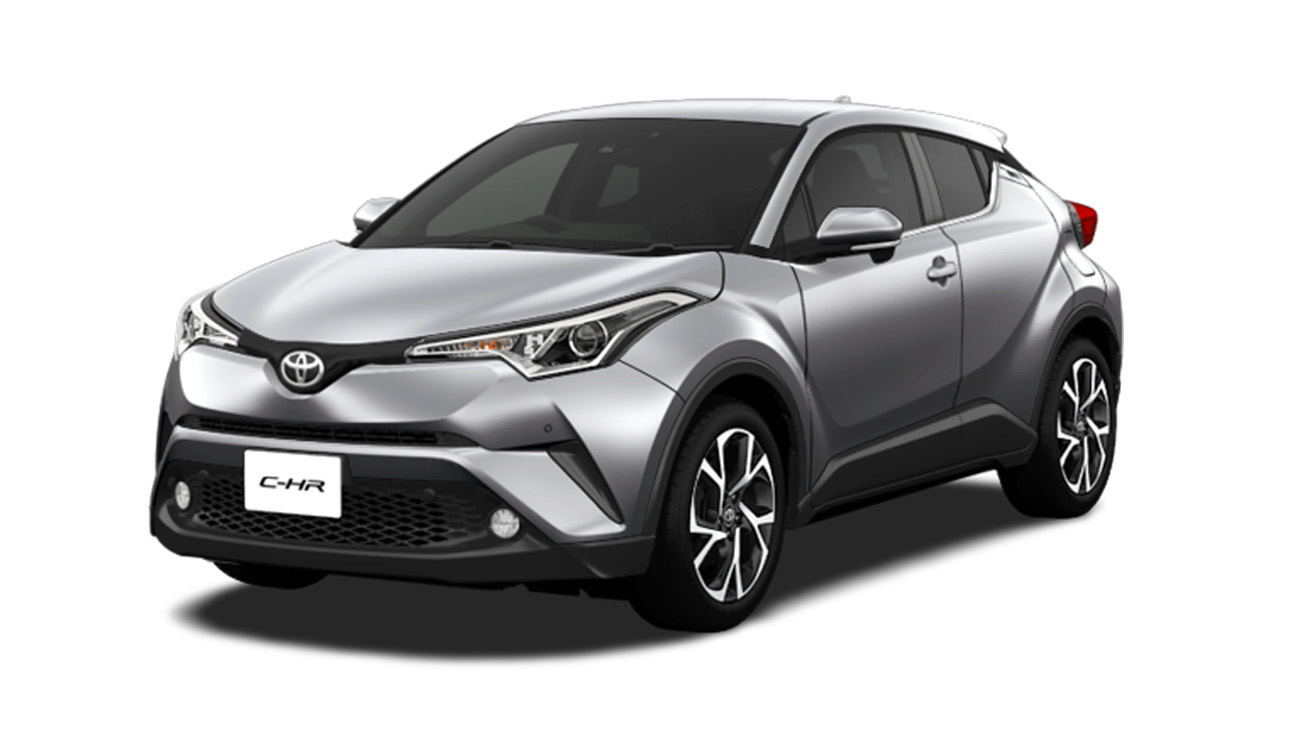
When the Toyota C-HR launched in Japan on 14 December 2016, it signalled a deliberate change in direction for Toyota — a brand more associated with reliable practicality than head-turning style. Built on the same TNGA (Toyota New Global Architecture) platform that underpins the fourth-generation Prius, the C-HR brought a dramatically sculpted design, a low centre of gravity, and class-competitive driving dynamics to the compact crossover segment.
The C-HR is not a body-on-frame SUV or an off-roader — it is a compact coupe-crossover built for urban and suburban use, with a focus on design, driving feel, and fuel efficiency. It was the second TNGA-based vehicle Toyota ever produced, making it part of the foundational model generation that transformed the company's product line. The original Toyota press release described its design concept as "Sensual Speed-Cross" — and that spirit has guided both generations.
The second generation, launched in 2023 exclusively with hybrid powertrains, raised the stakes further with sharper C-shaped LED headlights, a standard dual 12.3-inch digital display on upper grades, a PHEV option for the first time, and Toyota's latest fifth-generation hybrid system. It earned a five-star Euro NCAP safety rating.
What Does "C-HR" Stand For?
Toyota has offered three possible interpretations of the C-HR name, and all three reflect the car's character:
The "Coupé High-Rider" interpretation is the most commonly used by Toyota in official communications. It perfectly captures what makes the C-HR distinct in the compact SUV segment: the elevated ride height and commanding seating position of an SUV, combined with the raked roofline, tapered cabin, and expressive wheel-arch flaring of a performance coupe.
The Design Philosophy — "Sensual Speed-Cross"
💎 "Diamond Architecture Theme" — Toyota's Design Statement
At launch, Toyota described the C-HR's exterior design concept as "Sensual Speed-Cross" built on a "diamond architectural theme." Every surface was deliberately sculpted and chamfered to represent the faceted surfaces of a precision-cut gemstone. The three-dimensional contrast between the strongly tapered body and the pronounced flaring of the wheel arches creates a crossover with a silhouette unlike any rival. Viewed from any angle, the result is intentionally striking — "an SUV with the feel of a coupe."
The 2nd generation evolved this language into sharper, more aggressive territory: C-shaped LED headlights (shared with the 2023 Prius and Aygo X), a bolder honeycomb lower grille, a more dramatic roofline, and an available two-tone paint finish. The interior took an equally significant step up with available dual 12.3-inch screens, nanoe-X air quality technology, and digital climate controls on upper grades.
Two Generations — Key Differences at a Glance
1st Generation (2016–2022) · ZYX10 / NGX50
- Launched Japan: 14 December 2016
- TNGA GA-C platform (shared with Corolla)
- Japan: 1.2L turbo or 1.8L hybrid (FWD only for hybrid)
- Japan grades: S, S-LED, G, S-T, G-T
- Toyota Safety Sense P standard all grades
- Facelift 2019: added 2.0L hybrid option
- Discontinued in Japan 2022 (sold in Europe/Australia to 2023)
- Most common unit at Japanese auction
2nd Generation (2023–present) · ZYX11 / NGX11
- Revealed: 26 June 2023 · Launched: October 2023
- Updated TNGA GA-C platform
- Hybrid only — 1.8L or 2.0L HEV + PHEV option
- No petrol-only or turbo option
- Grades: S (base), G, GR Sport (+ PHEV variants)
- 5th generation Toyota hybrid system
- Dual 12.3-inch screen on upper grades
- 5-star Euro NCAP · nanoe-X cabin air tech
- Production centralised in Turkey
1st Generation Grade Guide — Japan (2016–2022)
The Japanese domestic market 1st generation C-HR launched with four grades, later expanded to five following the facelift. Grades were clearly divided between hybrid and turbocharged engine lines. Toyota Safety Sense P was standard on every grade from day one.
- 2ZR-FXE 1.8L hybrid system
- 18-inch machine-cut alloy wheels
- Toyota Safety Sense P (standard)
- Blind Spot Monitor + RCTA
- Rear camera
- Black interior with orange accents
- 2ZR-FXE 1.8L hybrid system
- All S features, plus:
- LED headlamps (bi-beam)
- Fog lights
- Seat heaters (front)
- Leather-wrapped steering wheel
- Larger touchscreen infotainment
- 8NR-FTS 1.2L turbo engine
- CVT (FWD) or Super CVT-i (AWD)
- AWD option: 1.2T only
- Toyota Safety Sense P standard
- 18-inch alloy wheels
- For buyers needing AWD
- 8NR-FTS 1.2L turbo engine
- All G features
- AWD available
- LED headlamps
- Seat heaters
- Leather steering wheel
2nd Generation Grade Guide (2023–present, Europe/Australia)
The second generation C-HR launched exclusively with hybrid powertrains — no petrol-only or turbo option exists. Grade names vary by market but the structure is consistent: a base grade, a mid grade with premium tech, and the GR Sport performance variant. The PHEV is available from the second grade upward in most markets.
- 1.8L 2ZR-FXE hybrid · 140 PS
- eCVT · FWD only
- C-shaped full LED headlamps
- 17-inch alloy wheels
- 8-inch touchscreen
- Toyota Safety Sense (standard)
- Wireless Apple CarPlay / Android Auto
- No PHEV option at this grade
- 1.8L or 2.0L hybrid options
- PHEV also available (2.0L + large battery)
- 18-inch alloy wheels
- Dual 12.3-inch screen available
- Blind Spot Monitor + RCTA
- Wireless charging
- Rear cross-traffic alert
- Nanoe-X air quality system
- 2.0L hybrid (197 PS) or PHEV (223 PS)
- All Design features, plus:
- 360° camera
- Skyview panoramic roof (with thermal glass)
- Multi-colour ambient lighting
- Suede-effect seat upholstery
- Heated front and rear seats
- Heated steering wheel
- 2.0L M20A-FXS hybrid · 197 PS
- Exclusive: 20-inch alloy wheels
- GR Sport body kit + lower spoilers
- Sport-tuned suspension
- Head-up display
- JBL premium audio system
- GR Sport seats with unique trim
- Red brake calipers
Full Feature Comparison Table — 2nd Generation
| Feature | Icon / Base 1.8L HEV |
Design / Mid 1.8 or 2.0L |
Excel / Luxury 2.0L or PHEV |
GR Sport 2.0L HEV |
|---|---|---|---|---|
| POWERTRAIN | ||||
| Hybrid system | 1.8L 5th-gen | 1.8L or 2.0L | 2.0L or PHEV | 2.0L HEV |
| PHEV option | ✗ | ✓ | ✓ | ✗ |
| Combined power | 140 PS | 140–197 PS | 197–223 PS | 197 PS |
| Fuel economy | ~26 km/L | ~22–26 km/L | ~22 km/L / EV 68 km | ~22 km/L |
| EXTERIOR | ||||
| Headlamps | Full LED C-shape | Full LED | Full LED | Full LED + adaptive |
| Wheel size | 17-inch alloy | 18-inch alloy | 19-inch alloy | 20-inch alloy |
| Two-tone paint | OPT | OPT | OPT | OPT |
| GR Sport body kit | ✗ | ✗ | ✗ | ✓ |
| Sport-tuned suspension | ✗ | ✗ | ✗ | ✓ |
| Red brake calipers | ✗ | ✗ | ✗ | ✓ |
| INTERIOR | ||||
| Infotainment screen | 8-inch | Dual 12.3-inch | Dual 12.3-inch | Dual 12.3-inch |
| Panoramic roof | ✗ | OPT | ✓ | OPT |
| 360° camera | ✗ | ✗ | ✓ | ✓ |
| Head-up display | ✗ | ✗ | ✗ | ✓ |
| JBL premium audio | ✗ | ✗ | ✗ | ✓ |
| Heated front seats | ✗ | ✗ | ✓ | ✓ |
| Heated steering wheel | ✗ | ✗ | ✓ | ✓ |
| Nanoe-X air quality | ✗ | ✓ | ✓ | ✓ |
| Ambient lighting | ✗ | ✗ | ✓ | ✓ |
| Wireless charging | ✗ | ✓ | ✓ | ✓ |
| SAFETY | ||||
| Toyota Safety Sense | ✓ | ✓ | ✓ | ✓ |
| Blind spot monitor | ✗ | ✓ | ✓ | ✓ |
| Rear cross-traffic alert | ✗ | ✓ | ✓ | ✓ |
| Adaptive headlights | ✗ | ✗ | ✗ | ✓ |
✓ = Standard | ✗ = Not available | OPT = Available as option | Grade names and features vary by market. Table represents typical 2nd gen global specification. Dark column = GR Sport. PHEV specs shown where different.
Powertrain Guide: 1.2T, 1.8 HEV, 2.0 HEV & PHEV
Understanding C-HR powertrains is essential for both buyers and importers — the right engine depends heavily on how and where the car will be driven.
1.8L Hybrid (2ZR-FXE)
- Available: 1st gen + 2nd gen
- Combined: 140 PS
- Fuel economy: ~26 km/L (WLTC)
- Drive: FWD only
- Best for: efficiency, daily urban use
- Refined, quiet, well-proven system
- 5th generation in 2nd gen C-HR
2.0L Hybrid (M20A-FXS)
- Available: 1st gen facelift + 2nd gen
- Combined: ~197 PS
- 40% stronger than 1.8L
- Drive: FWD only
- Best for: motorway, spirited driving
- GR Sport exclusive in 2nd gen
- Higher thermal efficiency engine
PHEV (2.0L + Large Battery)
- Available: 2nd gen only
- Combined: ~223 PS
- Electric-only range: ~68 km (WLTP)
- Drive: FWD only
- Best for: low-emission zone use
- Predictive Efficient Drive system
- Most powerful and efficient C-HR
The TNGA Platform — Why It Makes the C-HR Special
The C-HR was only the second vehicle ever built on Toyota's TNGA (Toyota New Global Architecture) platform — the first being the fourth-generation Prius. This platform fundamentally changed Toyota's vehicles by engineering a much lower centre of gravity, higher body rigidity, and dramatically improved suspension geometry compared to the architecture it replaced.
Toyota described the driving concept as a focus on "Response, Linearity and Consistency" — meaning the car should react instantly to driver input, in proportion to the input, and do so predictably on any road surface. These attributes were validated on road tests across Japan and Europe before launch.
Toyota Safety Sense — Standard on Every Grade, Every Generation
Since the very first C-HR launched in 2016, Toyota Safety Sense (TSS-P in the 1st gen, updated TSS in the 2nd gen) has been standard equipment on every single grade without exception. In the 2nd generation, the system received significant updates including improved night-time pedestrian detection and new traffic sign recognition. The 2nd generation C-HR earned a five-star Euro NCAP rating with particular commendation for child occupant protection and vulnerable road user protection — both scored at 86%.
Key Differences Between C-HR Grades Explained
1. Wheel Size — The Most Visible Grade Indicator
The wheel size progression across grades is the easiest way to identify a C-HR's specification at a glance. Base grades start at 17-inch alloys, mid grades use 18-inch, upper grades carry 19-inch, and the GR Sport is exclusively fitted with 20-inch alloys. Larger wheels enhance the car's visual presence but can produce a firmer ride — particularly the 20-inch GR Sport, which also has sport-tuned suspension to compensate.
2. Screen: 8-inch Single vs Dual 12.3-inch
The base grade receives an 8.0-inch centre display for infotainment. The mid grade and above step up to a dual 12.3-inch setup — a combined digital instrument cluster and touchscreen infotainment unit that completely transforms the cabin experience. This full digital dashboard is a significant visual and usability upgrade that most drivers find genuinely worthwhile.
3. Panoramic Roof — Grade-Dependent
The 2nd generation C-HR's panoramic Skyview roof uses thermal comfort glass that reduces heat transfer while maintaining the open, airy feeling. It is standard on the Excel/Luxury grade and available as an option on Design/Mid and GR Sport grades. The base grade cannot be specified with the panoramic roof in most markets.
4. The Head-Up Display — GR Sport Exclusive
A head-up display that projects speed, navigation arrows, and safety alerts onto the windscreen is reserved for the GR Sport grade (and Orange Edition in some markets). This keeps driving information in the driver's sightline without requiring them to look down, reducing eye-off-road time during navigation and speed monitoring.
5. Blind Spot Monitor — Not on Base Grade
The Blind Spot Monitor (BSM) and Rear Cross-Traffic Alert (RCTA) are available from mid grades upward but are absent from the entry grade. For buyers in markets with heavy traffic or for those who regularly use the car for lane-changing on motorways, this is a meaningful safety equipment difference that justifies stepping up from base.
6. Powertrain: 1.8L vs 2.0L Hybrid
In the 2nd generation, the base grade is exclusively 1.8L hybrid (140 PS). From mid grade upward, the more powerful 2.0L hybrid (197 PS) is available. The 2.0L produces roughly 40% more combined output and a noticeably more responsive driving experience — particularly at motorway speeds. The GR Sport uses only the 2.0L engine.
The GR Sport Grade — What Makes It Genuinely Different
The GR Sport is not merely a visual upgrade package — it is a distinct grade with meaningful mechanical and equipment differences that justify its position as the most desirable C-HR variant for driving enthusiasts.
| GR Sport Exclusive Feature | What It Adds |
|---|---|
| Sport-tuned suspension | Firmer, lower damper settings for sharper body control and more connected driving feel |
| 20-inch alloy wheels | Unique black machine-cut design — the largest wheels in the C-HR range, wider tyre profile |
| GR Sport body kit | Exclusive front bumper, side sill extensions, and rear diffuser giving a more aggressive profile |
| Head-up display | Projects speed and navigation info onto the windscreen — not available on any other C-HR grade |
| JBL premium audio | Upgraded multi-speaker JBL sound system with subwoofer — not available on other grades |
| Adaptive headlights | Headlamps that pivot to follow the curve of the road — not available on other grades |
| 2.0L hybrid only | GR Sport cannot be specified with the 1.8L engine — it always receives the more powerful 2.0L |
| GR Sport seats | Unique seat trim with sport bolstering and GR badging |
| Red brake calipers | Visual distinction that reinforces the performance character of the grade |
Full Technical Specifications
| Specification | Detail |
|---|---|
| Platform | TNGA GA-C (shared with Corolla E210 and Prius XW50) |
| Body style | 5-door coupé crossover SUV (hatchback profile) |
| Seating | 5 passengers |
| 1.2L turbo engine (1st gen) | 8NR-FTS · 116 PS / 185 Nm · CVT · FWD or AWD |
| 1.8L hybrid (both gens) | 2ZR-FXE + motor · 140 PS combined · eCVT · FWD |
| 2.0L hybrid (2nd gen / facelift) | M20A-FXS + motor · ~197 PS combined · eCVT · FWD |
| PHEV (2nd gen only) | M20A-FXS + large battery · ~223 PS · EV range ~68 km · FWD |
| Fuel economy — 1.8L HEV | ~26 km/L WLTC (1st gen: 30.2 km/L JC08 at launch) |
| Fuel economy — 2.0L HEV | ~22–23 km/L WLTC |
| Dimensions (L×W×H) | 4,360 × 1,795–1,800 × 1,550–1,565 mm |
| Wheelbase | 2,640 mm (same both generations) |
| Kerb weight — 1.8L HEV 2WD | ~1,390–1,430 kg |
| Kerb weight — 2.0L HEV | ~1,450–1,490 kg |
| Front suspension | MacPherson strut with SACHS dampers |
| Rear suspension | Double-wishbone (class-leading for a compact SUV) |
| Minimum turning radius | 5.2 m — comparable to a hatchback |
| Safety rating | 5-star Euro NCAP (2nd gen) |
| Model codes (1st gen Japan) | ZYX10 (1.8 HEV), NGX10/NGX50 (1.2T), MXPJ10 (2.0 HEV, facelift) |
Which Grade Should You Buy or Import?
⚡ Best for Efficiency / Most Common at Auction
Choose the 1st Gen G grade (1.8L Hybrid) for the best balance of fuel economy, features (LED headlamps, seat heaters, leather steering), and value. The G grade is by far the most common C-HR variant at Japanese auction and offers the proven 2ZR-FXE hybrid system with excellent running costs. For buyers who prioritise efficiency and reliability, the 1.8L HEV G grade is the default recommendation.
🚙 Best for AWD / Rough Roads
Choose the 1st Gen G-T (1.2L Turbo AWD) if you need all-wheel drive — this is the only C-HR configuration that offers it. The 1.2T AWD is the go-to choice for buyers in markets with rough terrain, mud, or snow. Note it is less fuel-efficient than the hybrid grades but more versatile off smooth tarmac.
🏆 Best Equipped / Most Desirable Globally
Choose the 2nd Gen GR Sport (2.0L Hybrid) for the ultimate C-HR — the most powerful grade, sharpest styling, head-up display, JBL audio, adaptive headlights, and 20-inch wheels. It commands the highest resale value in global export markets. Be aware of the firmer ride. If you want comparable luxury without the firmness, the Excel/Luxury grade with panoramic roof and heated seats is an excellent alternative.
Importing a Toyota C-HR
The Toyota C-HR is one of the most popular Japanese-sourced compact SUVs in the global export market, particularly in the Middle East, Africa, Southeast Asia, the Caribbean, and the Pacific Islands. Its combination of Toyota hybrid reliability, bold styling, and class-competitive technology makes it an easy sell in virtually every export destination.
1st Gen vs 2nd Gen — Which to Source?
Only the 1st generation C-HR (2016–2022) was sold in Japan — all 2nd generation production is in Turkey. If you are sourcing direct from Japan, you will be buying 1st gen units, which are widely available at auction with low mileage and excellent condition records. The 1st gen G hybrid is the most sought-after configuration. Post-facelift units (2019–2022) with the 2.0L hybrid option (MXPJ10 code) are increasingly popular and command a modest premium.
Identifying Grade from the Chassis
Model codes are the most reliable way to identify a 1st gen C-HR's exact specification: ZYX10 = 1.8L hybrid 2WD; NGX10 = 1.2L turbo 2WD; NGX50 = 1.2L turbo AWD; MXPJ10 = 2.0L hybrid 2WD (facelift). Always verify from the chassis number rather than relying on auction sheet grade labelling alone — misidentification is common, especially with special edition models like the G-Mode Nero.
Special Edition Models
The C-HR was popular in Japan as a canvas for special editions — G-Mode Nero (black appearance package), Glamour (white interior), and various dealer options. These are based on underlying G or S grades and do not change the powertrain. Verify the base grade before purchasing any special edition unit.
🔍 Verify Any Toyota C-HR Before You Import
Confirm the grade, model code (ZYX10 / NGX50 / MXPJ10), hybrid or turbo specification, mileage, and full accident history using the chassis number — instantly at JPChecker.com.
Run a Free Vehicle Check →